

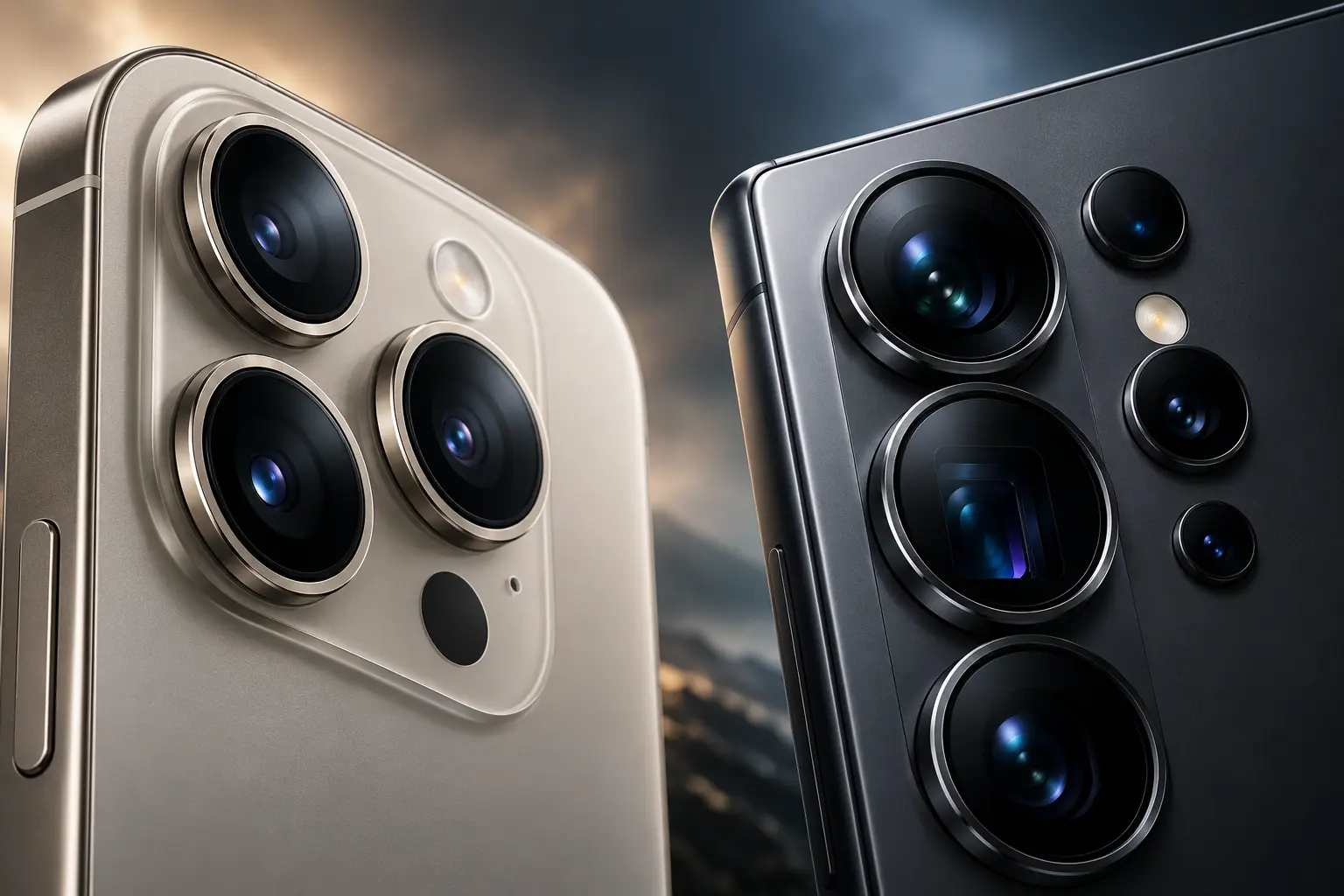
The iPhone vs Samsung camera choice in 2026 comes down to the pictures you take and the tools you use. Samsung’s Galaxy S26 Ultra offers two dedicated telephoto cameras for different shooting distances. Apple’s iPhone 18 Pro and Pro Max offer a variable-aperture main camera and a ProRes video workflow. Those differences are useful buying criteria; neither establishes a winner for every photograph.
This guide focuses on those models. Apple announced iPhone 18 Pro and Pro Max on 9 September 2026, so iPhone 17 Pro is no longer the latest Pro generation. We reviewed manufacturer specifications and a published camera comparison on 11 October 2026. This is a research-based buying guide, not a DubaiPress hands-on test.
For the wider decision about operating systems and connected devices, see our iPhone vs Samsung buying guide. Here, the focus is photography, zoom and video.
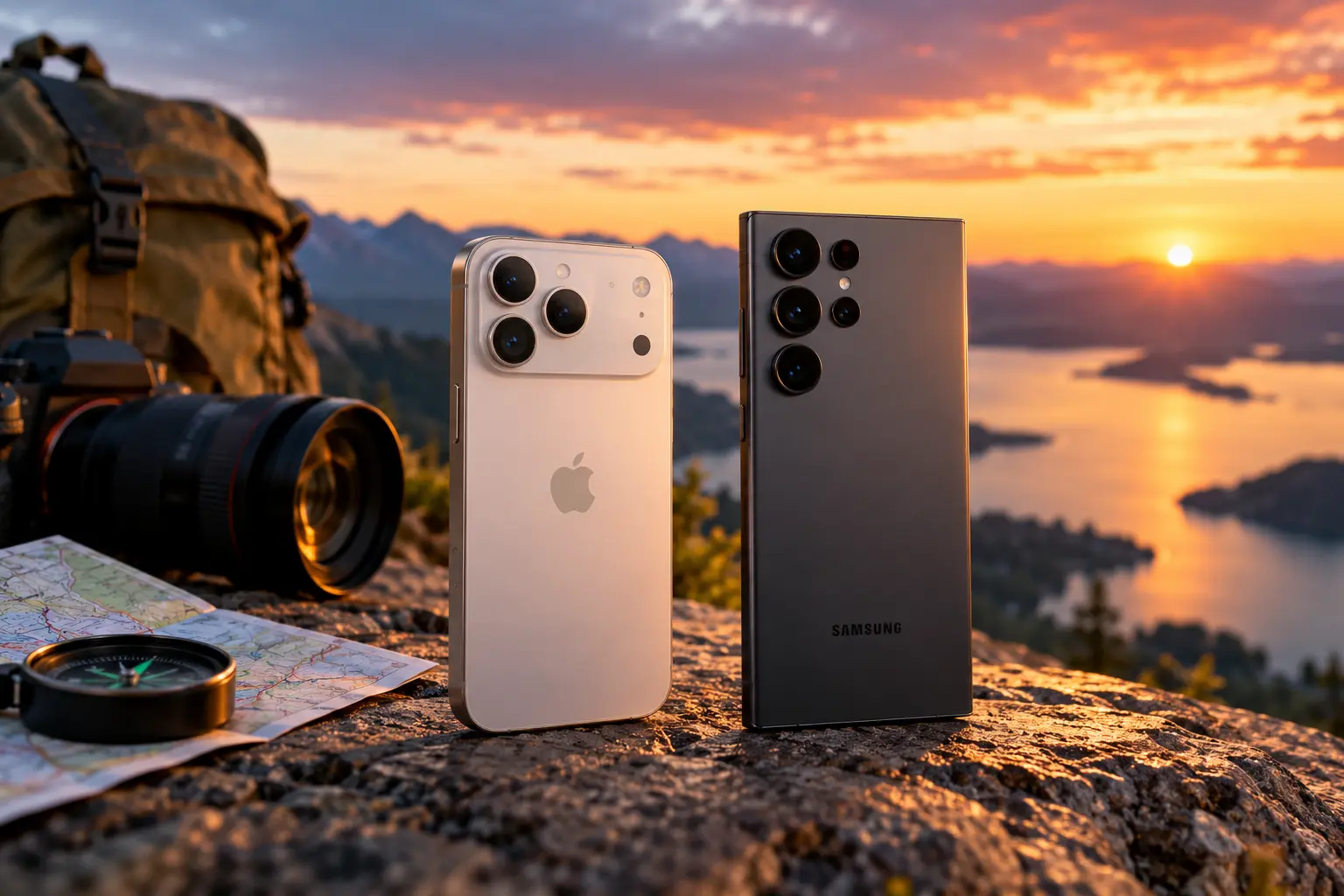
Illustration for this comparison; it is not a photograph of the exact models reviewed.
iPhone vs Samsung camera specifications at a glance
The table compares features listed in Apple’s iPhone 18 Pro specifications and Samsung’s Galaxy S26 launch specifications. Samsung’s S26 Ultra specification sheet also confirms the recording resolution and digital zoom limit. These are feature differences, rather than scores for image quality.
| Camera feature | iPhone 18 Pro / Pro Max | Galaxy S26 Ultra | What it helps you compare |
|---|---|---|---|
| Main camera | 48MP; variable aperture | 200MP; f/1.4 | Light control and capture options; megapixels alone do not rank image quality |
| Ultra-wide | 48MP | 50MP | Field of view, corner detail and distortion in sample images |
| Dedicated telephoto cameras | 48MP at 4x | 10MP at 3x and 50MP at 5x | Samsung offers two dedicated telephoto focal lengths |
| Advertised optical-quality zoom | 2x and 8x | 2x and 10x | These settings are distinct from the dedicated optical telephoto lenses |
| Maximum digital zoom | 40x | 100x | Maximum magnification is not a guarantee of usable detail |
| Video options | 4K Dolby Vision up to 120fps on the Main camera; ProRes | 8K up to 30fps; APV | Resolution, frame rate, recording requirements and editing compatibility |
| Front camera | 18MP Center Stage | 12MP with autofocus | Framing, focus and faces in real selfie or video-call samples |
Recording limits apply to particular cameras, modes and settings. Apple’s ProRes recording at 4K/120fps requires external recording; do not assume every lens or mode supports the maximum figures in the table.
Daylight, night, portraits, zoom and video
What a published photo comparison found
John Velasco’s 200-photo comparison for Tom’s Guide tested iPhone 18 Pro Max against Galaxy S26 Ultra in automatic mode. He preferred the iPhone for portraits and low light, and Samsung for macro and longer zoom; daylight and ultra-wide were ties. Those are the reviewer’s findings for the tested scenes, not DubaiPress measurements or a test of video and social-media apps.
Daylight and colour
Start with a scene you often photograph: a person beside a window, a building against a bright sky or food on a table. Look for detail in both bright and dark areas, and judge colours on the same screen. A more saturated picture may suit your taste, but that is different from accurate colour. For an ultra-wide shot, also inspect the corners and the shape of objects near the edges.
Night photography
For an iPhone vs Samsung camera comparison in low light, look at both a still skyline and a moving subject indoors. For the first, inspect fine detail, bright signs and shadow noise. For the second, check whether the person is sharp and whether the camera captures the moment you intended. A bright preview does not tell you how well a phone will handle both situations.
Samsung’s launch announcement describes wider apertures and low-light improvements relative to Galaxy S25 Ultra. That comparison does not establish a lead over Apple’s current phone. Compare samples from the exact models and shooting conditions you care about.
Portraits and people
Inspect hair, glasses and shoulders where the subject meets the blurred background, as well as skin texture and colour. Try more than one shooting distance: a close selfie and a head-and-shoulders portrait are different tasks. Apple’s variable aperture adds control over depth of field, while Samsung’s two telephoto cameras give you different framing options. Choose the effect you want instead of assuming a brand always produces more natural faces.
Zoom and distant subjects
Samsung has dedicated 3x and 5x telephoto cameras; Apple has a dedicated 4x telephoto. The higher “optical-quality” settings listed above are not extra telephoto lenses. Compare both phones at the same magnification and in similar light: matching each phone’s maximum zoom would answer a different question.
For buildings, stage events or distant details, inspect actual text and textures rather than only the enlarged outline. Samsung’s extra telephoto option is a practical reason to shortlist it, but its 100x digital setting does not mean every distant scene will produce a useful photograph.
Video and social-media recording
For video, your iPhone vs Samsung camera choice should account for how you record, edit and share footage. Apple lists Dolby Vision, Apple Log 2 and ProRes, while Samsung offers APV alongside its high-resolution recording options. Check that your editor supports the format and that your storage setup suits the recording mode. A larger resolution number alone does not establish better stabilisation, autofocus or colour.
For Instagram, TikTok or YouTube, compare a short clip recorded in the native camera app with one recorded inside the social app, then inspect the uploaded result. Look for focus changes, clipped highlights and abrupt exposure shifts while walking. That gives you a more relevant answer than a blanket claim that one brand is always better for social media.
If you plan to keep the phone for several years, our Samsung vs Apple software stability guide covers update policies and longer-term ownership considerations.
Which camera features matter most to you?
Use this iPhone vs Samsung camera comparison to build a shortlist, then check sample images for your main shooting situations.
Reasons to consider iPhone 18 Pro or Pro Max
- You want direct control over the main camera’s aperture and depth of field.
- Your editing workflow uses Apple Log 2 or ProRes.
- You value the Center Stage front-camera framing options.
Reasons to consider Galaxy S26 Ultra
- You want two dedicated telephoto focal lengths for different subjects.
- You have a specific use for 8K recording.
- Your production workflow can make use of the APV codec.
Neither list means you must use professional formats for ordinary photos and clips. Give priority to the features you will actually use.
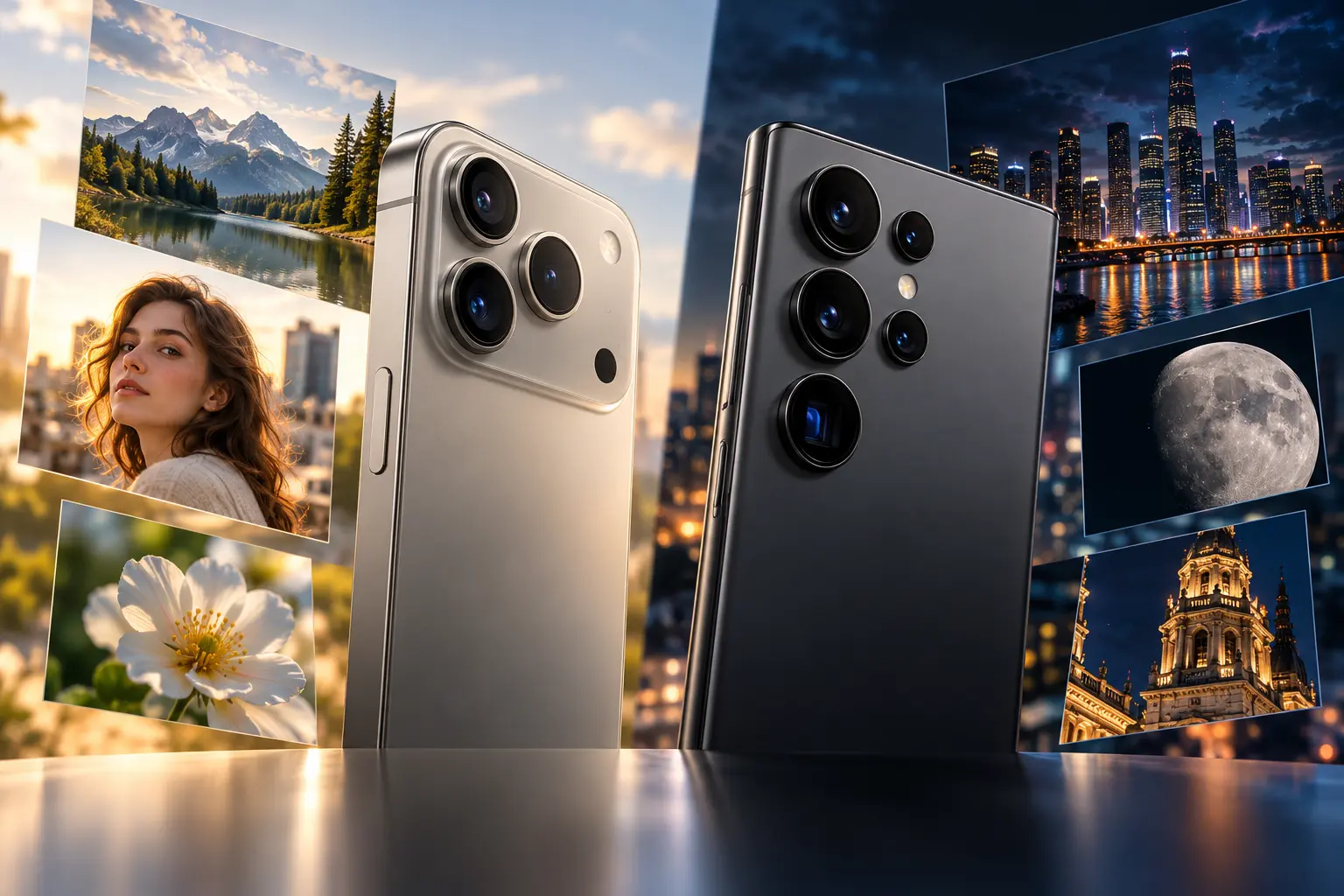
Illustrative collage. The inset scenes are not camera test samples from either phone.
iPhone vs Samsung camera: which suits your needs?
Start with your photography habits rather than the megapixel count. For family photos, inspect faces and movement. For travel, compare the focal lengths you use most. For video, check the complete path from recording to editing and sharing. If neither phone has a feature you specifically need, choose using matched samples, comfort in the camera app and the total purchase price.
Compare the right type of phone
A foldable is a separate camera choice: do not transfer a Pro-versus-Ultra verdict to a different device. If you want a folding screen, our iPhone Duo vs Galaxy Z Fold8 comparison and iPhone Fold vs Xiaomi 18 Fold comparison cover those alternatives and their camera hardware.
If your shortlist extends to other Android brands, use our Samsung vs Xiaomi phone comparison for the wider buying decision. Compare the particular models within your budget rather than assuming that a flagship camera verdict applies to every phone sold by a brand.
Before buying in Dubai
If you’re comparing these flagships before buying, our guide on where to buy a phone in Dubai explains the differences between official retailers and grey-market sellers, including warranty considerations.
Check the exact model, storage capacity, seller and warranty terms before comparing prices. Leave room in your budget for any recording storage or accessories your chosen workflow requires. The best camera purchase is the one that meets your actual shooting needs at a price you are comfortable paying.
For more phone and device buying guides, browse DubaiPress technology coverage.