
The Samsung vs Xiaomi decision in 2026 is less about finding one universally superior brand and more about choosing where you want your money to go. Samsung usually charges more for polished software, longer update support, stronger resale value, dependable cameras, and a broader connected-device ecosystem. Xiaomi often puts more of the budget into faster charging, larger batteries, powerful processors, and higher-end hardware at a lower price. Buyers comparing Android brands may also want to look at iPhone vs Samsung before deciding whether they prefer Android flexibility or Apple’s ecosystem. When you compare Xiaomi and Samsung, the better choice therefore depends on your priorities: Samsung is generally safer for long-term ownership and consistency, while Xiaomi can deliver better specifications per dollar. This comparison between Xiaomi and Samsung will examine their cameras, performance, battery life, software, build quality, prices, and support to answer the practical question: is Samsung better than Xiaomi, or does Xiaomi offer the smarter deal for your budget?
Samsung vs Xiaomi at a Glance
A quick Samsung vs Xiaomi comparison shows two different approaches to smartphone design. Samsung focuses more heavily on long-term software support, a consistent camera experience, polished ecosystem features, and broad availability across price ranges. Xiaomi usually competes through aggressive specifications, larger batteries, faster charging, and stronger hardware for the price. Samsung’s latest Galaxy flagships receive up to seven generations of operating-system upgrades and seven years of security updates, while Xiaomi’s support period varies more significantly by device and product tier.
| Category | Samsung | Xiaomi | Better Choice |
|---|---|---|---|
| Overall experience | More consistent and polished across hardware, software, cameras, and connected devices | Strong specifications and features, but the experience can vary more between Xiaomi, Redmi, and POCO models | Samsung |
| Value for money | Good selection, but comparable hardware often costs more | Frequently offers faster processors, more storage, or faster charging at a lower price | Xiaomi |
| Flagship performance | Excellent performance with strong optimization and dependable sustained use | Excellent performance, often paired with aggressive cooling and high memory configurations | Tie |
| Budget phones | Reliable software and displays, although entry-level specifications can be conservative | Often provides more powerful hardware and higher-resolution displays for the price | Xiaomi |
| Camera consistency | Usually produces reliable photos, balanced video, and consistent results across lenses | Strong camera hardware, especially on premium models, but processing varies between devices | Samsung |
| Display quality | Known for bright AMOLED displays, accurate colors, and strong outdoor visibility | Offers high-refresh AMOLED screens even in many affordable and mid-range phones | Samsung for quality; Xiaomi for value |
| Battery capacity | Generally well optimized for all-day use, but often uses more conservative capacities | Frequently offers larger batteries, particularly in Redmi and POCO models | Xiaomi |
| Charging speed | More conservative wired charging; the Galaxy S26 and S26+ use 25W and 45W recommendations depending on model | Commonly offers much faster wired charging across flagship and mid-range devices | Xiaomi |
| Wireless charging | Widely available on flagship Galaxy phones, with strong accessory and Qi compatibility | Available mainly on selected premium Xiaomi models | Samsung |
| Software interface | One UI is feature-rich, mature, and closely integrated with Galaxy devices | HyperOS offers extensive customization and cross-device functions but may feel less consistent across regions | Samsung |
| Software updates | Up to seven OS generations and seven years of security support on recent flagship models | Support depends on the model; Xiaomi’s general policy states at least two years of security updates, with some devices receiving longer support | Samsung |
| AI features | Galaxy AI is deeply integrated into communication, photography, productivity, and device settings | HyperOS includes AI tools and Google Gemini integration on supported devices | Samsung for integration |
| Ecosystem | Strong integration with Galaxy tablets, watches, earbuds, Windows PCs, televisions, and appliances | Growing ecosystem covering phones, tablets, wearables, smart-home products, and connected devices | Samsung for maturity; Xiaomi for variety |
| Build quality | Consistently strong across flagship and upper-mid-range models | Excellent on premium phones, but materials vary more widely in cheaper lines | Samsung |
| Product variety | Clear Galaxy S, Z, A, and M product families, including foldable phones | Very wide selection across Xiaomi, Redmi, and POCO, sometimes making model selection confusing | Depends on preference |
| Foldable phones | More established global range with Galaxy Z Fold and Galaxy Z Flip devices | Innovative foldable hardware, but availability is more limited in many markets | Samsung |
| Best for long-term ownership | Strong update policy, ecosystem support, and consistent after-sales availability | Better for users who upgrade frequently and want maximum hardware for their budget | Samsung |
| Best for specifications per dollar | Competitive, especially during promotions, but rarely the cheapest | Commonly delivers more RAM, storage, battery capacity, and charging speed for the same price | Xiaomi |
When you compare Xiaomi and Samsung, Samsung is generally the safer option for users who plan to keep their phone for several years and value consistent software, cameras, updates, and ecosystem integration. Xiaomi is often the smarter choice for buyers who prioritize performance, battery size, charging speed, and hardware value. Therefore, the answer to is Samsung better than Xiaomi depends on your buying priorities: Samsung usually provides the more complete long-term experience, while Xiaomi often delivers more technology for the initial purchase price.
Key Differences Between Samsung and Xiaomi
A detailed comparison between Xiaomi and Samsung reveals that the two brands prioritize different parts of the smartphone experience. Samsung generally focuses on software refinement, long-term reliability, camera consistency, and ecosystem integration, while Xiaomi competes more aggressively on hardware specifications, charging speed, battery capacity, and price.
- Pricing strategy: Xiaomi usually offers more powerful specifications at lower prices, while Samsung often charges a premium for software support, brand value, and a more consistent ownership experience.
- Software experience: Samsung’s One UI feels mature, polished, and feature-rich. Xiaomi’s HyperOS offers extensive customization but may include more preinstalled apps and promotional content on selected models.
- Software updates: Samsung generally provides longer and more predictable operating-system and security support, especially for flagship and newer mid-range Galaxy phones.
- Camera performance: Samsung typically delivers more consistent photos and videos across different lenses and lighting conditions. Xiaomi’s premium phones can offer excellent camera hardware, but results vary more between models.
- Battery capacity: Xiaomi frequently includes larger batteries, particularly in Redmi and POCO devices, making it attractive for gaming, streaming, and heavy daily use.
- Charging speed: Xiaomi is usually far ahead in wired charging, with many devices supporting significantly faster charging than comparable Samsung phones.
- Display quality: Samsung is known for excellent AMOLED panels with strong brightness, color accuracy, and outdoor visibility. Xiaomi often brings high-refresh AMOLED screens to lower price categories.
- Performance for the price: Xiaomi commonly provides stronger processors, more RAM, and greater storage at the same price, especially in its Redmi and POCO ranges.
- Build quality: Samsung tends to offer more consistent materials, water resistance, and overall construction across its mid-range and flagship devices. Xiaomi’s quality can vary more between product families.
- Ecosystem integration: Samsung provides deeper integration between Galaxy phones, tablets, watches, earbuds, televisions, laptops, and smart-home products.
- Product selection: Samsung’s Galaxy S, A, M, and Z families are relatively easy to understand. Xiaomi offers more models across Xiaomi, Redmi, and POCO, providing greater choice but making comparisons more complicated.
- Resale value: Samsung phones generally retain their value better because of wider recognition, longer software support, and stronger demand in the second-hand market.
- Repair and after-sales support: Samsung usually has a broader global service network and more widely available replacement parts, although local support still depends on the country.
- Advertising and preinstalled apps: Some Xiaomi and Redmi phones include promotional notifications or additional apps, while Samsung’s interface is generally cleaner, though it also includes some preinstalled services.
- Best user profile: Samsung is usually better for buyers seeking long-term ownership, dependable cameras, and a connected ecosystem. Xiaomi is more suitable for users who want maximum performance, battery capacity, and charging speed for their budget.
When you compare Xiaomi and Samsung, Xiaomi often wins the specifications-per-dollar contest, but Samsung usually provides the more polished and predictable long-term experience. Therefore, the answer to is Samsung better than Xiaomi depends on whether you value affordability and hardware power or software support and consistency.
Samsung vs Xiaomi: Brand Overview
Understanding the two companies’ smartphone strategies makes the Samsung vs Xiaomi decision much easier. Samsung positions itself as a broad, premium-to-budget Android brand with a strong global service network, long software support, advanced foldables, and deep integration across phones, tablets, watches, earbuds, televisions, and home appliances. Xiaomi competes through aggressive pricing, powerful hardware, fast charging, large batteries, and an unusually wide device portfolio spread across Xiaomi, Redmi, and POCO. The result is a clear contrast: Samsung usually sells a more consistent long-term experience, while Xiaomi often gives buyers more specifications for the same budget.
Samsung Smartphone Overview
Samsung offers one of the most complete smartphone lineups in the Android market. The Galaxy S series targets flagship buyers, the Galaxy Z range covers foldable phones, and the Galaxy A and M families serve mid-range and budget users. Samsung phones are especially known for high-quality AMOLED displays, dependable camera processing, polished One UI software, strong water resistance on many models, and long update commitments. The brand also benefits from broad retail availability, established repair networks, strong resale value, and seamless integration with other Galaxy products. Its main weakness is pricing, as similarly priced Xiaomi phones may include faster charging, larger batteries, more storage, or stronger processors.
Xiaomi Smartphone Overview
Xiaomi operates through several product families designed for different types of buyers. Xiaomi-branded phones usually compete in the premium and upper-mid-range segments, Redmi focuses heavily on affordability and value, and POCO targets performance-focused users, especially gamers and younger buyers. Xiaomi phones often stand out for fast charging, large batteries, high-refresh displays, generous memory, and powerful chipsets at competitive prices. Premium models can also offer advanced camera hardware and refined materials. However, software support, camera consistency, preinstalled apps, regional availability, and after-sales service may vary more between models than they do across Samsung’s lineup. In a direct comparison between Xiaomi and Samsung, Xiaomi is often the better hardware bargain, while Samsung is generally the safer choice for buyers who prioritize long-term reliability and a more predictable ownership experience.
Samsung vs Xiaomi Design and Build Quality
Design and durability are important parts of the Samsung vs Xiaomi comparison because both brands sell everything from affordable plastic phones to premium glass-and-metal flagships. Samsung generally delivers more consistent construction across its Galaxy lineup, particularly in the upper mid-range and flagship categories. Xiaomi can match or even exceed Samsung’s premium feel on selected flagship models, but materials, protection standards, and overall refinement vary more noticeably between Xiaomi, Redmi, and POCO devices. Buyers should therefore compare individual models rather than assume every phone from one brand offers the same build quality.
Materials and Durability
Samsung commonly uses reinforced aluminium frames and durable glass on its flagship Galaxy S and foldable models, while many Galaxy A phones combine plastic frames or backs with solid everyday construction. The brand usually prioritizes dependable buttons, refined finishing, and stronger protection against scratches and accidental drops. Xiaomi’s premium phones also use high-quality materials such as aluminium, glass, and, on selected models, ceramic-inspired finishes. However, Redmi and POCO devices often rely more heavily on plastic to keep prices low. When you compare Xiaomi and Samsung, Samsung provides more predictable build quality across price categories, while Xiaomi often reserves its most premium materials for higher-end devices.
Design Variety
Samsung offers a relatively clear design language across the Galaxy S, Galaxy A, Galaxy Z Fold, and Galaxy Z Flip ranges. Its phones generally use clean lines, simple camera layouts, and understated finishes, making them easy to recognize without appearing excessively flashy. Xiaomi provides greater visual variety through its Xiaomi, Redmi, and POCO families, including minimalist flagships, gaming-inspired designs, bold camera modules, and brighter color options. This wider selection can appeal to buyers who want something distinctive, although it also makes the Xiaomi lineup feel less visually consistent. Samsung is stronger for a unified premium identity, while Xiaomi offers more choice for different tastes and budgets.
Water and Dust Resistance
Samsung has an advantage in water and dust resistance because official IP ratings are available on a wider range of its smartphones. Premium Galaxy S and Galaxy Z devices commonly offer strong protection, while several mid-range Galaxy A models also include certified resistance against water and dust. Xiaomi provides similar protection on selected flagship and upper-mid-range phones, but many affordable Redmi and POCO devices offer only basic splash resistance or no full IP certification. An IP rating does not make a phone completely waterproof, and liquid damage may still fall outside warranty coverage. In this area of the comparison between Xiaomi and Samsung, Samsung is generally the safer choice for users who regularly carry their phones near water, dust, or challenging outdoor environments.
Samsung vs Xiaomi Performance
Performance in a Samsung vs Xiaomi comparison depends heavily on the exact models being matched. At flagship level, both brands can deliver fast app launches, smooth multitasking, demanding gaming, and advanced artificial-intelligence features. Xiaomi often offers more processing power, RAM, and storage at a lower price, particularly through Redmi and POCO devices. Samsung usually focuses more on software optimization, camera processing, power efficiency, and stable long-term performance. As a result, Xiaomi frequently looks stronger on a specification sheet, while Samsung may provide a more consistent everyday experience over several years.
| Performance Category | Samsung | Xiaomi | Better Choice |
|---|---|---|---|
| Everyday performance | Smooth, polished, and well optimized across apps and system features | Fast and responsive, often with stronger processors at the same price | Tie |
| Flagship processing power | Excellent performance with strong software and AI integration | Excellent raw performance with competitive flagship chipsets | Tie |
| Mid-range performance | Reliable, but processors may be conservative for the price | Frequently provides faster processors in Redmi and POCO models | Xiaomi |
| Budget performance | Suitable for everyday use, but entry-level models can feel slower under heavy workloads | Often offers stronger hardware and better multitasking for the price | Xiaomi |
| Gaming performance | Excellent on flagship devices and balanced for regular gaming | Particularly strong in performance-focused Redmi and POCO phones | Xiaomi |
| RAM options | Usually sufficient, but lower-cost models may include less memory | Commonly provides more RAM at comparable prices | Xiaomi |
| Storage value | Clear configurations, with microSD support on selected affordable models | Frequently offers 256GB or more at lower prices | Xiaomi |
| Software optimization | Strong integration between hardware, One UI, cameras, and ecosystem features | Fast and feature-rich, but optimization may vary between product families | Samsung |
| Cooling systems | More conservative temperature control and improving flagship cooling | Often uses larger cooling systems in gaming-focused devices | Xiaomi |
| Sustained performance | Stable and predictable, although performance may be limited earlier to manage heat | Can maintain higher speeds but may become warmer during demanding use | Depends on model |
| Best for casual users | Consistent performance, long-term updates, and polished everyday operation | Strong performance, but the software experience may require more adjustment | Samsung |
| Best for gamers and power users | Strong at flagship level but usually more expensive | Better performance, RAM, and storage for the same budget | Xiaomi |
Processors and Everyday Performance
Samsung uses a combination of Qualcomm Snapdragon and its own Exynos processors, depending on the device, price category, and market. Premium Galaxy phones generally deliver excellent everyday performance, while less expensive Galaxy A models may use more conservative processors to balance battery life and cost. One UI is also optimized to work closely with Samsung’s hardware, helping navigation, multitasking, photography, and productivity features feel smooth.
Xiaomi uses processors from Qualcomm and MediaTek across the Xiaomi, Redmi, and POCO ranges. The company often introduces powerful chipsets into lower price categories, which can make affordable Xiaomi phones feel faster than similarly priced Samsung alternatives. For messaging, social media, video streaming, browsing, and general multitasking, both brands perform well, but Xiaomi usually provides stronger raw performance per dollar.
Gaming Performance
Xiaomi has a clear advantage in many budget and mid-range gaming comparisons. POCO and selected Redmi phones frequently combine powerful processors with high-refresh displays, large batteries, generous memory, and gaming-focused software features. This makes them attractive for users who play demanding titles but do not want to pay flagship prices.
Samsung’s flagship Galaxy phones are also excellent gaming devices, offering powerful processors, responsive AMOLED displays, dependable frame rates, and useful gaming controls. However, Samsung’s affordable and mid-range phones may not always match the raw graphics performance of similarly priced Xiaomi or POCO models. Samsung is often better for a balanced experience, while Xiaomi is usually stronger when gaming performance is the main priority.
If gaming is your main priority, checking the best gaming phones in 2026 can help you compare Samsung and Xiaomi against other performance-focused models.
RAM and Storage Options
Xiaomi commonly offers more RAM and internal storage at each price level. Mid-range devices may include 8GB or 12GB of RAM and 256GB of storage as standard, while performance-focused models can provide even higher capacities. This makes Xiaomi attractive for gaming, multitasking, offline media, and users who want to keep their phones for several years without running out of space.
Samsung generally offers sufficient memory for its optimized software, but lower-priced configurations may include less RAM or storage than comparable Xiaomi phones. Samsung does, however, provide clearer product configurations in many markets, and some affordable Galaxy devices continue to offer microSD expansion. Buyers should remember that high RAM numbers do not automatically guarantee better performance, as memory speed and software optimization are also important.
Heat Management and Performance Stability
Heat management can significantly affect gaming and sustained performance. Xiaomi often equips its performance-focused phones with larger cooling systems, including vapor chambers and graphite layers, allowing the processor to maintain higher speeds during extended gaming sessions. However, aggressive performance settings can also produce noticeable heat, especially in slim devices with powerful flagship chipsets.
Samsung generally takes a more conservative approach to temperature and power management. Galaxy phones may reduce performance earlier to control heat, protect the battery, and maintain comfortable surface temperatures. This can result in lower benchmark scores during long sessions, but it may also create a more predictable experience for everyday users. Recent flagship Samsung devices have improved their cooling systems, narrowing the gap in sustained gaming performance.
Samsung vs Xiaomi Camera Comparison
The camera battle in a Samsung vs Xiaomi comparison is closer than simple megapixel numbers suggest. Samsung generally produces more predictable photos and videos across different lenses, lighting conditions, and shooting modes, making it a safer option for users who want reliable results without adjusting many settings. Xiaomi often uses more ambitious camera hardware on its premium models, including large sensors, Leica-developed optics, and advanced telephoto systems that appeal to photography enthusiasts. For example, Samsung’s Galaxy S26 Ultra combines a 200MP main camera with a 50MP telephoto camera, while Xiaomi’s flagship Xiaomi 17 Ultra uses a 1-inch main sensor and a 200MP optical zoom telephoto camera.
| Camera Category | Samsung | Xiaomi | Better Choice |
|---|---|---|---|
| Overall camera experience | Consistent results across the main, ultrawide, zoom, selfie, and video cameras | Strong hardware and creative options, but processing can vary more between models | Samsung |
| Main camera quality | Produces detailed, bright, and social-media-ready images with dependable processing | Premium models use large sensors that can capture strong detail, depth, and natural light | Xiaomi flagships |
| Daylight photography | Vibrant colors, strong dynamic range, and reliable exposure | Detailed photos with Leica color profiles and a more photographic appearance on selected flagships | Depends on preference |
| Low-light photography | Effective Nightography processing produces bright and usable night shots | Large sensors and wide apertures can capture excellent natural detail in dark environments | Xiaomi for hardware; Samsung for consistency |
| Zoom photography | Strong long-range zoom, effective stabilization, and reliable processing at multiple magnifications | Premium Ultra models offer advanced high-resolution periscope telephoto hardware | Tie at flagship level |
| Portrait photography | Reliable subject detection, skin tones, and edge separation | Leica portrait styles can produce more dramatic depth and character | Samsung for reliability; Xiaomi for style |
| Ultrawide camera | Generally consistent in color and exposure with the main camera | Often provides detailed ultrawide images, although quality varies more by model | Samsung |
| Video recording | Excellent stabilization, autofocus, audio capture, and consistency between lenses | Strong flagship video quality, but Samsung is generally more dependable across the full range | Samsung |
| Selfie camera | Usually delivers natural skin tones, dependable autofocus, and strong video calls | Good detail and beauty features, although processing may appear more aggressive | Samsung |
| Color processing | Frequently produces bright, saturated, and immediately shareable photos | Offers Leica Authentic and Leica Vibrant styles on supported premium phones | Depends on preference |
| Manual camera controls | Pro modes provide exposure, focus, and RAW controls on supported devices | Advanced Pro modes, Leica filters, and photography accessories offer greater creative control | Xiaomi |
| Camera AI features | Strong integration with Galaxy AI for editing, object removal, enhancement, and generative tools | AI editing and scene-recognition tools are available through HyperOS on supported phones | Samsung |
| Mid-range cameras | More consistent image processing, stabilization, and video quality across Galaxy A models | Often provides higher-resolution sensors, but secondary cameras may be less impressive | Samsung |
| Budget camera phones | Dependable daylight photography but usually conservative hardware | Competitive main-camera specifications at lower prices, with variable processing quality | Xiaomi for value |
| Best for casual users | Reliable point-and-shoot results with minimal effort | Strong results, but users may need to choose between more modes and color profiles | Samsung |
| Best for photography enthusiasts | Powerful and flexible, particularly on Galaxy Ultra models | Large sensors, Leica optics, manual controls, and dedicated photography accessories | Xiaomi |
| Best for video creators | Strong stabilization, autofocus, microphone performance, and lens consistency | Capable flagship video, but results are less uniform across the wider lineup | Samsung |
Samsung’s biggest camera advantage is consistency. Galaxy phones generally maintain similar colors, exposure, and processing when switching between the main, ultrawide, and telephoto cameras. The Galaxy S26 Ultra also emphasizes improved low-light video, a brighter 200MP camera, and AI-assisted photography tools, making it particularly suitable for users who record family moments, travel clips, and social-media content.
Xiaomi’s advantage is its ambitious flagship hardware. The Xiaomi 17 Ultra includes a 1-inch main sensor, a 14mm ultrawide camera, and a 200MP telephoto system covering approximately 75–100mm focal lengths. Its continued cooperation with Leica also gives users distinctive color profiles, optical design, portrait modes, and photography-focused accessories. These features make Xiaomi especially attractive to users who want greater creative control and a more traditional camera-like shooting experience.
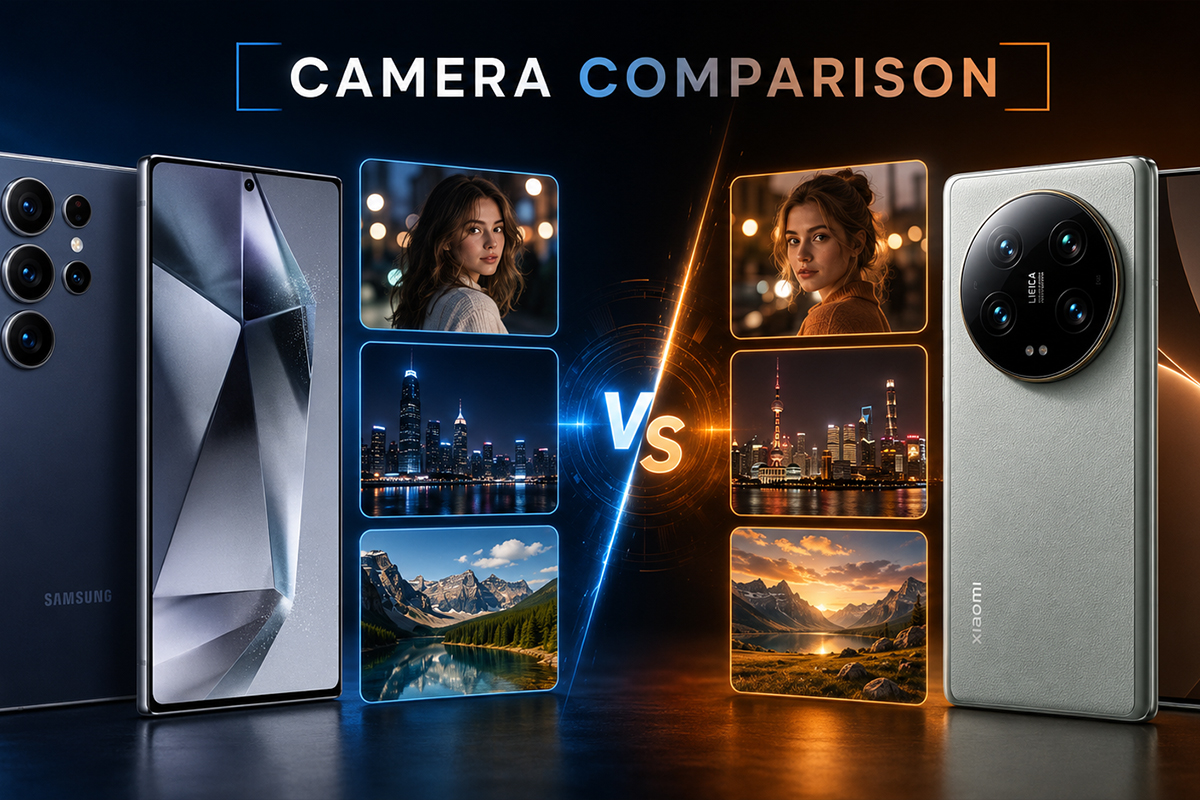
When you compare Xiaomi and Samsung at flagship level, Xiaomi can be the better choice for large-sensor photography, portraits, and manual shooting, while Samsung is generally stronger for video, selfies, lens-to-lens consistency, and straightforward point-and-shoot use. In the mid-range category, Samsung usually provides the more dependable overall camera system, even when Xiaomi advertises a higher megapixel count. Therefore, the answer to is Samsung better than Xiaomi for cameras depends on the user: Samsung is safer for consistent everyday results, while Xiaomi is often more exciting for photography enthusiasts.
Samsung vs Xiaomi Battery Life
Battery performance is one of the clearest differences in the Samsung vs Xiaomi debate. Samsung usually relies on efficient processors, adaptive display settings, and conservative power management to deliver dependable all-day use, while Xiaomi often installs physically larger batteries and supports much faster charging. Recent Xiaomi phones illustrate this strategy clearly: the Xiaomi 17 offers a 6,330mAh battery with 100W wired and 50W wireless charging, while the Xiaomi 17 Ultra supports a 6,000mAh battery, 90W wired charging, and 50W wireless charging. Samsung has improved charging on its latest models, with the Galaxy S26 Ultra reaching up to 75% in around 30 minutes, but Xiaomi still leads overall for battery capacity and charging speed.
| Battery Category | Samsung | Xiaomi | Better Choice |
|---|---|---|---|
| Typical battery capacity | Commonly uses balanced capacities designed around software efficiency and a slimmer build | Frequently includes larger batteries, especially in Redmi and POCO phones | Xiaomi |
| Everyday battery life | Reliable all-day performance with strong standby efficiency and adaptive power management | Often lasts longer under similar use because of higher-capacity batteries | Xiaomi |
| Heavy gaming and streaming | Efficient, but smaller batteries in some models may drain faster during demanding use | Larger batteries are well suited to extended gaming, navigation, and video playback | Xiaomi |
| Wired charging speed | Charging has improved, but Samsung generally remains more conservative | Commonly offers 67W, 90W, 100W, or faster charging on selected models | Xiaomi |
| Wireless charging | Widely supported across premium Galaxy phones with strong accessory compatibility | Fast wireless charging is available on selected Xiaomi flagships but not across the full range | Samsung for availability; Xiaomi for speed |
| Reverse charging | Available on selected flagships for earbuds, watches, and other devices | Offers wired or wireless reverse charging on supported premium models | Tie |
| Battery longevity features | Strong charging protection, adaptive charging, and battery-health controls | Newer models emphasize long-life silicon-carbon batteries and high cycle durability | Tie |
| Budget phone endurance | Commonly offers around 5,000mAh with reliable optimization | Frequently provides 6,000mAh to 7,000mAh batteries at affordable prices | Xiaomi |
| Mid-range charging | Newer Galaxy A models can support up to 45W charging | Redmi models may offer larger batteries and faster charging at similar prices | Xiaomi |
| Best for overnight charging | Conservative speeds and battery-protection tools suit users who charge overnight | Fast charging is convenient, but maximum speed may be unnecessary for overnight use | Samsung |
| Best for quick top-ups | Improved significantly but still slower than many Xiaomi alternatives | Can add several hours of use during a short charging session | Xiaomi |
| Best overall battery experience | Better for predictable efficiency and integrated battery controls | Better for maximum endurance and minimum charging time | Xiaomi |
Samsung’s battery strategy is based more on optimization than headline capacity. A phone such as the Galaxy A56 uses a 5,000mAh battery and supports 45W charging, while Samsung states that it can provide up to 29 hours of video playback. The Galaxy S26 series also introduced faster charging, with the S26 Ultra reaching up to 75% and the S26 or S26+ reaching up to 69% in approximately 30 minutes under Samsung’s test conditions.
Xiaomi is more aggressive about battery size. The Redmi Note 15 Pro 5G includes a 6,580mAh silicon-carbon battery and 45W charging, while the Redmi 15 5G reaches 7,000mAh. Xiaomi also claims that several recent batteries retain at least 80% capacity after 1,600 charging cycles, although actual longevity will depend on temperature, charging habits, and daily use.
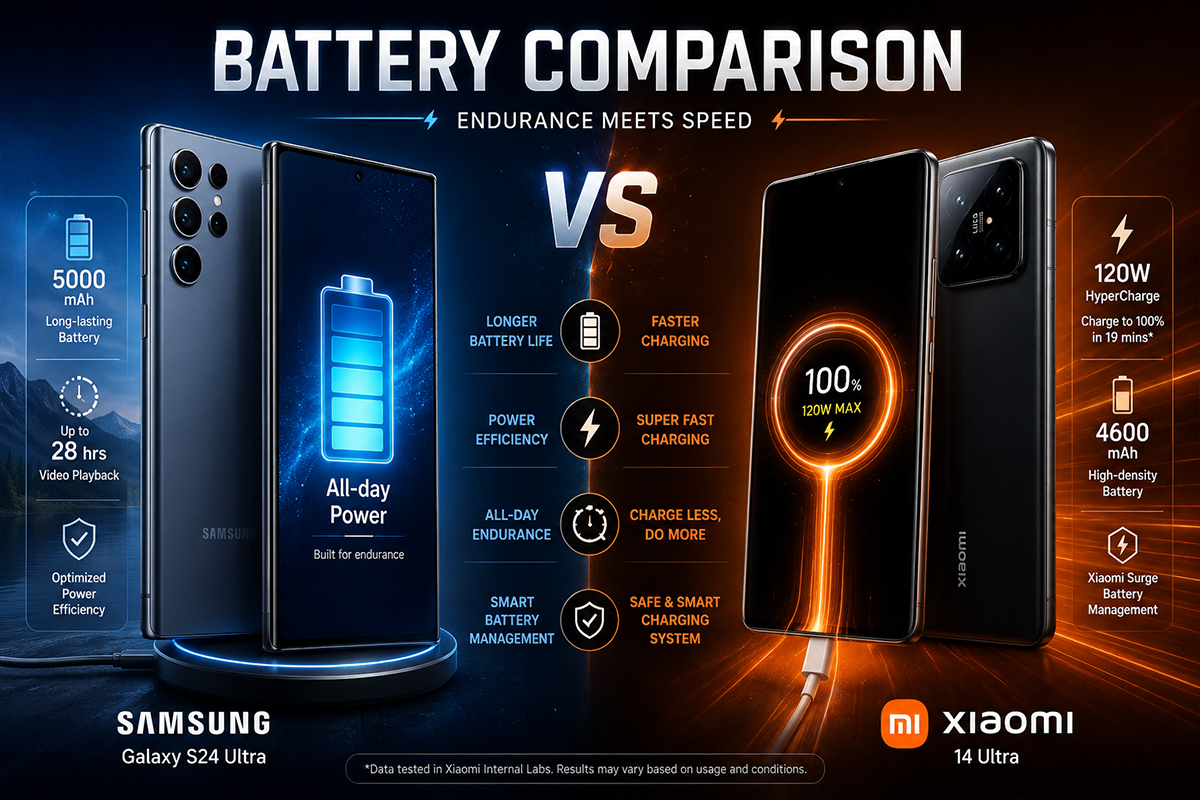
When you compare Xiaomi and Samsung, Xiaomi is usually the better option for users who game for long periods, travel frequently, or need to recharge quickly during the day. Samsung remains attractive for users who prefer controlled power management, dependable standby performance, and broader wireless-charging integration. In this part of the comparison between Xiaomi and Samsung, Xiaomi wins for raw endurance and charging speed, while Samsung provides a more conservative and predictable approach to battery management.
Samsung One UI vs Xiaomi HyperOS
The software experience can be more important than small differences in processor speed, especially if you plan to keep your phone for several years. In the Samsung vs Xiaomi comparison, One UI generally offers the more polished, consistent, and productivity-focused interface, with deep Galaxy AI integration and strong connections to Samsung tablets, watches, earbuds, and computers. HyperOS is fast, highly customizable, and designed to connect Xiaomi phones with tablets, wearables, smart-home devices, and other products, but its features and update experience can vary more between Xiaomi, Redmi, POCO, and regional versions.
| Software Category | Samsung One UI | Xiaomi HyperOS | Better Choice |
|---|---|---|---|
| Overall user experience | Refined, consistent, and designed for easy one-handed use | Fast, visually modern, and highly customizable | Samsung |
| Interface design | Clean layout with mature menus, widgets, navigation, and accessibility tools | More colorful and flexible, with redesigned animations and dynamic interface elements | Depends on preference |
| Ease of use | Generally easier for beginners and users switching from another Android phone | Offers many controls, but settings can feel more complex or fragmented | Samsung |
| Customization | Strong themes, lock-screen tools, widgets, Good Lock modules, and home-screen options | Extensive themes, icons, animations, control-center layouts, and lock-screen customization | Xiaomi |
| Artificial intelligence | Galaxy AI includes photo editing, transcription, translation, writing tools, call assistance, and audio editing | HyperOS includes AI writing, image tools, search, translation, and supported Google Gemini features | Samsung |
| Multitasking | Strong split-screen, floating windows, Samsung DeX, and tablet productivity features | Flexible floating windows and improved split-screen controls on supported devices | Samsung |
| Performance and animations | Smooth and stable, although feature-heavy on less powerful phones | HyperOS 3 emphasizes faster app opening, improved rendering, and smoother system animations | Xiaomi |
| Preinstalled applications | Includes Samsung and Google apps, creating some duplication | Often includes Xiaomi apps and additional third-party software, particularly on cheaper models | Samsung |
| Advertising and promotions | Generally limited within the main system interface | Promotional recommendations may appear on selected Redmi or POCO devices and can often be disabled | Samsung |
| Software updates | Long and relatively predictable support on recent Galaxy flagships and selected mid-range models | Update length varies by phone, region, and product family | Samsung |
| Security and privacy | Strong Knox security, privacy controls, secure folders, and AI-related safeguards | Offers privacy dashboards, security tools, app permissions, and device protection | Samsung |
| Ecosystem integration | Excellent with Galaxy Watch, Buds, tablets, SmartThings, Windows, and Samsung televisions | Strong and expanding integration with Xiaomi tablets, wearables, appliances, cars, and smart-home products | Samsung for maturity; Xiaomi for product variety |
| Desktop experience | Samsung DeX provides a desktop-style interface on supported phones | No equally mature universal alternative across the Xiaomi phone range | Samsung |
| Best for power users | Excellent productivity, multitasking, automation, and advanced system tools | Better for users who prioritize visual customization and detailed interface control | Samsung |
| Best for long-term ownership | More consistent updates, security support, and feature delivery | Suitable for value-focused users, but support should be checked model by model | Samsung |
One UI’s main strength is how well its features work together. Recent versions include tools such as Photo Assist, Call Assist, Transcript Assist, Writing Assist, Now Brief, and Audio Eraser, while Samsung continues to expand Galaxy AI across supported phones and tablets. One UI also offers features such as Secure Folder, Modes and Routines, Good Lock, and Samsung DeX, making it particularly useful for productivity and multitasking.
HyperOS focuses heavily on speed, visual fluidity, customization, and connections across Xiaomi’s wider device ecosystem. HyperOS 3 introduced smoother system animations, improved app responsiveness, better window management, and the Super Island interface for displaying live information and activities.
Samsung vs Xiaomi Security and Privacy
Security is an important factor in the Samsung vs Xiaomi comparison, especially because smartphones now store banking details, passwords, private photos, work files, and personal communications. Both brands use Android security features, biometric authentication, encrypted storage, app-permission controls, and regular security patches. However, Samsung generally offers a more mature and consistent security ecosystem through Samsung Knox, Knox Vault, Secure Folder, and Auto Blocker. Xiaomi provides strong privacy controls through HyperOS, its Security app, permission management, Second Space, and newer encryption technologies, but the exact features and update periods can vary more between Xiaomi, Redmi, and POCO devices.
Samsung Knox provides protection at multiple levels, including hardware, the operating system, applications, and cloud-connected services. On supported Galaxy devices, Knox Vault isolates sensitive information such as passwords, biometric data, and security keys from the main processor and operating system. Secure Folder also creates a separate encrypted space for private apps, photos, documents, and accounts. Samsung’s Auto Blocker can restrict apps from unauthorized sources, block potentially dangerous USB commands, scan applications, and reduce exposure to certain messaging attacks.
Xiaomi’s HyperOS includes a central security and privacy dashboard, app-permission controls, malware scanning, payment protection, hidden applications, private files, and Second Space on supported models. Second Space allows users to create a separate phone environment with different apps, files, accounts, and authentication settings. Xiaomi also states that HyperOS 3 introduces stronger edge-to-cloud data protection and post-quantum encryption for supported communication channels.
Samsung has an advantage in security-update consistency. Recent flagship Galaxy phones and selected mid-range models receive lengthy operating-system and security commitments, while Xiaomi’s support period must be checked for each individual device. Xiaomi states that it provides continuous security updates across Xiaomi, Redmi, and POCO products, but the frequency and total support period can differ significantly by model and region.
Privacy settings are available on both platforms, including controls for camera, microphone, location, contacts, advertising identifiers, and background access. Samsung gathers these settings into One UI’s Security and Privacy dashboard and also allows users to manage app permissions and personalized advertising. Xiaomi provides similar controls and publishes detailed privacy policies explaining the information collected by Xiaomi services. Users who want maximum privacy should review optional cloud synchronization, personalized recommendations, diagnostic-data sharing, advertising settings, and permissions on either platform.
For business users, Samsung is generally the stronger choice because Knox is widely integrated into enterprise device management, secure work profiles, remote administration, and organizational security policies. Samsung’s longer and more predictable support also makes Galaxy phones easier to recommend for companies managing devices over several years. Xiaomi remains suitable for personal users who want strong Android security at a competitive price, but businesses should confirm update policies and enterprise-management support for the exact model.
Overall, Samsung wins this part of the comparison between Xiaomi and Samsung because its security tools are more mature, more clearly integrated, and more consistent across supported devices. Xiaomi still provides capable privacy controls, encrypted services, malware scanning, and separate user spaces, especially on newer HyperOS phones. For users asking is Samsung better than Xiaomi for security and privacy, Samsung is generally the safer long-term choice, while Xiaomi remains a reasonable option when the device receives regular updates and its privacy settings are configured carefully.
Samsung vs Xiaomi Price Comparison
Price is often the deciding factor in a Samsung vs Xiaomi comparison. Xiaomi usually offers more RAM, storage, battery capacity, charging speed, and processing power at a given price, particularly through its Redmi and POCO ranges. Samsung phones tend to cost more because the price also reflects longer software support, broader after-sales service, stronger resale value, camera consistency, and deeper ecosystem integration. However, Samsung frequently runs trade-in promotions and discounts, so its real selling prices can be more competitive than the launch prices suggest.
Samsung covers a broad price range, from affordable Galaxy A models to premium foldable phones. Its March 2026 United States MSRP list placed selected Galaxy A phones from roughly $170 to $550, the Galaxy Z Flip7 FE from about $900, the Galaxy Z Flip7 from about $1,100, and the Galaxy Z Fold7 from about $2,000 before promotions. These prices illustrate how Samsung charges more as buyers move toward its flagship and foldable categories.
Xiaomi’s pricing is more region-dependent because not every Xiaomi, Redmi, or POCO model receives a full global release. Its portfolio nevertheless spans very affordable Redmi phones, value-focused Redmi Note devices, performance-oriented POCO models, and premium Xiaomi flagships. For example, the Redmi Note 15 launched in the United Kingdom with a listed price of £179 for the 6GB and 128GB version, alongside a lower introductory price during its first-sale period.
Buyers looking beyond Samsung and Xiaomi may also compare premium alternatives such as the HONOR Magic V6, especially in markets like the UAE.
The biggest pricing advantage for Xiaomi usually appears below the premium flagship category. Redmi and POCO phones commonly offer high-refresh displays, larger batteries, faster charging, more memory, and stronger processors than similarly priced Galaxy A models. Samsung may look weaker when specifications are compared line by line, but its phones can justify the higher price through longer support, more consistent cameras, stronger water resistance on selected mid-range devices, and easier access to repairs.
At the flagship level, the gap becomes smaller. Both brands offer expensive phones with premium displays, advanced cameras, powerful processors, and artificial-intelligence features. Xiaomi may still provide faster charging or more generous storage, while Samsung usually offers stronger resale value, longer software support, and more attractive trade-in campaigns. Samsung’s official store also regularly applies promotional discounts to current Galaxy devices, meaning buyers should compare the final checkout price rather than rely only on the original MSRP.
When you compare Xiaomi and Samsung based only on the initial purchase price, Xiaomi is usually the winner. It is particularly strong for budget buyers, mobile gamers, and users who want the highest specifications possible without entering premium price categories. However, Samsung may provide better long-term value for users who keep their phones for several years, rely on official service centers, or plan to resell or trade in the device later.
Therefore, the answer to is Samsung better than Xiaomi for price depends on how value is measured. Xiaomi generally costs less for equivalent hardware, while Samsung’s higher price can include better long-term support, resale value, camera consistency, and after-sales service. In the overall comparison between Xiaomi and Samsung, Xiaomi wins for upfront value, but Samsung can be the more economical choice across a longer ownership period.
Frequently Asked Questions
- Is Samsung Better Than Xiaomi?
Samsung is generally better for software support, camera consistency, security, resale value, and long-term ownership. Xiaomi is often better for specifications, charging speed, and affordability.
- Is Xiaomi Better Value Than Samsung?
Yes, Xiaomi usually offers more RAM, storage, processing power, and faster charging at a lower price. Samsung may provide better long-term value through longer updates and stronger resale value.
- Is Samsung Better Than Xiaomi?
Samsung is the safer choice for users who prioritize a polished experience, dependable cameras, regular updates, and ecosystem integration. Xiaomi is better for buyers seeking maximum hardware for their budget.
- Which Brand Has Better Battery Life?
Xiaomi generally offers better battery life because many of its phones use larger-capacity batteries. Actual endurance still depends on the processor, display, software, and individual model.
- Which Brand Offers Faster Charging?
Xiaomi offers significantly faster wired charging across most price categories. Samsung uses more conservative charging speeds but provides strong battery-protection features.
- Is Samsung or Xiaomi Better for Gaming?
Xiaomi is usually better for gaming value because Redmi and POCO phones often provide stronger processors, larger batteries, and better cooling at lower prices. Samsung remains excellent for premium gaming and a more polished overall experience.