
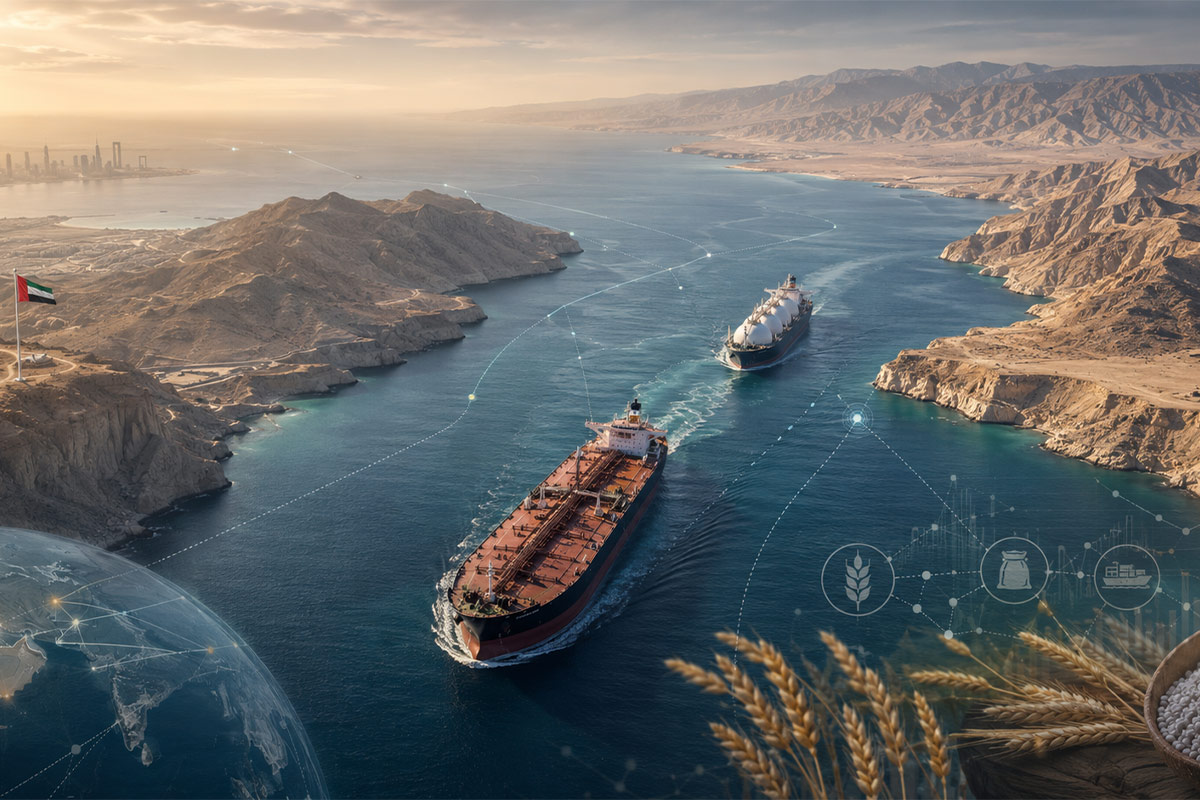
The UAE has warned that continued disruption around the Strait of Hormuz could have serious consequences far beyond the Gulf, putting pressure on energy flows, transport costs and global food security. Speaking at the United Nations General Assembly’s Informal Interactive Dialogue on Commodity Markets in New York, Sarah Al Awadhi, First Secretary at the Permanent Mission of the UAE to the United Nations, highlighted the importance of keeping one of the world’s most strategic waterways secure and open.
Her remarks focused on the wider economic impact of tensions involving Iran and the Strait of Hormuz, which is a major route for energy shipments and agricultural inputs used in food production.
UAE Says Maritime Disruption Is Raising Global Costs
Al Awadhi said threats and actions affecting navigation through the Strait have already created economic consequences for international markets. According to the UAE representative, restrictions on maritime movement have contributed to higher transport and insurance costs, increased pressure on supply chains and greater volatility in commodity prices.
The Strait of Hormuz is central to global trade because it carries major volumes of oil, liquefied natural gas and fertilisers. The United Nations Conference on Trade and Development has previously said the waterway handles around one quarter of global seaborne oil trade and roughly one third of global seaborne fertiliser trade.
Fertiliser Prices Add to Food Security Concerns
The UAE statement placed particular attention on the impact of the disruption on fertiliser markets. Al Awadhi said nitrogen fertiliser prices have climbed by as much as 80 per cent amid tensions linked to the Strait. Higher fertiliser prices can increase farming costs, reduce affordability for producers and eventually place upward pressure on food prices.
This issue is particularly concerning for countries already facing food insecurity or limited financial capacity to absorb new price shocks. International food and trade organisations have warned that prolonged disruption in Hormuz could affect fertiliser access, agricultural production and vulnerable economies.
Hormuz Remains Crucial for Energy Markets
The Strait of Hormuz is not only important for agriculture. It is also one of the world’s most critical energy corridors. Any major interruption to maritime traffic through the waterway can affect oil and gas shipments, shipping insurance, delivery schedules and energy prices in importing countries.
Recent regional developments have already increased concern over the reliability of supply routes through the Gulf. Reuters reported that disruptions in the Strait have affected trade and energy markets, while UAE officials have warned that full oil flows may not recover quickly even if regional tensions ease.
UAE Calls for Freedom of Navigation
In her address, Al Awadhi stressed that international waterways supporting the global economy should not be controlled or disrupted by a single state. The UAE called for stronger protection of maritime security, freedom of navigation and stable supply chains in accordance with international law and relevant United Nations Security Council resolutions.
Her remarks also emphasised that predictable shipping routes are essential not only for energy-producing countries, but for consumers, farmers, manufacturers and economies worldwide.
Developing Countries Face Greater Exposure
The UAE also highlighted the need for more international cooperation to support developing economies affected by rising commodity prices. Countries that rely heavily on imported fuel, fertilisers or food may be especially vulnerable when shipping costs rise or supplies become less reliable. Increased fertiliser and energy costs can affect agricultural output, food affordability and economic stability.
For these countries, market disruption in the Strait of Hormuz is not simply a regional security matter. It can quickly become a direct challenge to household budgets, farming activity and access to essential goods.
A Wider Global Supply Chain Risk
The warning from the UAE comes as governments and international organisations continue to assess the economic impact of instability around one of the world’s most important maritime routes. While the Strait is often discussed in relation to oil and gas, the UAE’s statement underlined its broader role in transporting materials needed for global food production.
With fertiliser markets already under strain and transport costs rising, Al Awadhi said international cooperation will be necessary to limit price shocks, protect maritime trade and build more resilient global supply chains.