
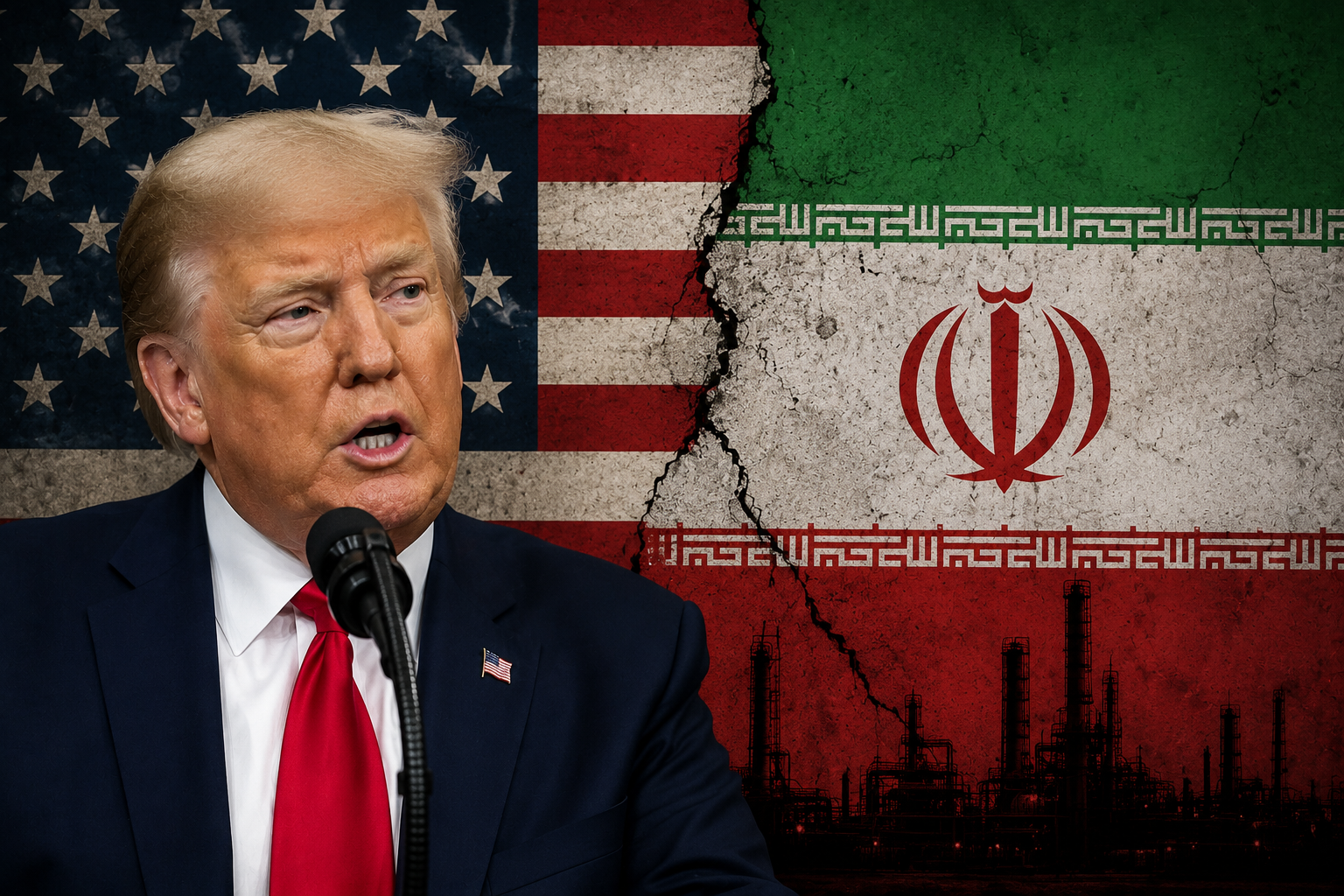
The Trump-Iran deal remains out of reach after President Donald Trump said on August 21 that Tehran wants an agreement but is “not ready to make the right deal.” His remarks come as Washington prepares to increase economic pressure on Iran while Tehran rejects the US position.
- Trump says Iran wants an agreement but is “not ready to make the right deal.”
- The Trump administration is preparing what officials call the “most crushing economic operation ever taken against any country,” with details due from Treasury Secretary Scott Bessent on Monday, August 24.
- Iranian officials, including Deputy Foreign Minister Kazem Gharibabadi and Foreign Minister Abbas Araghchi, have rejected Trump’s claims and warned of “devastating” retaliation against new sanctions.
- Brent crude rose to $93.78 a barrel and WTI to $86.64 after Bessent’s sanctions announcement, as the Strait of Hormuz remains a flashpoint.
Speaking to reporters at Joint Base Andrews on Friday, Trump said Iran wants to reach an agreement with Washington but has not accepted the terms the US is seeking. “So they would love to make a deal, but they’re not ready to make the right deal, in my opinion,” he said. He argued that Iran was under severe strain, saying the country had “no money,” “no navy,” “no air force,” was struggling to pay its soldiers and police, and was facing 350% inflation, according to a transcript of his remarks reported by multiple outlets.
The comments come as the war the US and Israel launched against Iran on February 28, 2026, drags toward six months old, following the collapse of a ceasefire and an interim memorandum of understanding between Washington and Tehran. [NEEDS VERIFICATION: exact date the MOU collapsed and the specific terms it contained]
Why the Trump Iran Deal Is Still Out of Reach
Trump’s position is that Iran wants relief from the pressure campaign but won’t meet Washington’s conditions for a “right deal.” He has repeatedly pointed to Iran’s economic state as evidence Tehran will eventually come around, and has said the US has “total control” of the region around the Strait of Hormuz. Iran has firmly disputed that framing: Deputy Foreign Minister Gharibabadi said Trump’s claims would be “corrected … either by circumstances or by Iran,” while Mohsen Rezaei, head of Iran’s Supreme National Security Council, said there’s “a wide gap” between Washington’s actual ability to reopen the Strait and its claim to control it.
US Increases Economic Pressure on Iran
New US Pressure on Iran
On Wednesday, Trump announced on Truth Social what he called “the most crushing economic operation ever taken against any country,” describing it as “economic warfare and isolation on an unprecedented scale.” Treasury Secretary Scott Bessent has said he will lay out the details at a press conference on Monday, August 24, and has described the plan as the “largest coordinated economic isolation in world history.” Bessent told CNBC the strategy is “a one-two punch” combining the naval blockade with what he called the “toughest sanctions in history,” aimed at ending Iran’s ability to pay its military and reducing its capacity to fund proxy groups in the region.
Bessent also warned countries that continue trading with Iran — through money transfers, oil purchases, or ship-to-ship transfers — that they will face the “full might and force” of the US Treasury. He singled out China, which he said has historically bought around 90% of Iran’s exported oil, though he declined to say directly whether Beijing itself would be targeted. China’s Ministry of Foreign Affairs called for negotiations rather than sanctions.
Impact of Economic Pressure on Iran
Iran has dismissed the threat as “economic terrorism” and argued that decades of sanctions have already failed to change its policies. Foreign Minister Araghchi called Trump’s plan a “diversion from America’s own crisis” of debt and rising interest costs. Senior Iranian officials have warned that further US pressure would be met with “crushing, punishing, and devastating responses,” though what form that would take has not been specified. [NEEDS VERIFICATION: any concrete Iranian retaliatory steps taken so far in response to the sanctions announcement, beyond statements]
What Does Trump Want From Iran?
Iran’s Nuclear Program
The war originated over Iran’s nuclear program, which US and Israeli strikes targeted extensively in 2025 and again after the February 2026 escalation. [NEEDS VERIFICATION: current assessed state of Iran’s nuclear program as of August 2026 — official statements on this have varied and conflict with independent assessments]
Regional Security and Iran’s Influence
Trump has tied economic pressure to reducing Iran’s ability to project power through allied armed groups across the region, arguing that cutting off funding limits Tehran’s regional reach.
Trump’s Demands for a New Agreement
Trump has not laid out a detailed public list of terms for a “right deal.” Iran, for its part, has said in past statements that normal shipping through Hormuz won’t resume until the US lifts its blockade of Iranian ports and oil sanctions, releases frozen Iranian assets, and ends military operations — conditions tied to an interim agreement reached earlier this year that has since broken down.
Iran’s Response to Trump’s Position
Beyond Araghchi and Gharibabadi’s public rejections, Iran’s Foreign Ministry spokesperson Esmaeil Baqaei responded to earlier Trump remarks about Hormuz with a literary quote rather than a direct denial, and senior figures including parliament speaker Mohammad Bagher Ghalibaf have continued to publicly reject US pressure. Iranian officials have also pointed to a reported understanding with Oman on a transit arrangement for the Strait as evidence Tehran, not Washington, controls access to the waterway. [NEEDS VERIFICATION: current operational status of the Oman transit arrangement]
Could the US and Iran Return to Negotiations?
Trump’s own team has reportedly been told to hold off engaging until Tehran shows it is ready to negotiate. According to a source described as familiar with the matter, “President Trump has decided to wait and asked his team to not engage until Iran is ready to make a deal,” even though there had been what the source called “positive discussions.” That suggests indirect channels remain open even as public rhetoric hardens. [NEEDS VERIFICATION: identity/credibility of the source describing the “positive discussions”]
How the Iran-US Dispute Could Affect the Region
Impact on Oil Prices
Oil prices climbed after Bessent’s sanctions comments, with Brent crude up 2.4% to $93.78 a barrel and US WTI futures up 2.7% to $86.64, reflecting market concern that a tougher sanctions regime could further disrupt supply out of the Gulf.
Impact on the Strait of Hormuz
Before the war, the Strait of Hormuz carried roughly a fifth of global oil and LNG supply. Disruptions have continued for nearly six months as Iran has maintained enough missile and drone capability to threaten tanker traffic, even as Trump insists shipping volumes remain largely unaffected.
Impact on Middle East Security
The dispute sits inside a wider set of regional flashpoints the US and its allies are managing simultaneously, from Gaza to shifting military deployments across the region. The UAE, for its part, has had to navigate the fallout of the conflict directly as a neighbouring Gulf state with deep economic and diplomatic ties to Iran.
What Happens Next Between Trump and Iran?
The immediate marker to watch is Bessent’s press conference on Monday, August 24, when the administration is expected to detail the new sanctions package. [NEEDS VERIFICATION: any Iranian officials’ scheduled public response or countermeasures timed to that date] Beyond that, the trajectory depends on whether the added economic pressure pushes Tehran back toward the terms Washington wants, or whether it hardens Iran’s position further, as some Iranian officials have suggested it will.
Why does Trump say Iran is not ready for a deal?
Trump says Iran wants an agreement with the US but has not accepted the terms Washington is asking for, calling it “not … the right deal.”
What does Trump want from Iran?
Trump has not detailed specific public terms, but his administration has tied continued pressure to Iran’s nuclear program and its support for allied armed groups across the region.
Is the US planning new pressure on Iran?
Yes. Treasury Secretary Scott Bessent is set to announce a new sanctions package on August 24, described by officials as the toughest ever imposed on a single country.
Could Trump and Iran return to negotiations?
A source familiar with the matter says Trump has told his team to hold off engaging until Iran signals it is ready to negotiate, suggesting indirect contact continues despite the public standoff.
How could Iran-US tensions affect oil prices?
Oil prices have already risen on the sanctions announcement, with Brent crude near $94 a barrel, as markets weigh further disruption to Gulf shipping.
What could happen next between the US and Iran?
The next major marker is Bessent’s Monday press conference; after that, either renewed economic pressure pushes Iran toward US terms, or the standoff continues to escalate.