
The United States has warned that it remains ready to resume military action against Iran if diplomacy fails, as efforts to reach an initial peace agreement continue to face major obstacles.
The warning came after President Donald Trump said any deal with Tehran must meet Washington’s key conditions, including a clear commitment that Iran will never be able to develop nuclear weapons.
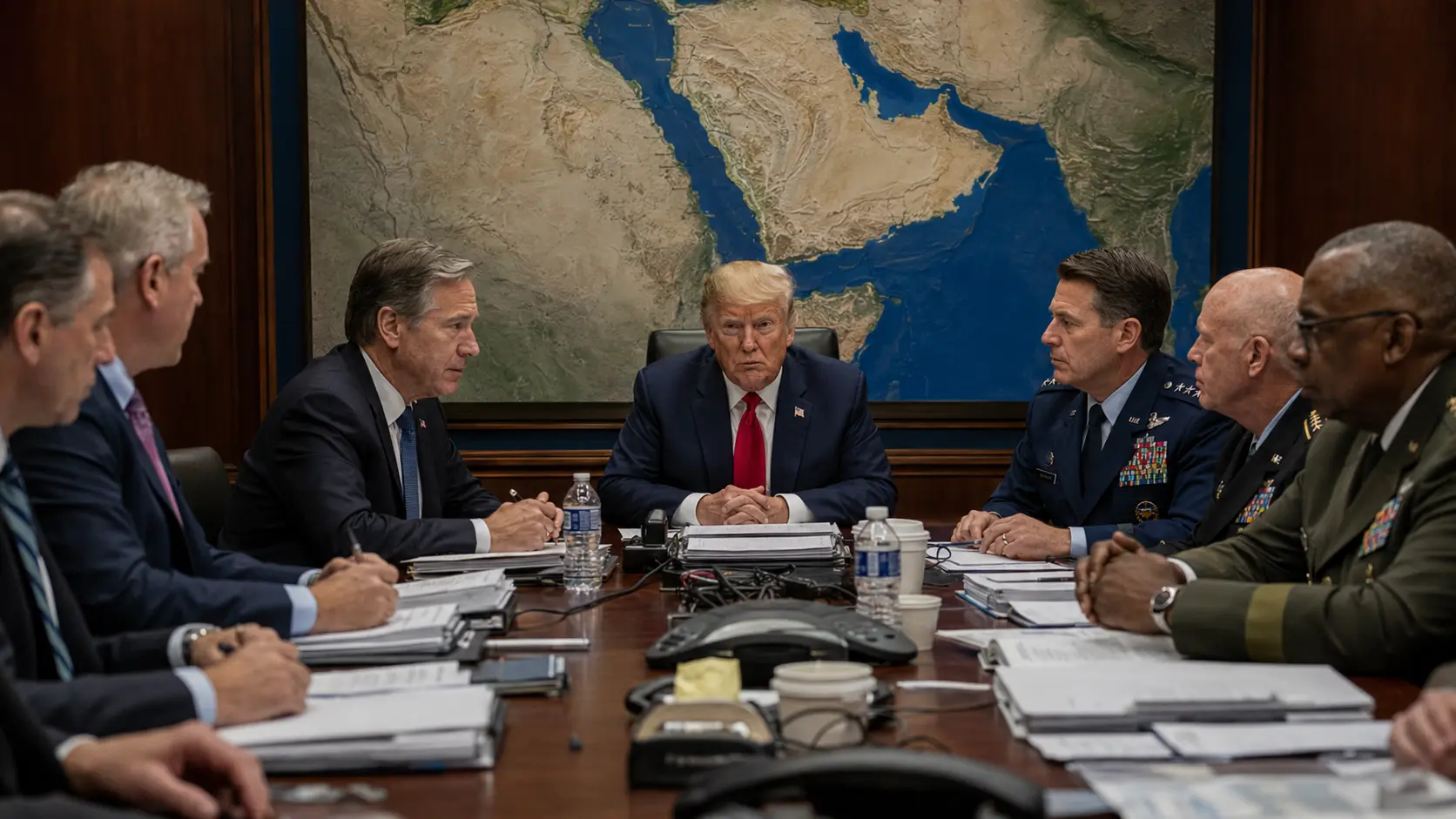
The White House had earlier suggested that Trump was close to deciding whether to approve an initial agreement after weeks of difficult negotiations. However, no final decision was made following a two-hour meeting in the White House Situation Room. A White House official said Trump would only support an agreement that served US interests and met his red lines. “Iran can never possess a nuclear weapon,” the official said.
Washington Signals Military Option Remains Open
Speaking at a major defence summit in Singapore, Pentagon chief Pete Hegseth said the United States remained fully capable of restarting military operations if needed.He said US forces had the ability and resources to resume action, pointing to American stockpiles and military readiness both in the region and globally.
The comments echoed a similar message from US Central Command, which said American forces remained present and vigilant across the Middle East.The warning adds pressure to ongoing negotiations, which have been mediated by Pakistan and complicated by recent military exchanges. US strikes on the southern Iranian port of Bandar Abbas were followed by retaliatory fire from Iran, raising doubts over whether the fragile diplomatic process can hold.
Competing Conditions Delay Agreement
The negotiations appear to be stuck between competing demands from Washington and Tehran. Trump has said his priorities include Iran abandoning any path toward nuclear weapons and the reopening of the Strait of Hormuz, a key maritime route for global energy trade.
In a social media post, he said Iran would remove mines from the strait and end its closure of the waterway without imposing tolls. In return, the United States would lift its parallel blockade of Iranian ports.
Trump also said both sides would coordinate on removing and destroying Iran’s enriched uranium, while adding that no money would be exchanged “until further notice.”
Iran has pushed back against the tone of Washington’s conditions. Foreign ministry spokesman Esmaeil Baghaei said the Islamic Republic had rejected the language of “must” since its 1979 revolution.
He confirmed that messages were still being exchanged between the sides, but said no final agreement had been reached. Iranian President Masoud Pezeshkian also spoke with the Emir of Qatar, saying Tehran was ready to pursue a “dignified framework” to end the war.
Disputes Over Frozen Assets and Hormuz
Iranian media has reported that Tehran wants the immediate release of $12 billion in frozen Iranian assets before moving to the next phase of talks. Reports also suggested that Iran disputes Trump’s description of the proposed deal, including claims about toll-free reopening of the Strait of Hormuz and the destruction of Iranian nuclear material.
These disagreements show how fragile the process remains. Both sides appear to be presenting the talks in ways that protect their domestic political positions, making it difficult to assess how close they really are to an agreement.
Fighting Continues in Lebanon
The diplomatic process is further complicated by the war’s other major front in Lebanon. Israeli Prime Minister Benjamin Netanyahu said Israeli forces had advanced beyond a river located around 30 kilometres north of the Lebanon-Israel frontier. Hezbollah, meanwhile, said it had launched attacks on northern Israel and on Israeli troops attempting to advance near the Beaufort fortress, also known as Qalaat al-Chakif.
A ceasefire between Israel and Hezbollah was supposed to begin on April 17, but it has not been fully observed, with both sides accusing each other of violations.
Lebanon was pulled deeper into the conflict in early March after Hezbollah launched rockets at Israel following the killing of Iran’s supreme leader in US-Israeli attacks. Israel responded with strikes and a ground invasion.
Direct talks between Israel and Lebanon began in April, and another round is expected in Washington next week after military delegations from both sides met at the Pentagon.
Final Outlook
The coming days may determine whether diplomacy can produce a first-stage agreement or whether the region moves closer to renewed war. Washington is making clear that military pressure remains on the table. Tehran is insisting that no final deal has been reached and is resisting conditions it views as one-sided.
With disputes over nuclear material, frozen assets, the Strait of Hormuz and the conflict in Lebanon still unresolved, any agreement remains uncertain. For now, the US and Iran are still negotiating, but the risk of renewed escalation remains high.