
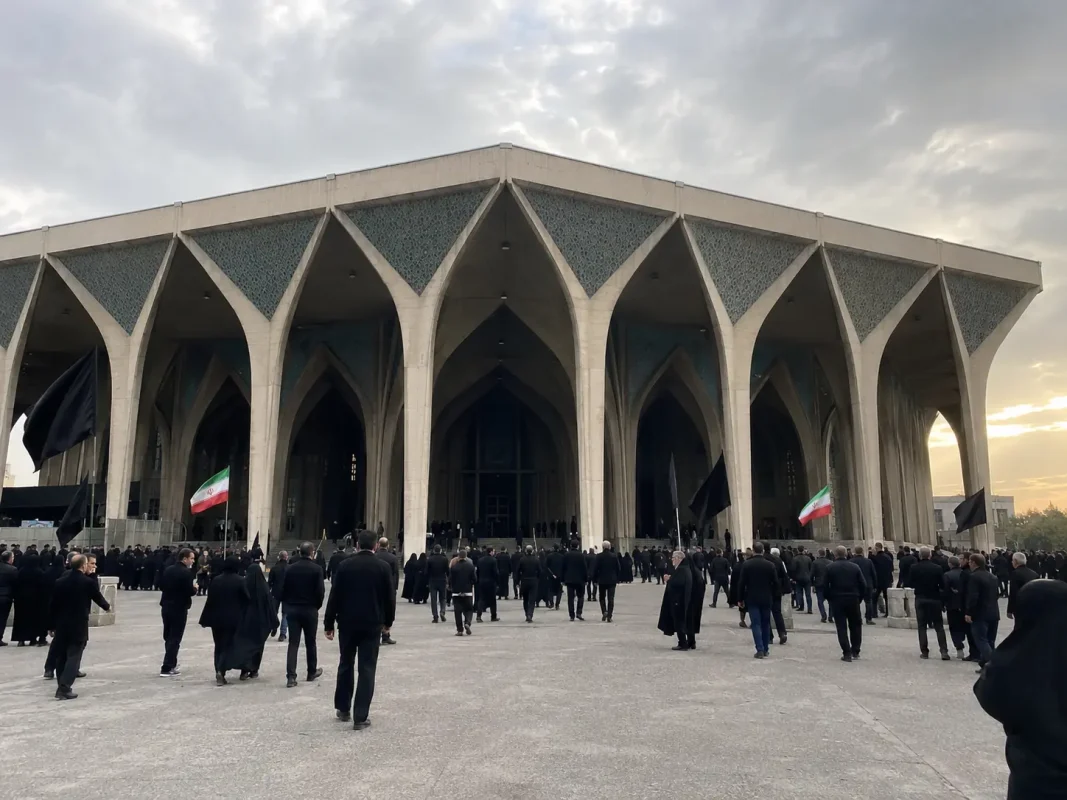
Iran has begun one of the most politically significant funerals in its modern history, as the country holds dayslong ceremonies for late Supreme Leader Ayatollah Ali Khamenei. The funeral is being staged across several symbolic religious and political locations, beginning in Tehran and ending with burial in Mashhad, the northeastern city where Khamenei was born.
The ceremonies come months after Khamenei was killed on February 28, 2026, during the first day of the US-Israel war on Iran. His funeral had initially been delayed as the conflict continued, but Iranian authorities are now using the event as a major national display of mourning, unity and political defiance.
Where Is Iran’s Leader Being Buried?
Ayatollah Ali Khamenei is expected to be buried at the Imam Reza shrine in Mashhad, one of the holiest Shia Muslim sites in Iran. The shrine is visited by millions of pilgrims every year and has long carried deep religious and political symbolism in the country.
Mashhad is also Khamenei’s birthplace, making the burial location both personal and symbolic. The final burial ceremony is scheduled to take place after several days of public processions in Tehran, Qom and Iraq’s Shia holy cities.
Funeral Route and Main Ceremony Locations
The funeral began in Tehran, where Khamenei’s body was placed at the Imam Khomeini Grand Mosalla, one of the country’s largest prayer complexes. Public farewell ceremonies are being held there before the procession moves through other major religious centers. The planned route includes Tehran, Qom, Najaf, Karbala and Mashhad. According to reports, the body will first remain in Tehran for public mourning, then move south to Qom, before being taken to Iraq for ceremonies in Najaf and Karbala. It will then return to Iran for the final burial in Mashhad.
This route is designed to connect the funeral with the core geography of Shia political and religious identity: Tehran as the seat of state power, Qom as Iran’s clerical center, Najaf and Karbala as sacred Shia cities in Iraq, and Mashhad as the final burial site.
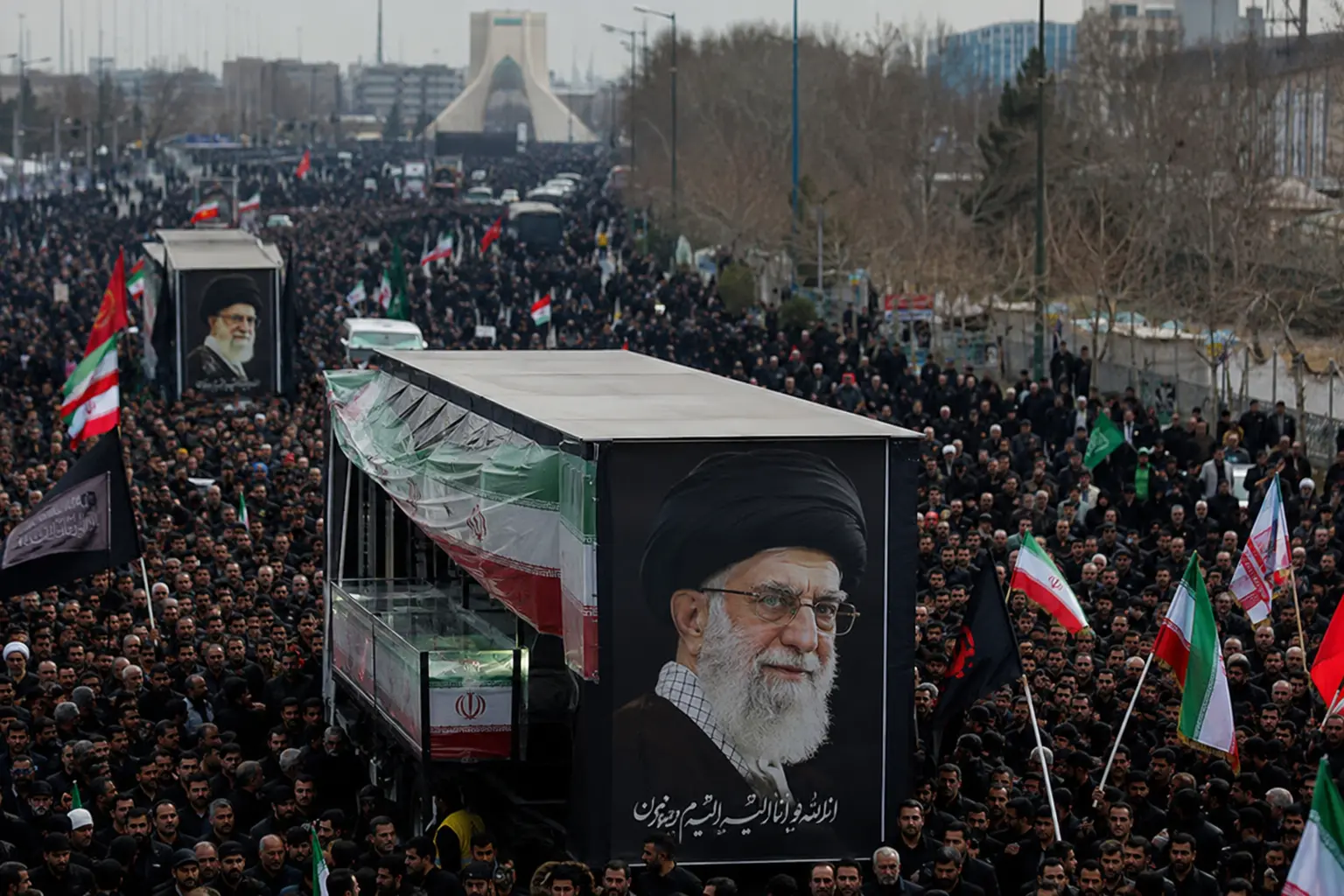
Which Countries Are Attending Iran’s Leader Funeral?
Iranian officials and state-linked media have said representatives from more than 90 to 100 countries are expected to attend the funeral ceremonies. However, the full official list of countries has not yet been publicly confirmed.
Based on currently reported confirmations, the countries and delegations include:
- Pakistan: Prime Minister Shehbaz Sharif is expected to attend, alongside senior Pakistani officials including army chief Field Marshal Asim Munir and Interior Minister Mohsin Naqvi.
- Tajikistan: President Emomali Rahmon is listed among the foreign leaders attending the ceremony.
- Armenia: Prime Minister Nikol Pashinyan is expected to represent Armenia at the commemoration.
- Georgia: President Mikheil Kavelashvili has also been reported among the foreign officials attending.
- Turkey: Vice President Cevdet Yilmaz is expected to attend on behalf of Ankara.
- India: India is sending Bihar Governor Syed Ata Hasnain and Deputy Foreign Minister Pabitra Margherita to represent the country.
- China: Senior Chinese lawmaker He Wei, vice chairman of the Standing Committee of the National People’s Congress, is attending the funeral.
- Russia: Dmitry Medvedev, deputy chairman of Russia’s Security Council and former president and prime minister, is expected to attend.
- Afghanistan: The Taliban government’s Foreign Minister Amir Khan Muttaqi has travelled to Tehran, while Afghan media also reported the attendance of Abdul Ghani Baradar.
- Bangladesh: Parliament Speaker Hafiz Uddin Ahmed is scheduled to attend, according to reports cited by Al Jazeera.
Public Holidays This Week in Iran
Iran has announced public holidays connected to the funeral ceremonies. Tehran province is expected to observe three days off from July 4 to July 6, covering the public farewell ceremonies and funeral events at the Grand Mosalla. July 6 has also been reported as a nationwide public holiday for the funeral.
Reports also indicate that Qom and Mashhad will observe local public holidays as the procession reaches those cities, with Qom hosting tribute ceremonies and Mashhad preparing for the final burial.
The holiday schedule reflects the scale of the event and the government’s effort to enable mass participation in ceremonies across multiple cities.
Why This Funeral Matters Politically
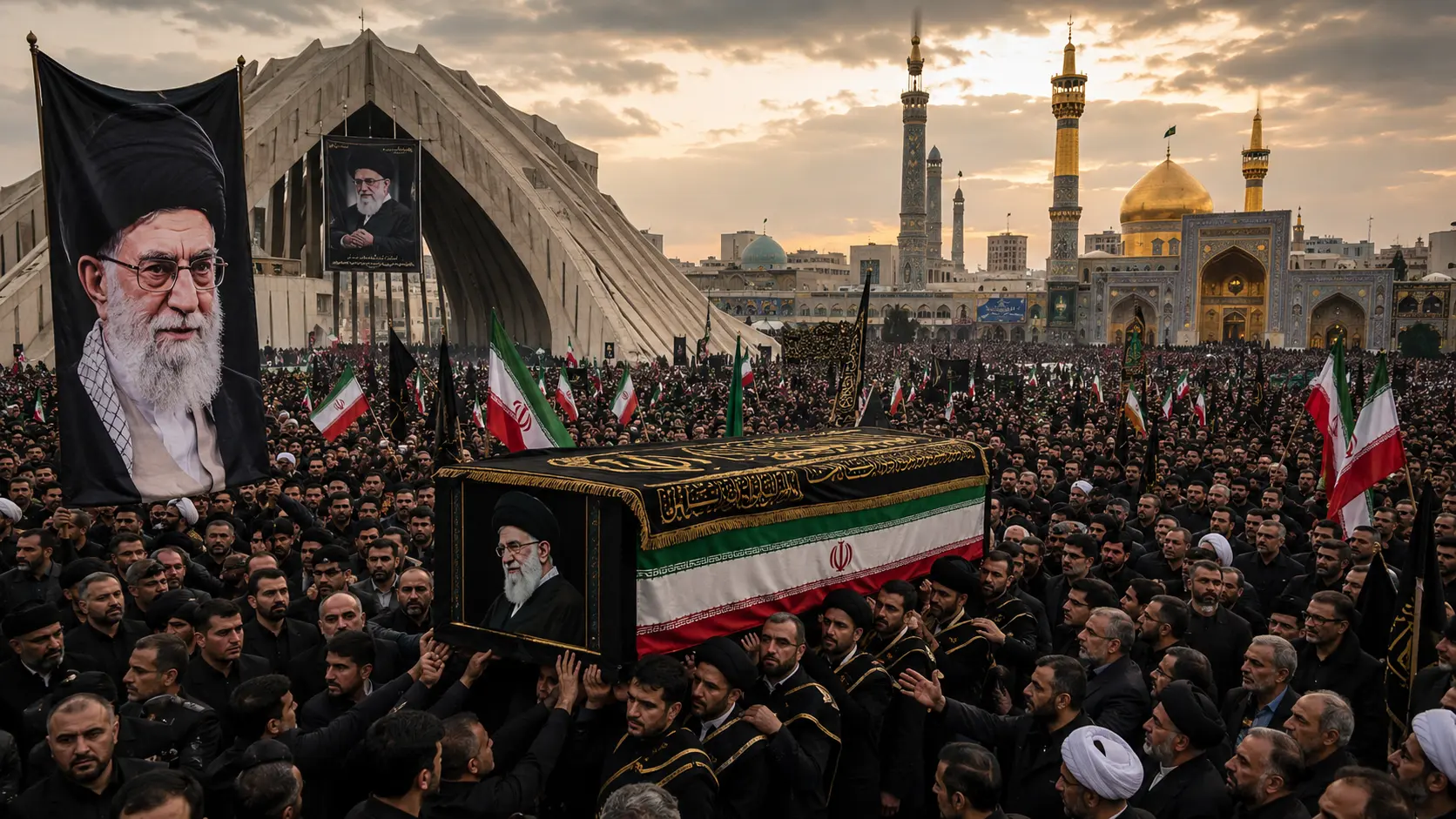
Khamenei’s funeral is not only a religious and national mourning event. It is also a major political moment for the Islamic Republic. Reuters reported that Iranian authorities are seeking to mobilize millions of people, presenting the turnout as a symbolic referendum on the system and its resilience after war.
The funeral also comes at a time of internal pressure. The event is also being closely watched across the region, as Iran’s political future could influence UAE and Iran relations and broader diplomatic developments in the Gulf. Iran has faced public anger over economic hardship, sanctions and political repression, while the war has intensified uncertainty around the country’s leadership and future direction. For the government, the funeral is a chance to project unity. For observers, it is also a test of how much public support the state can still mobilize after one of the most turbulent periods in the Islamic Republic’s history.
Final Burial in Mashhad
The final stage of the funeral is expected to take place in Mashhad, where Khamenei will be buried at the Imam Reza shrine. The burial will close a week of ceremonies that began in Tehran and extended across Iran and Iraq.
With foreign delegations, public holidays, mass processions and religious symbolism, the Iran leader funeral has become more than a state burial. It is a carefully staged national moment, designed to mark the end of Khamenei’s decades-long rule while shaping the political narrative of what comes next.