
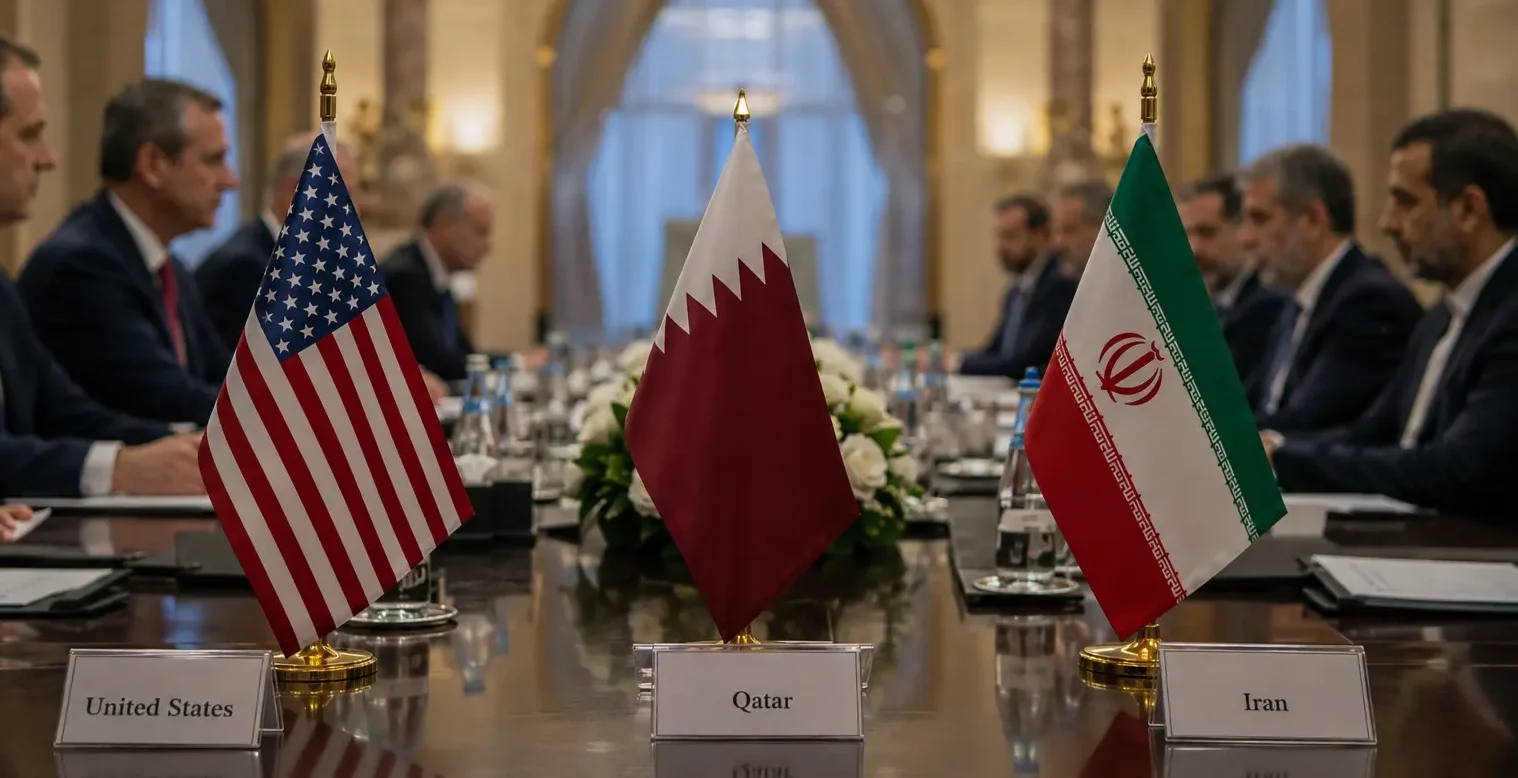
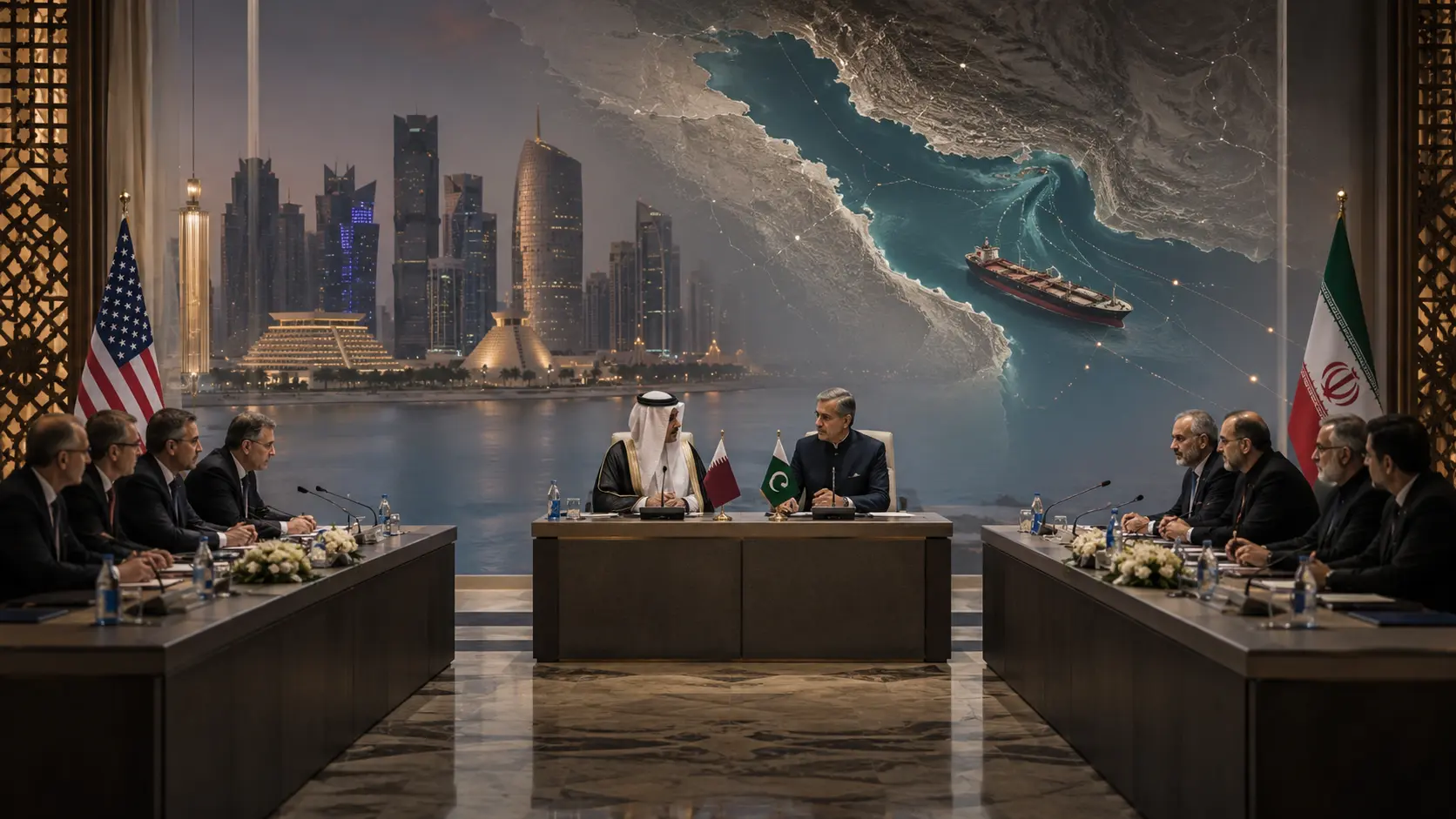
US Iran talks in Doha are expected to continue on Wednesday through indirect lower-level technical discussions, as mediators try to build on a fragile ceasefire and move both sides toward a permanent agreement to end the Middle East war. The talks follow earlier regional efforts in which Qatar said US-Iran negotiations could resume, highlighting Doha’s continuing role as a diplomatic mediator. A diplomat with knowledge of the talks said US and Iranian officials would not meet directly. Instead, technical teams are expected to hold indirect discussions with Qatari and Pakistani mediators on the memorandum of understanding and unresolved details of the ceasefire framework.
The talks come two weeks after Washington and Tehran signed an interim truce, but several key issues remain unsettled. These include the reopening and management of the Strait of Hormuz, the release of restricted Iranian assets and the path toward a longer-term peace deal.
US Envoys Not Expected to Join Technical Talks
US envoys Jared Kushner and Steve Witkoff arrived in Doha on Tuesday for high-level discussions with Qatari officials, including Prime Minister Sheikh Mohammed bin Abdulrahman Al Thani. However, a diplomat said Kushner and Witkoff would not participate in Wednesday’s technical talks with mediators. Their visit appears to be focused on consultations with Qatar, rather than direct negotiations with Iranian officials.
Iran has also rejected the idea of direct meetings with top US envoys at this stage. Iranian officials have said that the terms of the ceasefire must be clarified before the two sides can move to more difficult topics, including any future restrictions linked to Iran’s nuclear programme.
Iran Says Talks Will Be With Mediators
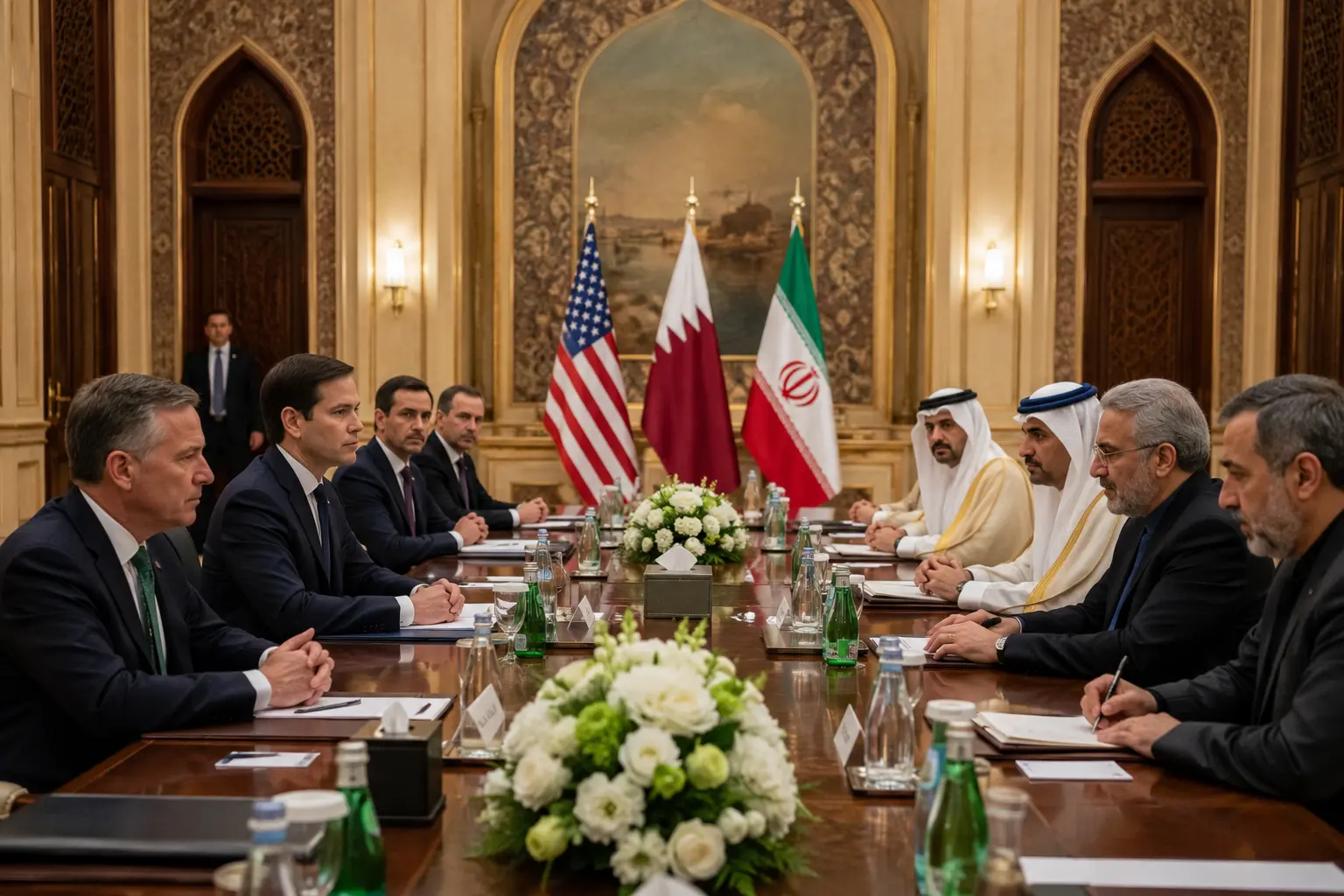
Iran confirmed that a delegation would travel to Doha but disputed claims that direct talks with the United States would take place. Foreign ministry spokesman Esmaeil Baghaei said Iran’s delegation would be led by Deputy Foreign Minister Kazem Gharibabadi and would first meet with mediators on Wednesday.
According to Iranian officials, one of the issues on the table is a provision related to the release of Iran’s restricted assets. This financial issue appears to be part of the wider ceasefire framework and could become a key point in negotiations. The use of indirect talks shows how sensitive the process remains. Both sides appear willing to keep diplomacy alive, but the gap between them remains significant.
Strait of Hormuz Remains a Major Point of Tension
One of the most important issues in the talks is the future of the Strait of Hormuz, a strategic waterway that handled around one-fifth of global oil and liquefied natural gas before the war began. The issue has already raised regional concerns, with warnings that a Strait of Hormuz disruption could affect global food, energy and shipping flows. Shipping has partially resumed through the strait, but the situation remains fragile. Iranian officials have said they have the right to manage traffic alongside Oman, which lies on the other side of the waterway.
Iran’s top negotiator, Mohammad Bagher Ghalibaf, said on state television that sovereignty over the Strait of Hormuz lies with Iran and Oman, and that traffic through the strait is subject to arrangements determined by Iran. US officials have strongly rejected any plan that would allow Iran to collect tolls from ships passing through the international waterway. US Vice President JD Vance said Washington would not accept an outcome where Iran collects tolls from vessels moving through Hormuz.
Gulf Security Concerns Enter the Debate
The Arab Parliament has urged that any agreement between the United States and Iran must take into account the security concerns of Arab countries, especially Gulf Cooperation Council states. Arab Parliament Speaker Mohammed bin Ahmed Al Yamahi said that Gulf security concerns should be included in any arrangements related to regional stability. His remarks reflect wider anxiety in the region over the future of maritime security, energy flows and the balance of power after the war.
For Gulf countries, the talks are not only about Iran and the United States. The outcome also matters for UAE and Iran relations, especially as Gulf states assess maritime security, energy risks and regional stability after the war. They also concern shipping routes, oil markets, regional security architecture and the risk of renewed escalation.
Iran Prepares Funeral for Late Supreme Leader
The talks are taking place as Iran prepares for the public funeral of its late supreme leader Ali Khamenei, who was killed in US-Israeli airstrikes on February 28, the first day of the war. In Tehran, large mourning banners and portraits have been displayed ahead of the funeral ceremony. His body is expected to lie in state at the Grand Mosalla in central Tehran, a major venue for Friday prayers, official ceremonies and religious gatherings.
The funeral had initially been delayed during the height of the war. It is now expected to take place while Iran and the United States observe a fragile ceasefire and attempt to move toward a broader settlement. The timing adds emotional and political weight to the negotiations, especially inside Iran, where the conflict and leadership transition continue to shape public messaging.
State TV Cuts Short Interview With Iran Negotiator
Iranian state television also drew criticism after cutting short the broadcast of an interview with Ghalibaf, Iran’s top negotiator in talks with the United States. A statement from the parliament media centre said the discussion had been delivered to the Islamic Republic of Iran Broadcasting more than two hours before airtime, but the broadcast was stopped midway.
The statement criticised the decision and said officials should have coordinated with the parliament’s media centre if they intended not to air part of the recorded discussion. The incident suggests that internal tensions over messaging and negotiation strategy may still be present as Iran enters a sensitive phase of diplomacy.
Indian Sailors Fear Returning to the Gulf
The aftermath of the war is also affecting commercial shipping workers. Indian sailors who were stranded in the Strait of Hormuz for months have begun clearing the waterway, but some remain fearful of returning to the Gulf. India is one of the world’s largest contributors of merchant shipping crew, sending hundreds of thousands of seafarers to work globally.
Thousands of Indian sailors have left the Gulf since the war began, including more than 3,600 aided by India’s shipping ministry. During the conflict, commercial ships became targets, and some Indian mariners saw vessels attacked and colleagues killed or wounded. Even with an interim truce in place, many sailors remain concerned because sporadic violence has continued and the Strait of Hormuz remains a major flashpoint.
South Korean Vessel Expected to Leave Hormuz in July
South Korea’s Oceans Ministry said the cargo vessel Namu, operated by HMM, is expected to exit the Strait of Hormuz in mid-July at the earliest once repairs are completed. The ship was damaged in an attack in May, with Seoul saying the incident probably involved an Iranian anti-ship missile. South Korea summoned the Iranian ambassador at the time to share the results of its investigation and lodge a protest. Officials said two vessels remain stuck in the Strait of Hormuz, including Namu, with 35 crew members on board. However, 21 South Korean operated vessels have reportedly passed safely through the strait since the ceasefire was signed two weeks ago.
Oil Prices Rise on Uncertainty
Oil prices rose on Wednesday as concerns grew that difficulties in reaching a final US-Iran agreement could extend supply disruptions in the Middle East. Brent futures rose to $73.28 a barrel, while US West Texas Intermediate crude climbed to $69.84 a barrel in early trading. The movement reflects investor concern over the security of energy routes, especially as the Strait of Hormuz remains central to the negotiations. Although oil prices had fallen sharply in the previous quarter, the risk of renewed instability continues to influence markets. Any breakdown in talks could raise fears of fresh disruption to shipping and energy supplies. Trump Reportedly Weighed Further Strikes
US President Donald Trump has reportedly considered returning to a more aggressive military approach if diplomacy fails. According to a report citing US sources, Trump has held discussions with Defence Secretary Pete Hegseth and Chairman of the Joint Chiefs of Staff General Dan Caine about possible further strikes. However, the report said Trump has decided for now to give diplomacy more time. The possibility of renewed strikes adds pressure to the Doha process. While both sides are engaged indirectly, the threat of renewed military escalation remains in the background.
What the Doha Talks Mean for the Region
The US Iran talks in Doha could become a turning point if mediators manage to clarify the ceasefire terms and reduce tensions around Hormuz. For Washington, the talks offer a chance to secure maritime access, prevent Iran from imposing tolls and move toward a more durable peace framework. For Tehran, the talks may offer a path to financial relief, recognition of its role around Hormuz and a structured process for future negotiations.
For Gulf countries, India, South Korea and global energy markets, the outcome could directly affect shipping security and economic stability. However, the process remains uncertain. Iran has refused direct talks with top US envoys, the ceasefire terms are still being contested, and both sides remain far apart on several core issues.
Final Thoughts
The latest round of US Iran talks in Doha comes at a critical moment for the Middle East. Two weeks after an interim truce, negotiators are still trying to define the terms of the ceasefire, reopen and manage the Strait of Hormuz, address restricted Iranian assets and establish a path toward a permanent peace deal.
With Qatar and Pakistan acting as mediators, the talks may help prevent a return to full-scale conflict. But the diplomatic process remains fragile, and unresolved disputes over Hormuz, regional security and future negotiations could still derail progress. For now, Doha remains the centre of a delicate effort to turn a temporary ceasefire into a lasting political settlement.