
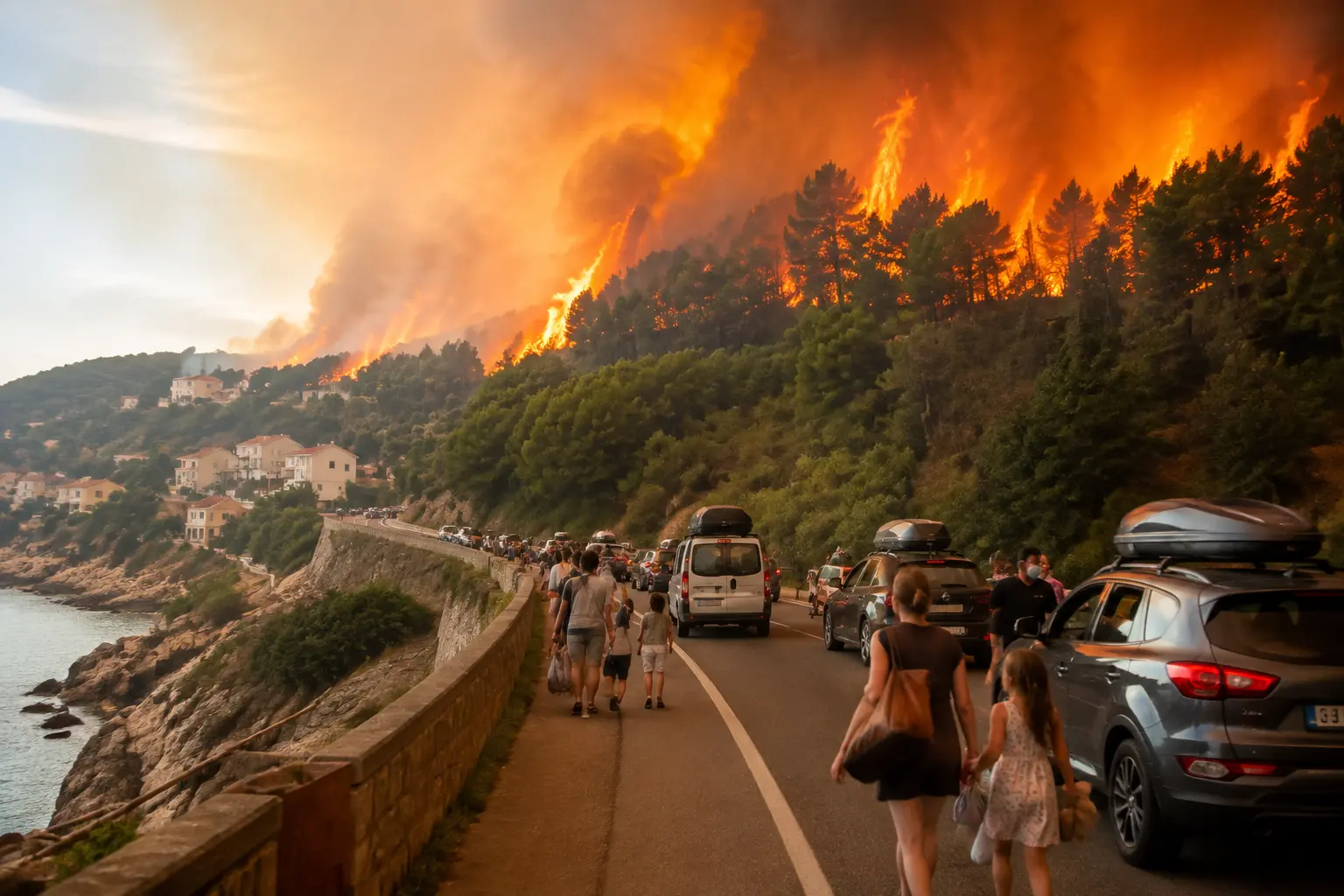
More than 300,000 people have been forced to evacuate their homes and holiday destinations as devastating wildfires continue to spread across France and Spain, creating one of the largest civilian evacuation efforts in Europe in recent years.
The fires have destroyed homes, threatened tourist areas and pushed thousands of residents into emergency shelters as firefighters struggle to control flames driven by extreme heat, dry conditions and strong winds. Authorities in both countries warned that the situation remained dangerous, with several major fires still active.
In France, the most severe situation has been reported in the Gironde region near Bordeaux, where massive wildfires have burned through forests and forced hundreds of thousands of people to leave affected areas. Emergency centres, including exhibition halls, schools and sports facilities, have been transformed into temporary shelters where displaced families are staying while waiting for conditions to improve.
French officials said the fires created highly unpredictable conditions, with some blazes generating their own weather patterns, including powerful winds that made firefighting operations more difficult. Thousands of firefighters have been deployed, supported by aircraft, helicopters and military resources to slow the spread of the flames.
Many residents described the evacuation process as sudden and frightening, with families leaving behind their homes as smoke covered large areas. Some evacuees later returned to find properties damaged or completely destroyed by the advancing fires.
Spain has also faced a major wildfire emergency, with evacuations ordered in several regions including areas near Madrid and Toledo. Thousands of residents were moved to safer locations as authorities warned that high temperatures and changing winds could accelerate the spread of the fires.
Spanish officials said protecting human lives remained the top priority, while emergency crews worked around the clock to contain the flames. One person was reported dead in eastern Spain after being caught near a wildfire, adding to concerns over the human impact of the crisis.
The fires have also disrupted normal activities in both countries. In France, the final stage of the Tour de France was shortened after some security personnel were redirected to support wildfire response operations.
Climate experts have linked the increasing intensity of European wildfires to rising temperatures, prolonged droughts and more frequent heatwaves. These climate challenges have also increased global attention on sustainable development strategies as governments look for long-term solutions to environmental risks. Southern Europe has experienced some of its hottest and driest conditions in recent years, creating ideal environments for large-scale fires to develop.
France and Spain have received support through European emergency assistance programmes, including additional firefighting aircraft and personnel from neighbouring countries. However, officials continue to warn that the combination of extreme weather and dry vegetation means the danger remains high.
As firefighters continue their efforts, thousands of displaced families are waiting for evacuation orders to be lifted and hoping they can safely return home. The crisis has once again highlighted the growing challenge Europe faces in managing climate-related disasters.