
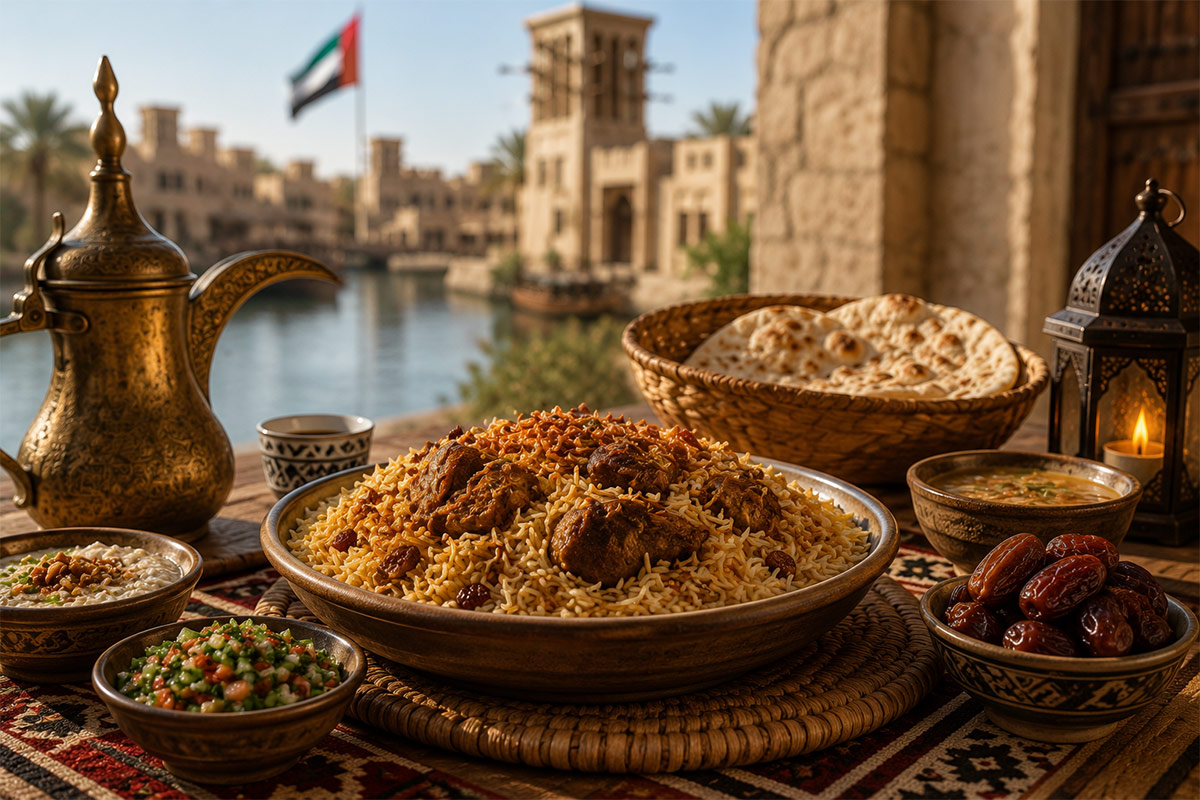
Traditional Emirati food is one of the most important parts of the UAE’s cultural identity and heritage. While Dubai and Abu Dhabi are often known for luxury, skyscrapers, and international lifestyles, the roots of Emirati culture are deeply connected to traditional cuisine, hospitality, and family gatherings. This contrast is also part of the wider Dubai lifestyle, where modern luxury and local heritage often exist side by side. Emirati traditional food reflects the history of desert life, fishing communities, Bedouin traditions, and centuries of trade with regions like India, Persia, and East Africa. As a result, many traditional Emirati dishes combine rich spices, slow-cooked meats, rice, seafood, dates, saffron, cardamom, and aromatic herbs that create unique flavors different from other Middle Eastern cuisines.
Today, traditional Emirati food continues to play a major role in local culture, especially during Ramadan, Eid celebrations, weddings, and family events. Some dishes, such as Luqaimat and Arabic coffee, also appear in guides to the best street foods to try in Dubai, especially during festivals, markets and cultural events. At the same time, many restaurants across Dubai, Abu Dhabi, and other Emirates are introducing Emirati traditional food to tourists and younger generations who want to experience authentic local flavors. From famous dishes like Machboos and Harees to popular Emirati desserts and traditional Arabic coffee, the UAE offers a food culture that blends simplicity, hospitality, and rich history.
In recent years, interest in traditional Emirati food recipes has also grown internationally as more people search for authentic Gulf cuisine and cultural dining experiences. Whether someone is visiting the UAE for the first time or simply wants to learn more about Emirati culture, trying authentic Emirati traditional food is one of the best ways to understand the country beyond its modern image.
What are Traditional Emirati Foods?
Traditional Emirati food refers to the authentic local dishes that have been part of the UAE’s culture for generations. Before the rapid modernization of cities like Dubai and Abu Dhabi, Emirati cuisine was shaped by desert living, fishing traditions, trade routes, and Bedouin hospitality. The result is a food culture built around rice, meat, seafood, dates, spices, and slow-cooked meals designed to provide flavor, nutrition, and comfort in harsh desert conditions.
Today, Emirati traditional food remains an important part of family life and national identity in the UAE. Many of these dishes are still prepared during Ramadan, Eid, weddings, family gatherings, and cultural celebrations. While international cuisine is widely available across the Emirates, traditional Emirati food continues to hold strong cultural value among locals and tourists looking for authentic Gulf experiences.
Some of the most popular traditional Emirati foods include:
- Machboos – Spiced rice dish with meat, chicken, or seafood
- Harees – Slow-cooked wheat and meat dish popular during Ramadan
- Madrooba – Creamy salted fish or chicken dish mixed with spices
- Thareed – Bread soaked in rich meat and vegetable stew
- Luqaimat – Sweet fried dumplings topped with date syrup
- Balaleet – Sweet vermicelli noodles served with eggs
- Majboos Samak – Emirati rice dish made with fish
- Khameer Bread – Traditional Emirati bread flavored with saffron
- Regag Bread – Thin crispy bread often served with cheese or eggs
- Arabic Coffee (Gahwa) – Traditional coffee served with dates
These dishes reflect the simplicity, hospitality, and deep cultural traditions that define Emirati cuisine today.
History and culture behind Emirati traditional food
The history of traditional Emirati food is closely connected to the UAE’s environment and lifestyle before oil wealth transformed the country. For centuries, local communities depended on fishing, pearl diving, camel farming, and desert trade routes to survive. Because resources were limited, Emirati cuisine developed around ingredients that were practical, filling, and suitable for hot desert conditions.
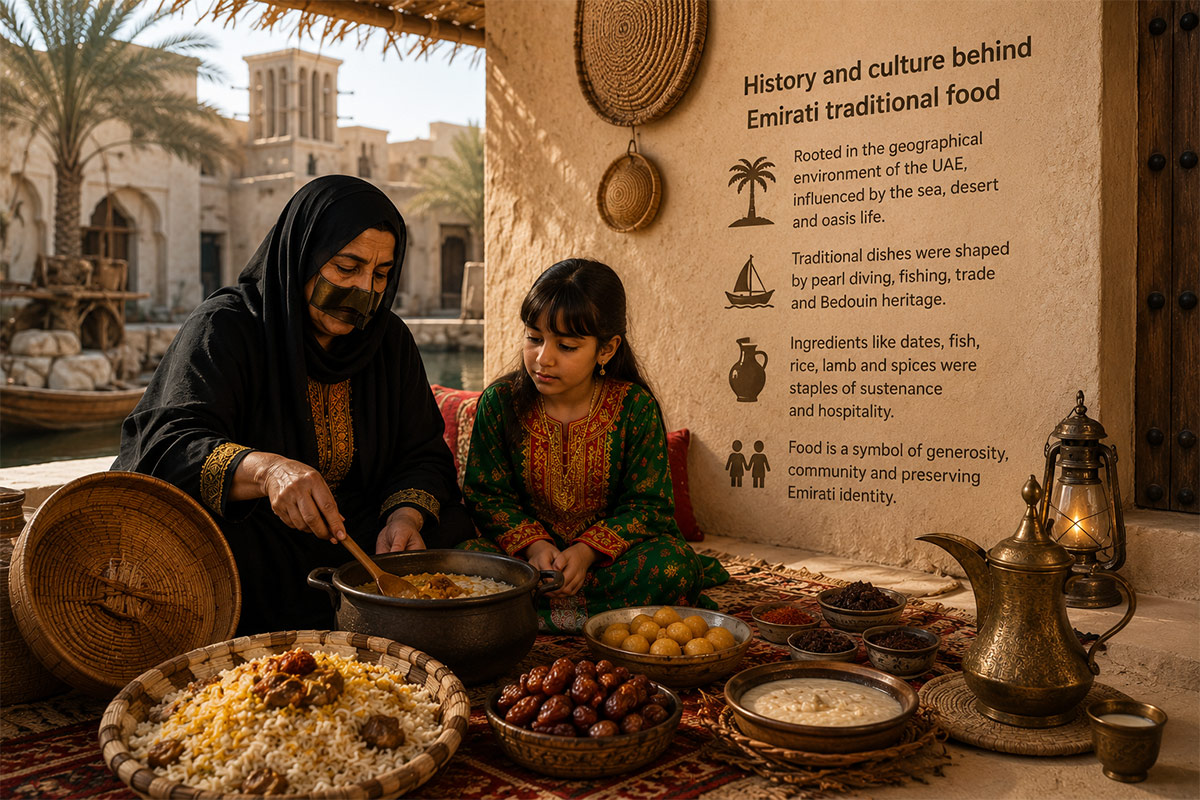
Trade also had a major influence on Emirati traditional food. The UAE historically connected trade routes between the Middle East, India, Persia, and East Africa. As merchants traveled through the Gulf region, spices such as saffron, cardamom, turmeric, cinnamon, and cloves became central parts of Emirati cooking. This is one reason why Emirati cuisine often has richer spice combinations compared to some neighboring cuisines.
Hospitality is another major cultural element behind Emirati food traditions. Serving guests generously is deeply rooted in Emirati culture, and many traditional dishes are designed to be shared among large groups of family and friends. Meals are often associated with social gatherings, celebrations, religious events, and special occasions where food becomes a symbol of respect and generosity.
Even as the UAE has become one of the world’s most modern countries, traditional Emirati food continues to preserve cultural identity and connect younger generations to the country’s heritage.
Main ingredients used in Emirati cuisine
Traditional Emirati cuisine uses simple but flavorful ingredients that reflect both desert traditions and historical trade influences.
Some of the main ingredients used in Emirati cuisine include:
- Rice
- Lamb
- Chicken
- Fish and seafood
- Dates
- Wheat
- Saffron
- Cardamom
- Turmeric
- Cinnamon
- Dried lemon (loomi)
- Ghee
- Yogurt
- Onions
- Tomatoes
- Chickpeas
- Rose water
- Honey
Many traditional Emirati food recipes rely heavily on spices and slow cooking methods to create deep flavors. Rice dishes are especially important in Emirati cuisine, often cooked with meat, seafood, or vegetables alongside aromatic spice blends. Dates and Arabic coffee also remain essential parts of Emirati hospitality and daily life.
Most Popular Emirati Traditional Food Dishes
Traditional Emirati food is known for rich spices, slow-cooked recipes, and meals designed around sharing and hospitality. Many Emirati dishes have been passed down through generations and are still commonly served in homes, traditional restaurants, Ramadan gatherings, weddings, and cultural festivals across the UAE.
One of the most unique aspects of Emirati traditional food is the balance between simplicity and flavor. Most dishes use basic ingredients such as rice, meat, fish, wheat, and spices, but the cooking methods and spice combinations create deep and memorable flavors. Because of the UAE’s location and history, Emirati cuisine also combines influences from Gulf, Persian, Indian, and East African food traditions.
Today, many visitors searching for authentic traditional Emirati food want to experience dishes that reflect the country’s heritage rather than international cuisine commonly found in Dubai and Abu Dhabi. From famous rice dishes to seafood meals and traditional desserts, Emirati cuisine offers a wide variety of local flavors worth trying.
Traditional Emirati rice and meat dishes
Rice and meat dishes are some of the most important parts of Emirati cuisine. These meals are usually heavily spiced, slow-cooked, and prepared for large family gatherings or celebrations.
Some of the most popular Emirati rice and meat dishes include:
- Machboos – The most famous Emirati rice dish made with rice, meat or chicken, onions, tomatoes, and traditional spices
- Harees – Soft wheat and meat dish slow-cooked for hours until creamy
- Thareed – Bread layered with meat and vegetable stew, especially popular during Ramadan
- Madrooba – Creamy dish made with chicken or fish mixed with spices and cooked rice
- Ouzi – Roasted lamb served with rice, nuts, and raisins
- Chicken Majboos – Spiced chicken and rice dish commonly served in Emirati homes
These dishes are often flavored with saffron, cardamom, cinnamon, dried lemon, and other spices that define traditional Emirati food recipes today.
Traditional Emirati seafood dishes
Before the oil era, many coastal communities in the UAE depended heavily on fishing and pearl diving. As a result, seafood became a major part of Emirati traditional food, especially in Dubai, Abu Dhabi, Sharjah, and other coastal areas.
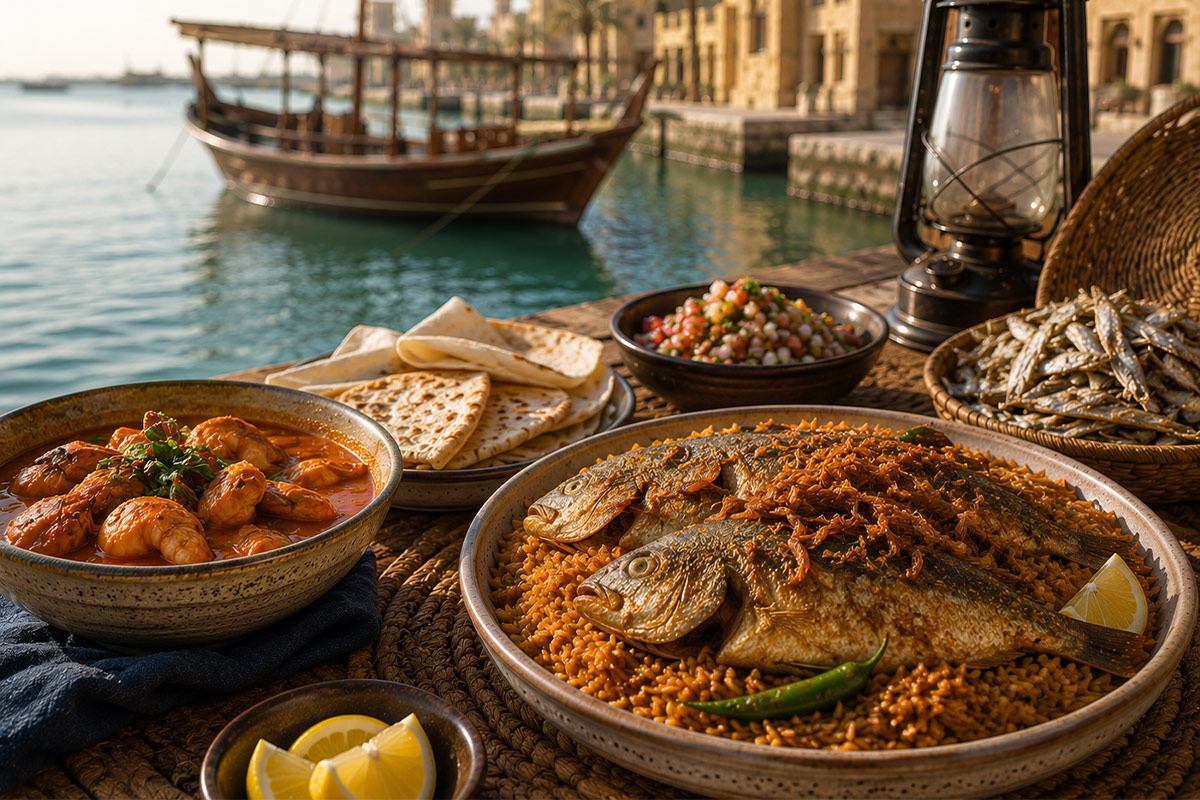
Popular Emirati seafood dishes include:
- Majboos Samak – Spiced rice dish cooked with fish
- Jesheed – Traditional shredded shark meat dish served with spices and rice
- Maleh – Salted preserved fish commonly eaten with rice
- Samak Mashwi – Grilled local fish with traditional Emirati spices
- Prawn Machboos – Rice dish made with shrimp and aromatic Gulf spices
Seafood dishes in Emirati cuisine often use dried lemon, turmeric, garlic, coriander, and chili to create bold flavors while still keeping the recipes simple and traditional.
Popular Emirati desserts and sweets
Desserts are an important part of Emirati hospitality and are commonly served with Arabic coffee (Gahwa) during gatherings, celebrations, and religious occasions.
Some of the most popular Emirati desserts and sweets include:
- Luqaimat – Fried dough balls topped with date syrup or honey
- Balaleet – Sweet vermicelli noodles flavored with saffron and cardamom, usually served with eggs
- Khanfaroosh – Traditional Emirati fried cake flavored with saffron and rose water
- Batheetha – Sweet date dessert mixed with flour and butter
- Khabeesa – Soft dessert made from flour, sugar, saffron, and rose water
- Arabic Dates – Served daily as part of Emirati hospitality traditions
Many traditional Emirati desserts use ingredients such as dates, saffron, cardamom, rose water, honey, and ghee, which reflect both Gulf traditions and regional spice influences. These sweets continue to play a major role in Emirati culture and remain popular among both locals and tourists looking for authentic traditional Emirati food experiences.
Best Places to Try Traditional Emirati Food in Dubai and the UAE
One of the best ways to understand Emirati culture is through food. While Dubai is famous for international restaurants and luxury dining, the UAE is also home to many traditional restaurants that preserve authentic Emirati flavors, recipes, and hospitality traditions. Visitors looking for traditional Emirati food can find everything from modern Emirati restaurants in luxury hotels to small local spots serving recipes passed down through generations.
Many traditional restaurants focus not only on food but also on creating a cultural experience through Arabic seating areas, local décor, traditional coffee, and classic Emirati hospitality. These restaurants allow both tourists and residents to experience authentic Emirati traditional food beyond the modern image of Dubai.
For travelers planning food-focused trips, traditional Emirati restaurants can also offer a unique alternative to upscale international dining. Some visitors even combine local food experiences with luxury dining guides such as Romantic Restaurants in Dubai when exploring the city’s culinary scene.
Traditional Emirati restaurants in Dubai
Dubai has several well-known restaurants that specialize in Emirati traditional food and Gulf cuisine. These restaurants are popular among tourists who want authentic local dishes as well as residents interested in preserving Emirati culinary traditions.
| Restaurant | Location | Known For |
|---|---|---|
| Al Fanar Restaurant & Cafe | Dubai Festival City / Al Seef | Traditional Emirati dishes and old Dubai atmosphere |
| Arabian Tea House | Al Fahidi Historical District | Traditional breakfast, Emirati tea, and local desserts |
| SMCCU Cultural Meals | Al Fahidi | Cultural dining experiences and Emirati hospitality |
| Logma | Dubai Mall / Boxpark | Modern Gulf and Emirati fusion dishes |
| Seven Sands | JBR Dubai | Traditional Emirati and Khaleeji cuisine |
Al Fanar is one of the most popular places for tourists searching for authentic traditional Emirati food because the restaurant recreates the atmosphere of old Dubai before modernization. Arabian Tea House is also highly recommended for visitors who want lighter Emirati meals, traditional breakfast options, and Arabic tea in a historical setting.
Meanwhile, restaurants like Logma offer a more modern interpretation of Emirati cuisine, making traditional dishes more accessible to younger audiences and international visitors.
Authentic local food experiences in the UAE
Beyond restaurants, the UAE offers many cultural food experiences that allow visitors to connect more deeply with Emirati heritage. Traditional Emirati food is strongly connected to hospitality, family gatherings, and local customs, so food experiences often go beyond simply eating at a restaurant.
Some authentic local food experiences in the UAE include:
- Visiting heritage villages and cultural festivals
- Trying Emirati iftar meals during Ramadan
- Joining traditional Arabic coffee and dates experiences
- Exploring old Dubai areas like Al Fahidi and Al Seef
- Attending cultural dining events hosted by local organizations
- Trying homemade Emirati dishes at local markets and community events
Abu Dhabi, Sharjah, and Ras Al Khaimah also offer strong traditional food experiences outside Dubai’s luxury-focused dining scene. In many smaller local restaurants across the UAE, visitors can still experience authentic Emirati traditional food recipes prepared using older cooking techniques and family traditions.
For many travelers, trying traditional Emirati food becomes one of the most memorable parts of visiting the UAE because it offers a direct connection to the country’s history, hospitality, and cultural identity beyond the skyscrapers and luxury lifestyle in dubai.
Final Thoughts on Emirati Traditional Food
Traditional Emirati food is much more than a collection of local dishes. It represents the history, hospitality, culture, and identity of the UAE itself. From slow-cooked rice meals and seafood recipes to famous desserts and Arabic coffee traditions, Emirati cuisine reflects centuries of desert life, trade routes, family gatherings, and cultural values that continue to shape the country today.
Even as Dubai and the UAE become increasingly modern and international, traditional Emirati food remains an important connection to local heritage. Many restaurants, cultural centers, and family-owned businesses continue preserving authentic Emirati traditional food recipes while also introducing them to new generations and international visitors.
For tourists, trying traditional Emirati food is one of the best ways to experience the UAE beyond luxury malls and skyscrapers. And for residents, these dishes continue to represent family traditions, celebrations, and the spirit of Emirati hospitality. Whether someone tries Machboos, Harees, Luqaimat, or traditional Arabic coffee for the first time, Emirati cuisine offers a deeper understanding of the culture and history behind modern UAE life.
FAQ About Traditional Emirati Food
- What is the most popular traditional Emirati food?
One of the most popular traditional Emirati foods is Machboos, a spiced rice dish usually cooked with chicken, lamb, or seafood. Other famous Emirati dishes include Harees, Thareed, and Luqaimat.
- What spices are commonly used in Emirati food?
Traditional Emirati food commonly uses spices such as saffron, cardamom, turmeric, cinnamon, cloves, coriander, and dried lemon (loomi). These spices give Emirati cuisine its rich and aromatic flavor.
- Where can tourists try authentic Emirati traditional food?
Tourists can try authentic Emirati traditional food at restaurants like Al Fanar, Arabian Tea House, Seven Sands, and cultural dining experiences in areas such as Al Fahidi and Al Seef in Dubai.