
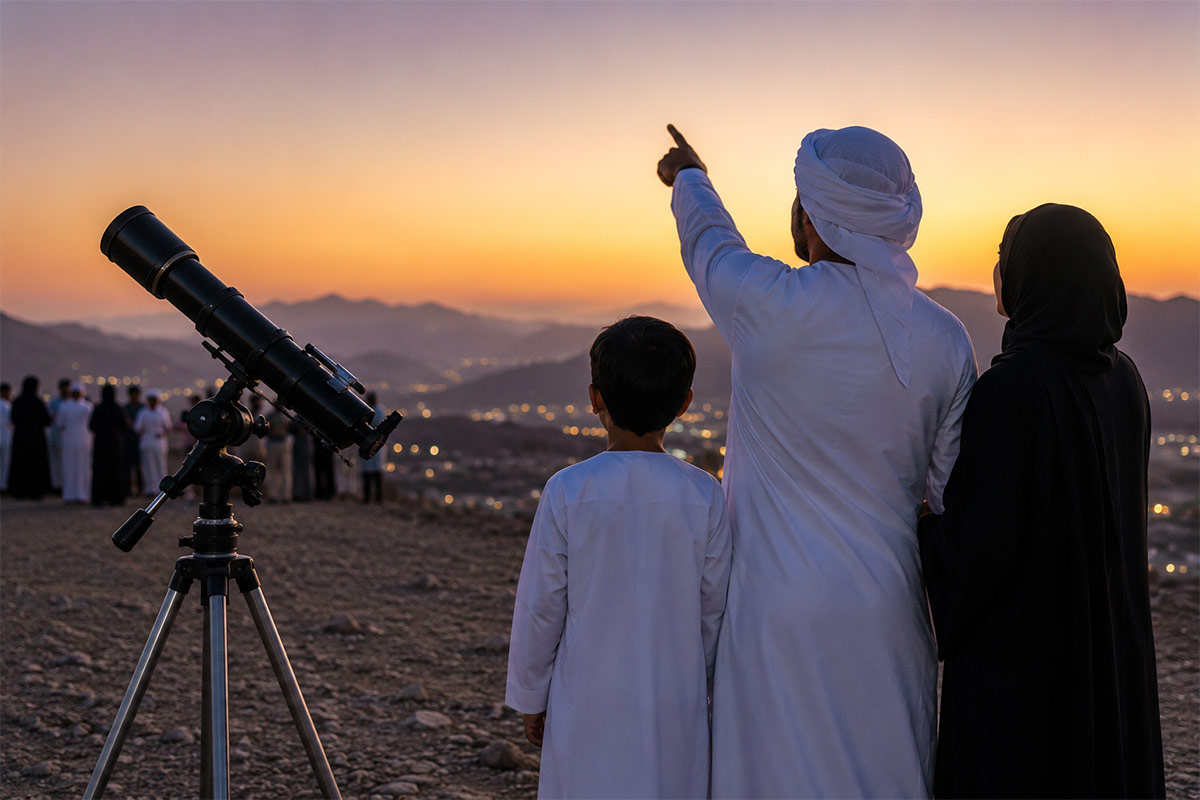
Dubai residents will have the chance to take part in a public crescent moon sighting event that will help mark the beginning of Dhul Hijjah, the final month of the Islamic calendar. The Dubai Department of Islamic Affairs and Charitable Activities, known as IACAD, has invited families and community members to attend a special event dedicated to observing the Dhul Hijjah crescent. The initiative gives residents a rare opportunity to see how the beginning of an Islamic lunar month is traditionally confirmed.
The event, called “Crescent Observation of Dhul Hijjah,” will take place on Sunday, May 17, at Jebel Nazwa. It will begin at 5pm and continue until after sunset.
Jebel Nazwa is a 200-metre-high mountain and protected conservation area located near the Dubai-Hatta highway, close to the border between Dubai and Sharjah. The event is open to all members of the community.
Why the Moon Sighting Matters
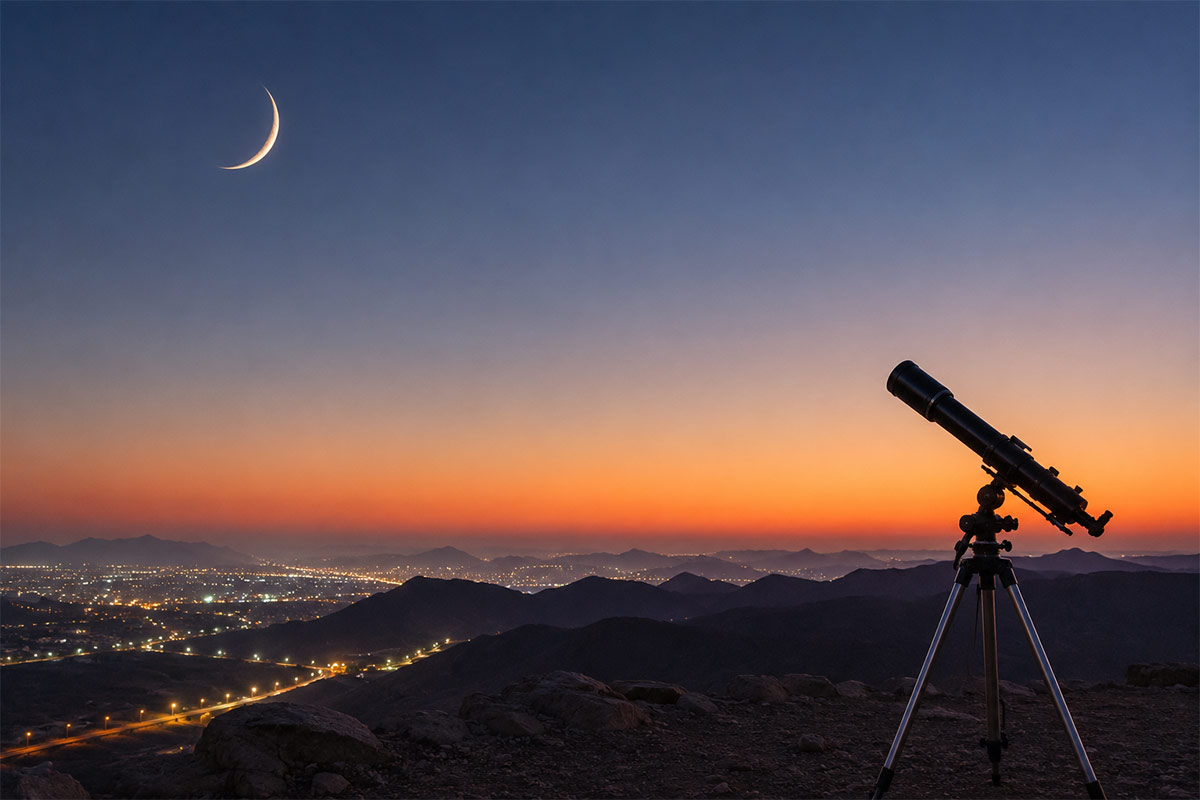
The sighting of the crescent is an important moment because it helps determine the official start of Dhul Hijjah, one of the most significant months in the Islamic calendar.
Dhul Hijjah is closely connected to the Hajj pilgrimage, Arafah Day, and Eid Al Adha. Once the crescent is confirmed, authorities can officially announce the key dates for these major Islamic occasions.
According to IACAD, the event is designed to introduce the public to both the religious and scientific sides of crescent observation. Participants will be able to learn how visual moon sighting and astronomical calculations are used together to confirm the start of lunar months.
The initiative also aims to strengthen community awareness of the Hijri calendar and the traditional methods used across the Islamic world to determine important religious dates.
When Will Eid Al Adha Begin in the UAE?
The Dhul Hijjah moon sighting will play a key role in confirming the official dates for Arafah Day and Eid Al Adha in the UAE. According to the Sharjah Academy for Astronomy, Space Sciences and Technology, Monday, May 18, 2026, is expected to be the first day of Dhul Hijjah.
Based on that forecast, Arafah Day is expected to fall on Tuesday, May 26, 2026, while the first day of Eid Al Adha is expected to be Wednesday, May 27, 2026.
These dates are still linked to the official moon sighting process, which is why the crescent observation remains important before final confirmation.
UAE Residents Could Get a Longer Eid Break
In the UAE, the confirmed Eid Al Adha dates are expected to create a longer public holiday period for residents. Depending on the final announcement and weekend alignment, many residents could receive an extended break of around six to nine days. This would give families more time to travel, gather with relatives, attend prayers, and celebrate the Islamic festive period.
Eid Al Adha is one of the most important Islamic holidays and is observed by Muslims around the world. It is also closely linked to the conclusion of the Hajj season and the spiritual significance of Arafah Day.
Moon Sighting Remains a Key Islamic Tradition
Moon sighting continues to play a central role in the Islamic calendar. Across the UAE and the wider Muslim world, specialised committees, religious authorities and astronomy centres work together to confirm the beginning of each Hijri month. The process combines traditional visual observation with modern astronomical data. This helps ensure that important dates such as Ramadan, Eid Al Fitr, Dhul Hijjah and Eid Al Adha are confirmed accurately.
For Dubai residents, the Jebel Nazwa event offers more than a public gathering. It is a chance to witness a meaningful tradition that connects faith, science and community life in the UAE.