
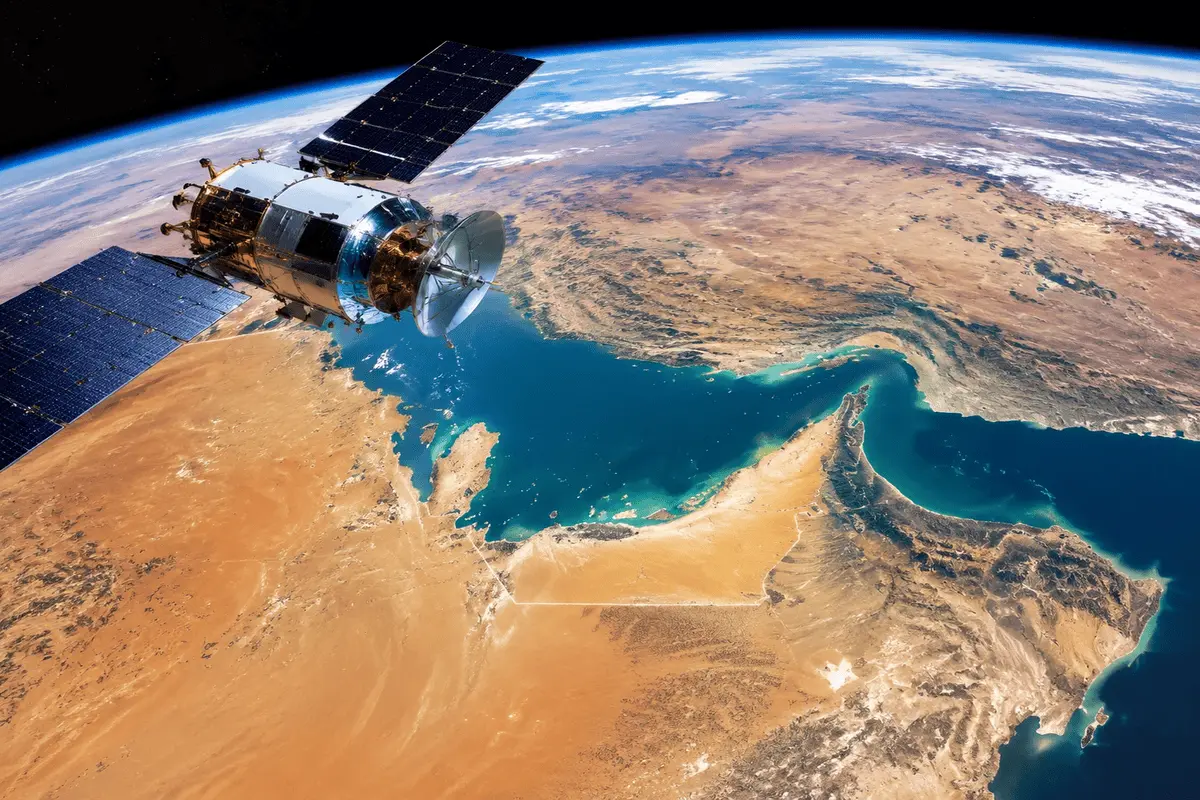
Satellites play a critical role in modern life, yet their importance often goes unnoticed. From financial transactions and aviation routing to communication networks and navigation systems, many essential services rely on satellite infrastructure operating quietly above the Earth.
According to Dr Khalid Al Naqbi, National Expert on Satellite Technology and Vice President of Product and Engineering at Space42, satellite systems form the hidden backbone of modern economies. Over the past 15 years, he has witnessed how the UAE has moved from relying on foreign space technologies to developing its own sovereign capabilities.
Satellites Behind Everyday Services
Many people associate satellites with weather forecasts or digital maps. In reality, their role extends far beyond that. Satellite-based systems support positioning, navigation, timing services, and global communications used by aviation, logistics networks, banking systems, and mobile operators.
Without Global Navigation Satellite Systems (GNSS), critical sectors such as transportation, telecommunications, and financial networks would struggle to function efficiently. These systems provide accurate location data and timing signals that keep complex global systems synchronized.
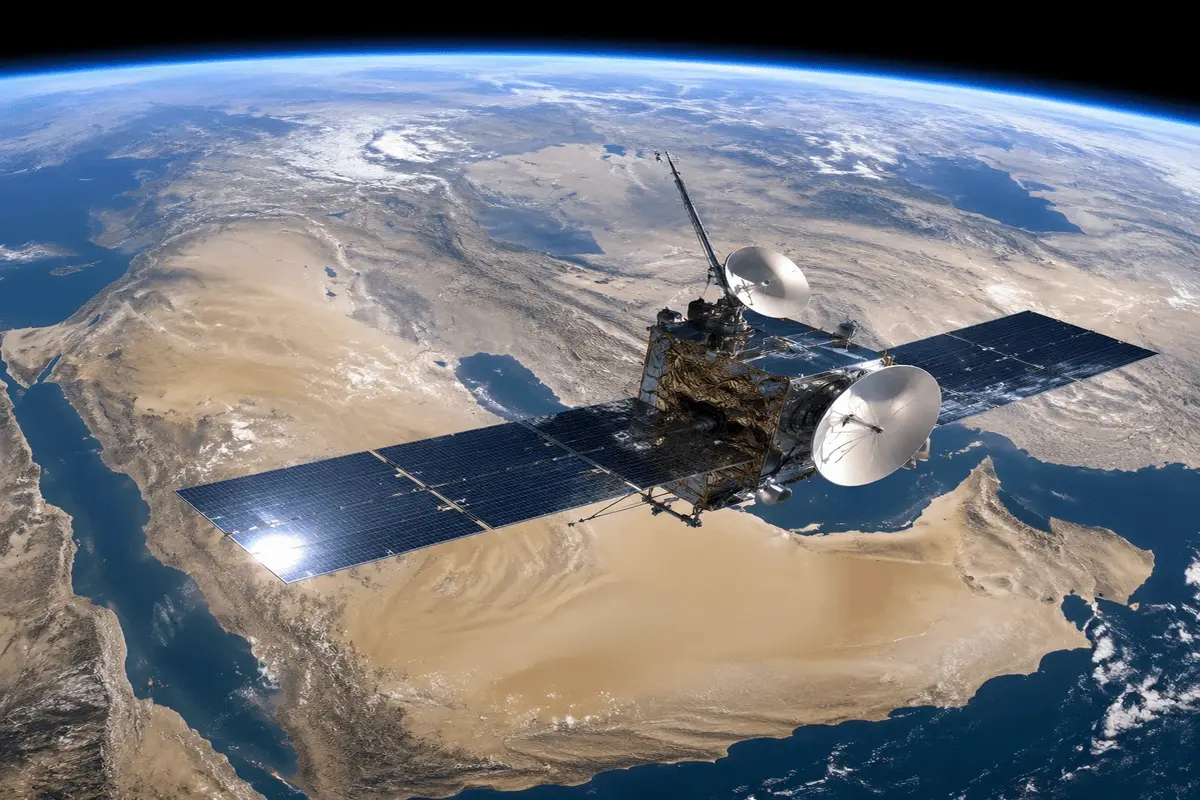
AI Transforming Satellite Data
The integration of artificial intelligence has dramatically improved how satellite imagery is analysed. Synthetic Aperture Radar (SAR) satellites can capture detailed images of the Earth’s surface regardless of weather conditions or darkness.
AI technology can convert complex radar data into images that resemble optical photographs, making the information easier to interpret. These capabilities allow scientists and planners to analyse soil conditions, track environmental changes, and predict flood paths in cities before heavy rainfall occurs.
UAE Expands Its Space Infrastructure
The UAE has also made significant progress in building its own satellite infrastructure. Space42’s Foresight constellation now includes five SAR satellites operating in low Earth orbit with resolutions of around 25 centimetres.
Abu Dhabi is also home to the region’s first commercial facility dedicated to manufacturing SAR satellites. The facility allows the country to design, assemble, and test advanced Earth observation satellites domestically.
This investment reflects the UAE’s broader strategy to strengthen its technological independence while building local expertise in space science, artificial intelligence, and cybersecurity.
Investing in the Next Generation
The growth of the space sector has also encouraged a new generation of Emirati students to pursue careers in space technology. Programmes such as the National Expert Programme aim to develop leaders who can connect multiple sectors and help advance the country’s innovation ecosystem.
According to Al Naqbi, the number of Emiratis entering the space industry today is significantly higher than when he first started working in the field more than a decade ago.