
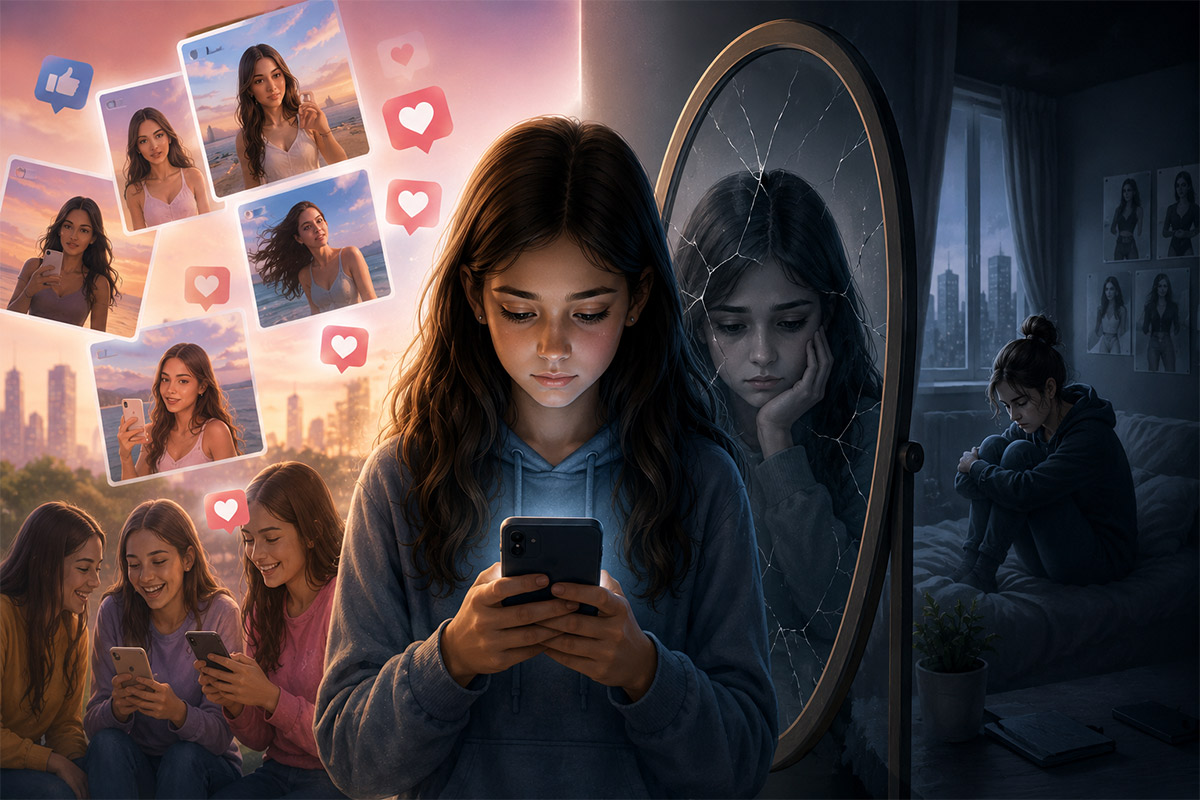
A 13-year-old girl once told her psychiatrist that she wanted to get lip surgery as soon as she turned 18. Her reason was simple but worrying: she felt that “normal lips” were no longer attractive. Mental health professionals in the UAE say concerns like this are becoming more common as children and teenagers spend more time on social media. Filters, edited photos, influencer culture and beauty trends are shaping how young people view their faces, bodies and value.
As the UAE moves to restrict social media access for children under 15, experts say the issue is no longer only about screen time. It is also about self-image, confidence and the pressure young people feel to match unrealistic online standards.
Online Beauty Standards Are Affecting Children
Dr Shahana Kasim, specialist psychiatry at NMC Specialty Hospital in Abu Dhabi, said she is seeing more children compare themselves with carefully edited images they see online. Many teenagers understand that online photos are often filtered, edited or selected to show only the best version of a person. However, that awareness does not always stop them from comparing themselves to those images.
One case that stood out involved a 13-year-old girl who believed she would need cosmetic surgery in the future because the look she saw online had become her idea of what was normal.
According to Dr Shahana, constant comparison can lead to dissatisfaction with appearance and feelings of inadequacy. She said many children are increasingly imitating adult behaviours, from clothing and makeup to the way they present themselves online, and may be losing part of their childhood in the process.
Filters Are Becoming the New Reality
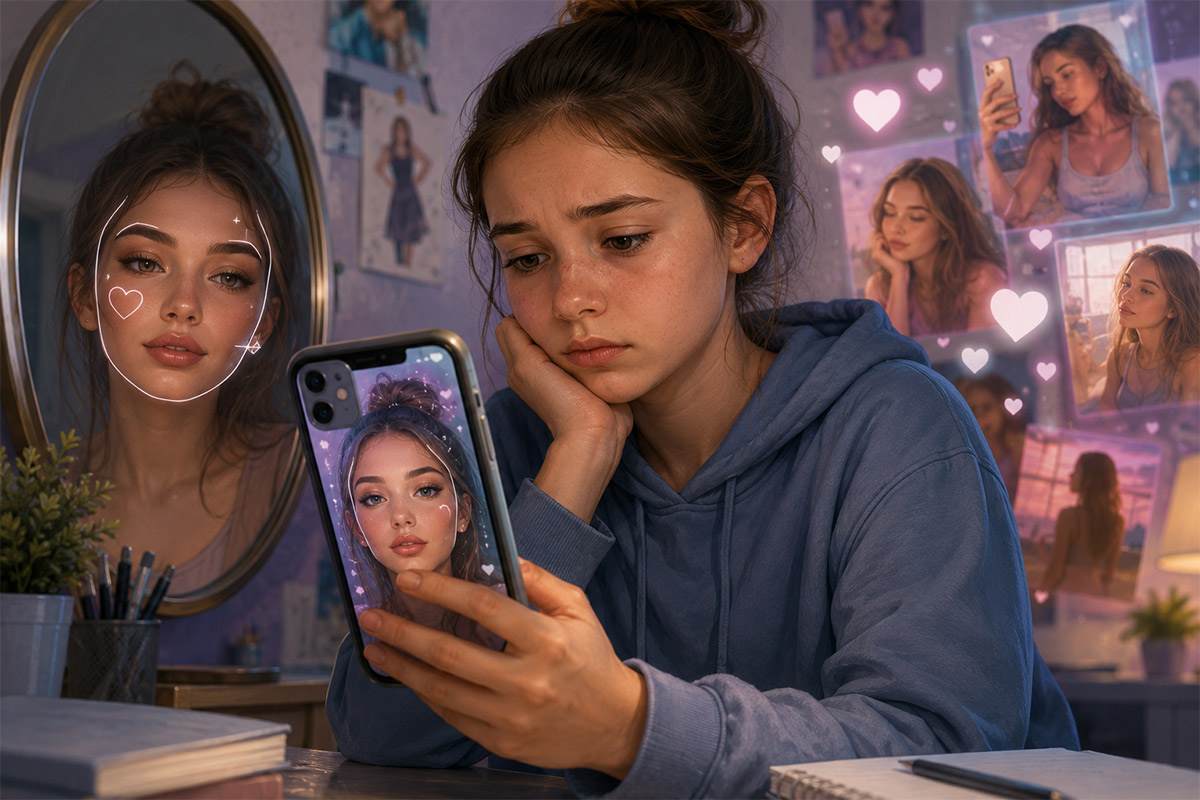
Experts say social media platforms are filled with curated images that often do not reflect real life. Carolyn Yaffe, counsellor and cognitive behaviour therapist at Medcare Camali Clinic, said many young people feel pressure to present a perfect version of themselves online. This can push them to edit photos, use filters and share only the most attractive or exciting parts of their lives.
Over time, constant exposure to influencers, celebrities and highly polished content can make children believe these standards are normal or achievable. Some may start feeling unhappy with their own appearance, achievements or lifestyle because they are comparing daily life with someone else’s edited highlight reel. Yaffe said this cycle of comparison can affect self-esteem and overall happiness.
The Impact Goes Beyond Appearance
Doctors warn that the effect of social media is not limited to looks. Children and teenagers may also begin measuring their value through likes, comments, followers and online approval. This can affect how they see their popularity, friendships, success and lifestyle.
Dr Amir Javaid, director of psychiatry and intellectual disorders and consultant psychiatrist at Burjeel Medical City, said social media can create unrealistic expectations about popularity and success. He noted that constant exposure to highly curated content may contribute to dissatisfaction with appearance, reduced self-confidence and distorted expectations about lifestyle. For many young people, social media can create the impression that everyone else is happier, more attractive and more successful. In reality, most platforms show only selected moments, not the full picture of a person’s life.
Chasing a Life That Is Not Real
Pratibha Tiwari, emotional intelligence coach and youth leadership development expert, said many children struggle to separate online perception from reality. She said some young people begin to believe in a false version of life shaped by trends, products and influencer culture. Having the latest phone, following popular trends and doing what appears “cool” online can become extremely important to them.
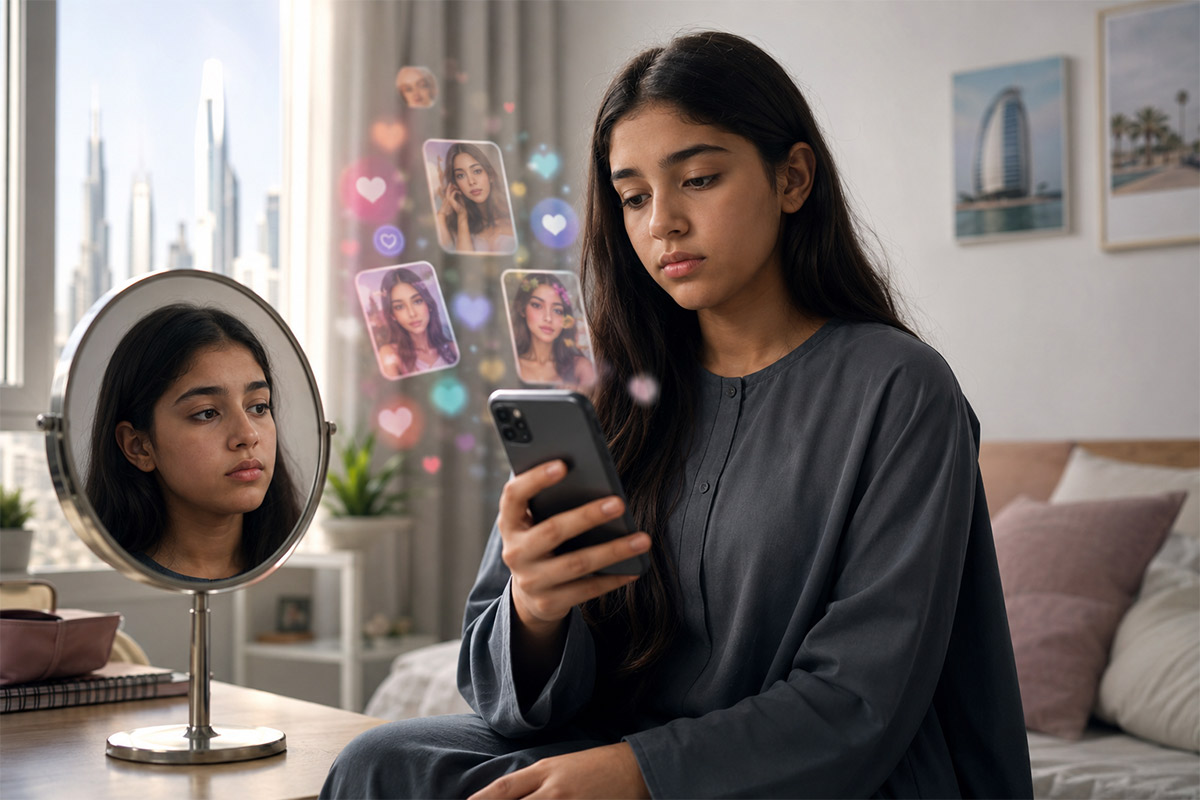
This can distract children from more meaningful goals, such as building real-world confidence, developing skills, exploring interests and forming healthy friendships. Experts say the danger is not only that children want to look different, but that they may begin to believe their real lives are not enough.
Why the UAE’s Under-15 Rule Matters
The UAE’s move to restrict social media access for children under 15 comes at a time when experts are raising concerns about the emotional and psychological effects of online platforms. The new rules are designed to create a safer digital environment for children. But mental health professionals say legal restrictions alone will not solve the problem. Children still need guidance, open conversations and support from parents, schools and caregivers.
The issue is especially important because many children are exposed to beauty standards and lifestyle comparisons before they are emotionally mature enough to process them.
How Parents Can Help
Experts say social media itself is not the enemy. The bigger issue is how children understand and respond to what they see online. Parents can help by talking openly about filters, editing, influencer marketing and unrealistic beauty standards. Children should understand that many online images are staged, polished or altered, and that online popularity does not define personal worth.
Mental health professionals also recommend encouraging children to build confidence through activities that have nothing to do with likes or followers. Sports, creative hobbies, friendships, volunteering, reading and real-world achievements can help young people develop a stronger sense of identity.
Building Confidence Offline
One of the most important steps is helping children find value outside social media. When young people feel confident in their abilities, relationships and interests, they are less likely to depend on online approval. Real-world activities can also help them understand their strengths beyond appearance.
Experts say parents should observe changes in behaviour, such as increased anxiety about appearance, repeated comparison with influencers, excessive photo editing, withdrawal from offline activities or distress linked to social media use. Early conversations can help prevent online pressure from becoming a deeper self-esteem problem.
Final Thoughts
Social media is changing the way many UAE children and teenagers see themselves. From beauty filters and edited images to influencer lifestyles and online popularity, young people are growing up in a digital environment where comparison is constant. For some, that pressure can affect body image, confidence and emotional well-being.
The message from mental health professionals is clear: children need more than restrictions. They need guidance, reassurance and real-world experiences that help them understand that their value is not measured by filters, trends, likes or online approval.