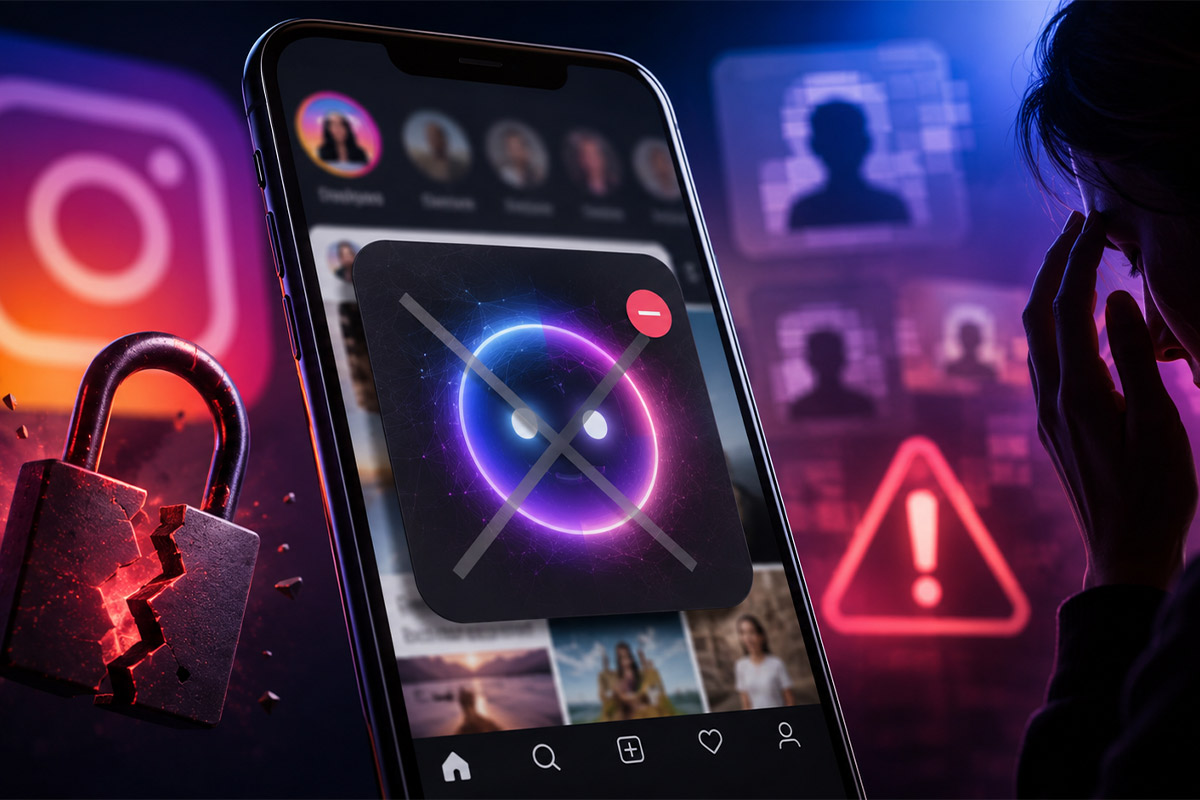
Meta removes AI feature Muse on Instagram after days of public criticism over privacy, consent and the use of people’s likenesses in artificial intelligence images. The feature, which was introduced earlier in the week as part of Meta’s Muse Image rollout, allowed users to create AI-generated images by referencing public Instagram accounts.
The tool quickly became controversial because public Instagram users were automatically included unless they opted out. That meant people’s photos, appearance and public content could be used in AI image prompts without direct permission. Many users argued that the system should have required clear consent from the beginning instead of forcing people to search through settings to protect themselves.
Meta has now disabled the Instagram feature, saying the product “missed the mark” after receiving strong feedback. The company said its original goal was to offer a useful creative tool while giving people control over whether their public content could be referenced, but acknowledged that the response showed the feature was not working as intended.
Why Meta’s Instagram AI Feature Sparked Backlash
The backlash centered on one major issue: consent. The Instagram version of Muse Image allowed public accounts to be used in AI generations, raising concerns that people’s faces, bodies and personal image could be manipulated without their knowledge.
Reports said users could tag a public Instagram account in a prompt and generate images based on that account’s public content. Critics warned that this could enable deepfakes, misleading images, identity misuse, fake endorsements or even harassment. These risks are part of a wider concern around AI scams, where synthetic images, fake identities and manipulated content can make online deception harder to detect. The concern was especially serious for artists, public figures, creators, women and young users who already face a high risk of image-based abuse online.
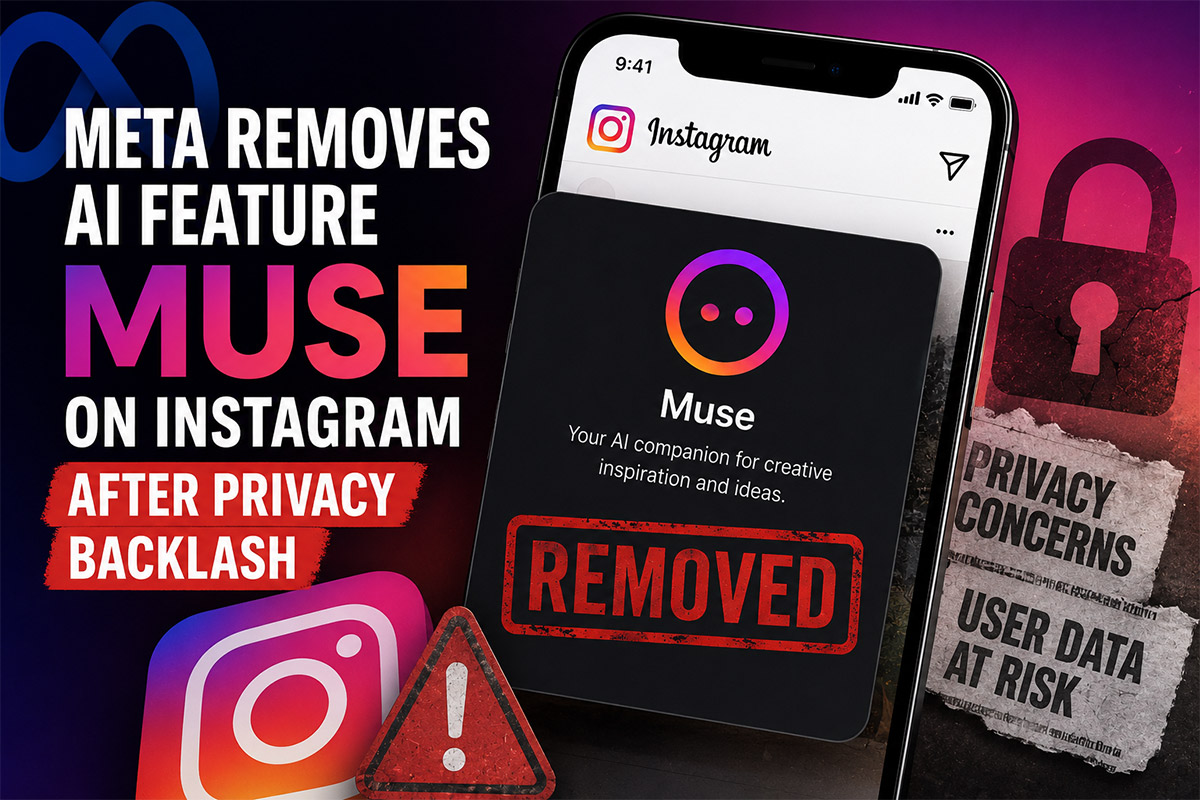
Some users shared instructions on how to opt out by making accounts private or changing settings inside Instagram. Before the feature was removed, the opt-out setting was reportedly located under “Sharing and reuse,” where users could disable permission for their content to be used with AI features on Meta.
Hollywood Agencies and Unions Criticized Meta
The criticism did not come only from regular Instagram users. Hollywood talent agencies and entertainment unions also raised concerns about how the tool could affect actors, artists and creators.
Creative Artists Agency, one of the biggest talent agencies in Los Angeles, contacted Meta on behalf of its clients and criticized the company’s approach. The agency argued that artists should be able to decide whether their image and work can be used in AI-generated content, and that consent should be the default rather than an afterthought.
SAG-AFTRA, the major actors’ union, also criticized the opt-in-by-default design. The union said Meta had misread public concern around artificial intelligence and likeness rights, especially at a time when performers are increasingly worried about how AI tools may copy or manipulate their faces, voices and performances.
Muse Image Is Still Available Elsewhere
Although Meta removed the controversial Instagram feature, Muse Image itself has not been fully shut down. Meta’s broader AI image generator remains available in other parts of the company’s ecosystem, including WhatsApp and the standalone Meta AI app.
Other Instagram tools connected to Muse Image, such as AI-powered filters and creative effects, also remain available. Reuters reported that Muse Image was designed to power more than 30 new AI effects for Instagram Stories and to support image generation in direct chats with Meta AI on WhatsApp.
This means Meta is not retreating from AI image generation overall. Instead, it appears to be pulling back only from the specific Instagram feature that allowed users to create images using public accounts as references.
AI Image Tools Face Growing Scrutiny
Meta’s decision comes during a broader wave of criticism aimed at AI image and video tools. Companies across the technology industry have faced questions about copyright, consent, deepfakes and the use of public or copyrighted material to generate synthetic media. The debate also connects to broader concerns around large language models and generative AI systems, especially when their outputs affect real people, creative work and public trust.
OpenAI faced similar concerns when it launched Sora, its AI video tool, with debate over whether copyrighted characters, styles and content could be used without permission. Other platforms have also faced backlash over manipulated images involving real people, especially when tools were used to create harmful or sexualized content.
The controversy around Muse Image shows how quickly users and advocacy groups can push back when AI products affect personal identity. For social platforms, the issue is especially sensitive because public profiles are not the same as consent to be used in AI-generated images.
Meta Is Still Moving Forward With AI
Despite the backlash, Meta is continuing to invest heavily in artificial intelligence. The company recently expanded its Muse Image tools and also released a new version of its Muse Spark AI model. Meta is also expected to release an AI video generator in the coming months.
The removal of the Instagram feature shows that Meta may need to move more carefully when AI products involve real people’s images. Creative tools can be popular, but they become far more controversial when they allow users to remix, alter or reproduce someone’s likeness without explicit permission.
For Instagram users, the controversy is a reminder to check account privacy settings and understand how public content may be used by platform features. For Meta, it is a warning that AI tools built around real identities will likely face intense scrutiny unless consent and control are clear from the start.
What Happens Next?
Meta has not said whether the Instagram feature will return in a revised form. If it does come back, the company may face pressure to make it opt-in only, give users clearer controls and add stronger protections against impersonation or harassment.
For now, the most controversial part of Muse Image on Instagram is no longer available. But the debate it created is not going away. As AI image generation becomes more common across social media, questions about privacy, copyright and likeness rights will remain central to how these tools are received by users, creators and regulators. For creators, the debate also shows that Instagram strategy is no longer only about reach, engagement or the Worst Time to Post on Instagram, but also about privacy, consent and how platform features may reuse public content.