
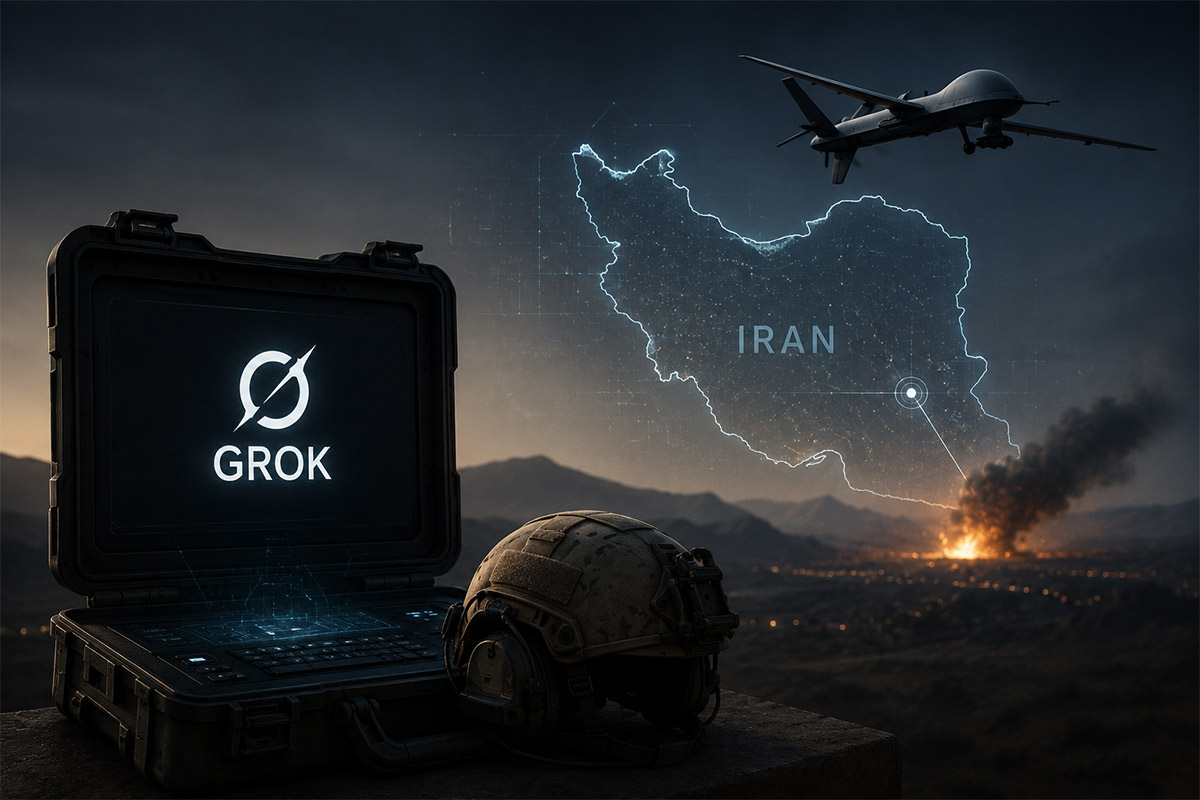
Elon Musk’s artificial intelligence tool Grok was used in US military operations against Iran, according to a legal filing cited in a case involving Musk’s company xAI. The claim appeared in a June 15 legal brief filed by the US government, which is defending the use of gas turbines powering a major xAI data centre. The turbines are at the centre of an environmental lawsuit that accuses the company of operating them without proper permits.
In the filing, the US Department of Justice argued that the lawsuit could threaten national, economic and energy security by disrupting power supply for AI systems that support military operations.
Grok Linked to Project Maven
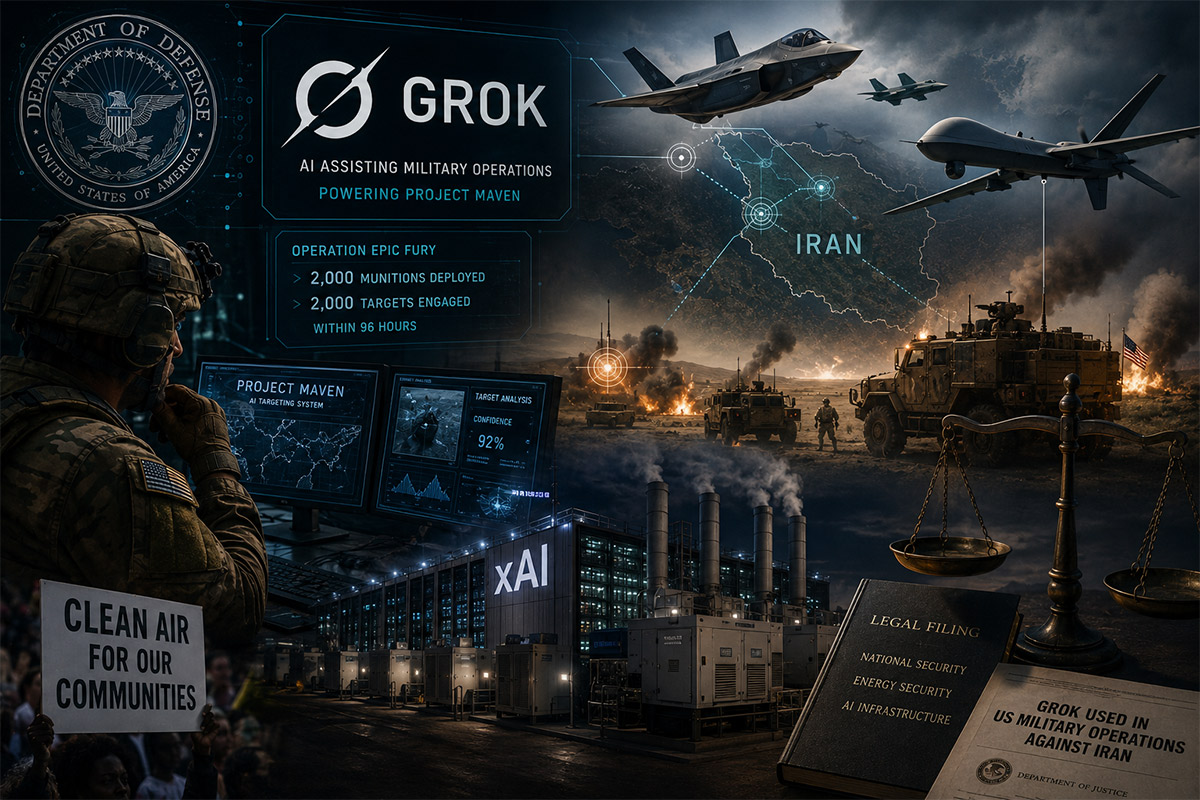
To support its argument, federal prosecutors cited testimony from Cameron Stanley, the Pentagon’s AI chief. Stanley said under oath that Grok is already being used within Project Maven, the US military’s AI-assisted targeting programme. Project Maven was originally known for using AI to help analyse military data and support targeting decisions.
According to Stanley’s statement, Maven Smart Systems helped US forces deploy more than 2,000 munitions against 2,000 separate targets within 96 hours during Operation Epic Fury. Stanley also praised the operational efficiency made possible by the Grok Gov Model, describing it as a major improvement for military use.
xAI Faces Environmental Lawsuit
The legal filing is part of a wider case involving xAI’s data centre operations. The NAACP, a civil rights organisation, is suing xAI and accusing the company of operating dozens of gas turbines without permits in violation of the Clean Air Act. The group argues that the turbines pollute majority-Black neighbourhoods.
xAI has pushed back against the claims, saying the turbines are temporary and mobile, and therefore should not be subject to the same regulatory requirements. The US government’s brief suggests that shutting down the turbines could affect AI infrastructure connected to defence operations, raising the stakes of what might otherwise appear to be a local environmental dispute.
Pentagon Turns to New AI Partners
The filing also highlights how deeply artificial intelligence has entered US military planning. According to the report, the government ended its contracts with Anthropic at the end of February after the company refused to allow its tools to be used for fully automated strikes or mass surveillance of Americans.
After that, the Pentagon reportedly turned to other AI companies, including Google, OpenAI and xAI, as it continued expanding military AI capabilities. The shift has raised growing concerns inside the technology industry. At Google, hundreds of employees reportedly called on the company not to provide AI tools for classified military operations. Other critics have warned about the risks of using AI in warfare, especially in targeting systems.
AI and Military Targeting Remain Controversial
The use of AI in military operations has become one of the most sensitive debates in technology. Supporters argue that AI can help process large amounts of data faster, improve operational efficiency and support military decision-making in complex environments. They say tools like Project Maven can help commanders identify threats more quickly and reduce delays during fast-moving conflicts.
Critics, however, worry that AI systems could make warfare faster, less transparent and more difficult to control. They also warn that the line between human-assisted targeting and automated lethal decision-making could become harder to define as the technology advances. The reported use of Grok in operations connected to Iran will likely intensify those concerns.
Musk’s AI Ambitions Expand
The legal filing also places new attention on Musk’s growing AI ambitions. Musk launched xAI as a rival to other major AI developers, with Grok positioned as one of its central products. The tool has been promoted as an alternative to other generative AI systems, while xAI has expanded its infrastructure to support larger AI workloads.
According to the report, Musk folded xAI into SpaceX in February, further connecting his AI, space and infrastructure businesses. The disclosure that Grok is being used in a military context could reshape public discussion around the company, especially as xAI faces scrutiny over both its environmental footprint and the potential defence applications of its technology.
Why the Legal Filing Matters
The case is important because it links three major issues: artificial intelligence, military operations and environmental regulation. On one side, the US government is arguing that xAI’s infrastructure supports national security and should not be disrupted. On the other, the NAACP argues that the company must comply with environmental laws and protect local communities from pollution.
That conflict could become a larger test of how governments treat AI infrastructure when it is connected to defence operations. As AI systems require more power, data centres are becoming increasingly important. But the energy demands of AI are also creating pressure on local communities, regulators and environmental groups.
Final Thoughts
The reported use of Grok in US military operations against Iran marks a significant moment in the debate over artificial intelligence and warfare. For the US government, the technology is being presented as part of a critical defence capability. For critics, it raises difficult questions about accountability, environmental impact and the role of private AI companies in military operations.
The legal battle over xAI’s turbines may appear at first to be about power supply and permits, but the filing shows that the case now reaches much further. It sits at the intersection of AI infrastructure, national security and the future of military decision-making.