
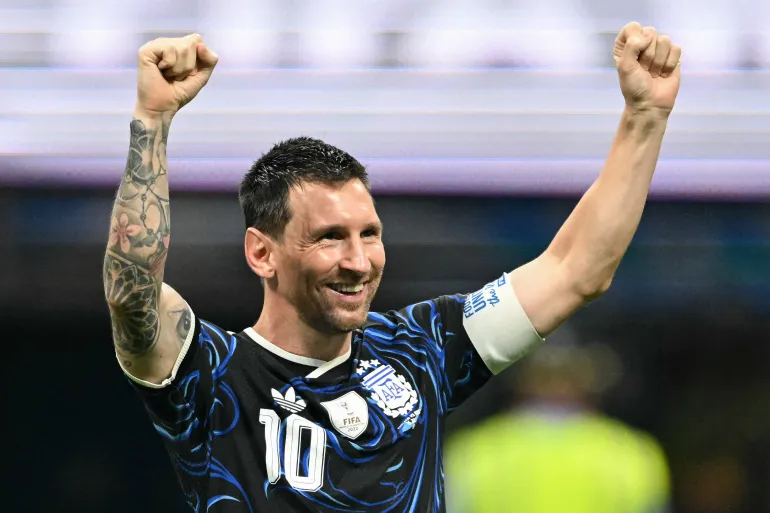
This Lionel Messi biography covers a career that reshaped modern football: eight Ballon d’Or awards, a record haul unmatched by any player in history, a 2022 World Cup win that completed his trophy collection, and a move to Inter Miami that has helped grow the sport in the United States. Few footballers have a resume that needs as little introduction, and few have as much genuine substance behind the reputation.
Born in Rosario, Argentina, on June 24, 1987, Lionel Andrés Messi built almost his entire career at a single club before adding two more chapters late in his career. This biography walks through his early life, his two decades at Barcelona, his time at Paris Saint-Germain and Inter Miami, and the records and titles that define his legacy.
Key takeaways
- This Lionel Messi biography centres on a record eight Ballon d’Or awards (2009, 2010, 2011, 2012, 2015, 2019, 2021, 2023), the most of any player in the award’s history.
- He won the 2022 FIFA World Cup with Argentina, the one major trophy that had eluded him for most of his career, following it with a second Copa América title in 2024.
- At Barcelona, where he spent 21 years across the youth system and first team, he won 4 Champions League titles, 10 La Liga titles, and became the club’s all-time leading scorer with 672 goals.
- Since joining Inter Miami in 2023, Messi has added the Leagues Cup, the 2024 Supporters’ Shield and the 2025 MLS Cup to his honours. He also won the 2025 MLS Golden Boot and became the first player in league history to win consecutive MLS MVP awards.
- Messi led Argentina to another World Cup final in 2026, finishing his World Cup career with a record 34 appearances before announcing his retirement from international football on August 31, 2026.
Who Is Lionel Messi?
Lionel Messi is an Argentine professional footballer widely regarded as one of the greatest players in the sport’s history. Any serious Lionel Messi biography has to start with his early life: he joined his hometown club Newell’s Old Boys as a young boy, before a growth hormone deficiency diagnosis threatened to end his career before it began. Barcelona agreed to fund his medical treatment on the condition his family relocate to Spain, and Messi joined the club’s La Masia academy at age 13.
He made his first-team debut for Barcelona in 2004 at 17, becoming the club’s youngest-ever official scorer that same season. Over the two decades that followed, he became the defining player of his generation — a left-footed forward whose close control, vision and finishing set a standard few others have approached. This Lionel Messi biography would be incomplete without noting how unusual his physical profile was for the position: at 1.70m, he built his game on close control and balance rather than size or pace, at a time when the position increasingly favoured taller, more physical forwards.
Early Life and Move to Barcelona
Lionel Andrés Messi was born on June 24, 1987, in Rosario, Argentina. He began playing football at a young age, first with local side Grandoli and later with Newell’s Old Boys, where his technical ability quickly separated him from other players of his age.
As a child, Messi was diagnosed with a growth hormone deficiency that required expensive treatment. His footballing talent had already attracted attention, but the cost of treatment placed additional pressure on his family. Barcelona eventually offered him the opportunity to move to Spain and continue his development in the club’s academy, La Masia.
Messi joined Barcelona at the age of 13. The move meant leaving much of his life in Argentina behind, but it also placed him inside one of Europe’s most respected youth systems. His close control, balance and ability to change direction at speed helped him progress rapidly through the academy despite his smaller physical frame.
Barcelona Career: From La Masia to Club Legend
Messi made his official Barcelona first-team debut against Espanyol on October 16, 2004, at 17 years old. What followed became one of the most productive individual club careers in football history. By the time he left Barcelona in 2021, he had made 778 appearances, scored 672 goals and won 35 trophies with the club.
His rise accelerated after Ronaldinho’s departure in 2008, when Messi became the focal point of Barcelona’s attack. Under Pep Guardiola, the combination of Messi, Xavi, Andrés Iniesta and the rest of Barcelona’s core produced one of the defining teams of the modern era. Barcelona won the treble in 2008/09 and completed a historic six-trophy year in 2009. Messi later helped the club win another treble in 2014/15.
His Barcelona honours included 10 La Liga titles, seven Copa del Rey trophies, eight Spanish Super Cups and four UEFA Champions League titles. He also became Barcelona’s all-time leading scorer and the player with the most appearances in the club’s history.
The end of his Barcelona career came unexpectedly in 2021. Although both sides had wanted to continue together, Barcelona’s financial and registration problems prevented a new contract from being completed. Messi left the club after 17 first-team seasons, ending the chapter most closely associated with his rise to global superstardom.
Paris Saint-Germain Years
Messi joined Paris Saint-Germain in 2021, moving outside Spanish football for the first time in his senior career. At PSG he played alongside stars including Kylian Mbappé and Neymar and adjusted to a different tactical environment after spending almost his entire professional life at Barcelona.
Across two seasons in Paris, Messi made 74 appearances, scored 32 goals and recorded 35 assists. He won two Ligue 1 titles and the Trophée des Champions before leaving at the end of the 2022/23 season.
His PSG period did not reach the same emotional or statistical heights as his Barcelona years, particularly in the Champions League, but it remained a successful domestic spell and overlapped with one of the most important moments of his career: Argentina’s 2022 World Cup triumph.
Inter Miami and the Final Club Chapter
Messi joined Inter Miami in 2023, a move that immediately raised the international profile of Major League Soccer and transformed expectations around the club.
His impact was not limited to commercial attention. Messi helped Inter Miami win the Leagues Cup shortly after arriving and later added the 2024 Supporters’ Shield. In 2025, Miami won its first MLS Cup, while Messi finished the regular season with a league-leading 29 goals to claim the Golden Boot. He was also named MLS Most Valuable Player for the second consecutive year, becoming the first player in league history to win back-to-back MVP awards.
Argentina Career: From Final Defeats to World Champion
Messi’s relationship with the Argentina national team was more complicated than his club career. He made his senior international debut in 2005 after already helping Argentina win the FIFA U-20 World Cup that year. Three years later, he won Olympic gold in Beijing.
For much of the next decade, however, major senior international trophies remained out of reach. Argentina lost the 2014 World Cup final and several Copa América finals, and after another Copa defeat in 2016 Messi briefly announced his international retirement before reversing the decision.
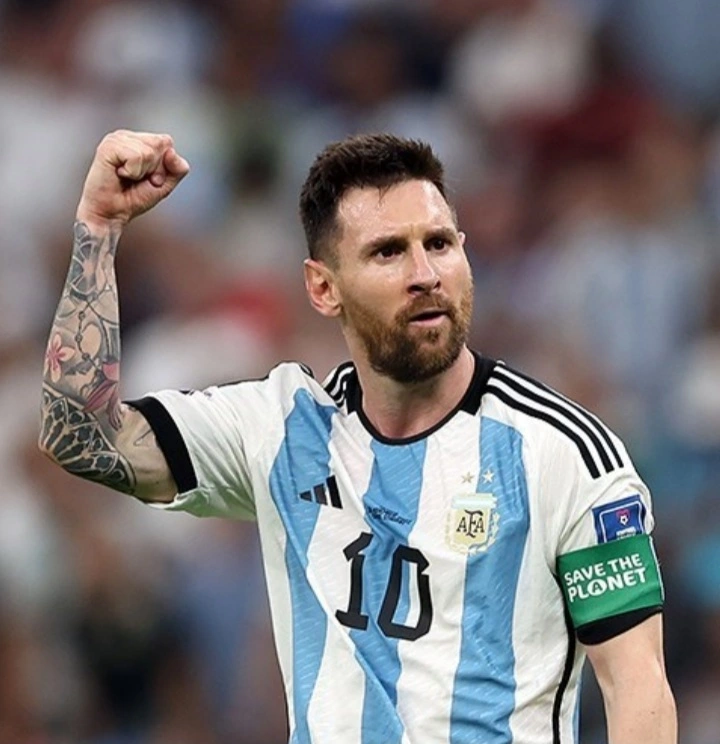
The turning point came in 2021, when Argentina defeated Brazil at the Maracanã to win the Copa América. A year later they beat Italy in the Finalissima before winning the 2022 World Cup in Qatar, where Messi captained the team and scored twice in the final against France. Argentina then retained the Copa América in 2024.
Messi’s final World Cup came in 2026 at the age of 39. He helped Argentina reach another final and extended his all-time World Cup appearance record to 34 matches. Spain ultimately defeated Argentina 1-0 after extra time in New York New Jersey.
During that run, Messi scored twice in Argentina’s 2-0 group-stage victory over Austria and later played a central role in the dramatic 3-2 comeback against Egypt.
After the tournament, Messi announced the end of his Argentina career, closing more than two decades with the national team. His international honours included the 2021 and 2024 Copa América titles, the 2022 Finalissima and the 2022 World Cup, in addition to his earlier Olympic and youth success.
Playing Style: What Made Messi Different?
Messi’s impact cannot be explained by goals alone. At his peak, he combined elite finishing with dribbling, acceleration, vision and passing at a level rarely found in the same player.
His low centre of gravity allowed him to change direction while maintaining close control of the ball, often forcing defenders to commit before he accelerated into the space they had left behind. Unlike many prolific forwards, Messi was also capable of functioning as the primary creator of an attack rather than simply its final target.
His role changed significantly across his career. He began primarily as a wide forward, became devastating as a false nine under Guardiola and later developed into a deeper creator who controlled attacks through passing and movement between the lines. As his explosive pace declined with age, his vision, positioning, set-piece ability and decision-making became increasingly important.
That evolution helped explain his longevity. Messi remained capable of influencing matches long after the physical advantages of his early Barcelona years had diminished.
Career Titles, Records and Major Achievements
Messi’s career has produced a combination of individual and team honours that few players have approached.
At Barcelona alone he won 35 trophies, including 10 La Liga titles and four Champions Leagues. His international career eventually produced the World Cup and two Copa América titles, while his move to the United States added trophies in both Leagues Cup and MLS.
| Category | Highlight |
|---|---|
| Ballon d’Or | 8 wins |
| FIFA World Cup | Champion in 2022 |
| Copa América | Champion in 2021 and 2024 |
| UEFA Champions League | 4 titles |
| La Liga | 10 titles |
| Barcelona | 672 goals in 778 appearances |
| PSG | 2 Ligue 1 titles |
| Inter Miami | Leagues Cup, Supporters’ Shield and MLS Cup |
| MLS individual honours | Golden Boot and consecutive MVP awards |
| World Cup appearances | Record 34 matches |
Messi’s record book continued to change even late in his career. At the 2026 World Cup he extended his appearance record to 34 matches, while his club career in the United States continued to add new individual and team honours.
Personal Life
Away from football, Messi has maintained strong ties to Rosario, the Argentine city where he grew up. He is married to Antonela Roccuzzo, whom he knew from childhood, and the couple have three sons.
His public image has generally remained more private than that of many global sports stars, with much of his public-facing work focused on football, family and charitable activity. Through the Leo Messi Foundation, he has also supported initiatives related to children’s health, education and access to opportunities.
Lionel Messi and the 2026 Ballon d’Or
Despite reaching the final stages of his career, Messi remained part of the Ballon d’Or conversation in 2026 and returned to the official shortlist.
His nomination reflected the unusual length of his elite career, although the 2026 award race also featured a new generation of leading contenders. For a full breakdown of the shortlist and the players considered most likely to win, DubaiPress covers the race separately.
Legacy
Messi’s legacy rests on more than a single record or trophy. His Barcelona career combined goalscoring numbers normally associated with a pure striker with the creative output of an elite playmaker. His Argentina career evolved from repeated final defeats into a period that delivered the country’s biggest international trophies, while his later years demonstrated that his influence could extend beyond European football.
His longevity is equally important. Messi played at the highest level across more than two decades, adapting his role as his body and the teams around him changed. From La Masia to Barcelona’s greatest era, from Paris to Miami and from international disappointment to World Cup victory, few careers have contained as many distinct chapters.
By the end of his Argentina career in 2026, Messi had already secured a place among football’s defining figures. The debate over where he ranks among the greatest players will remain subjective, but the scale of his records, trophies and influence is not.