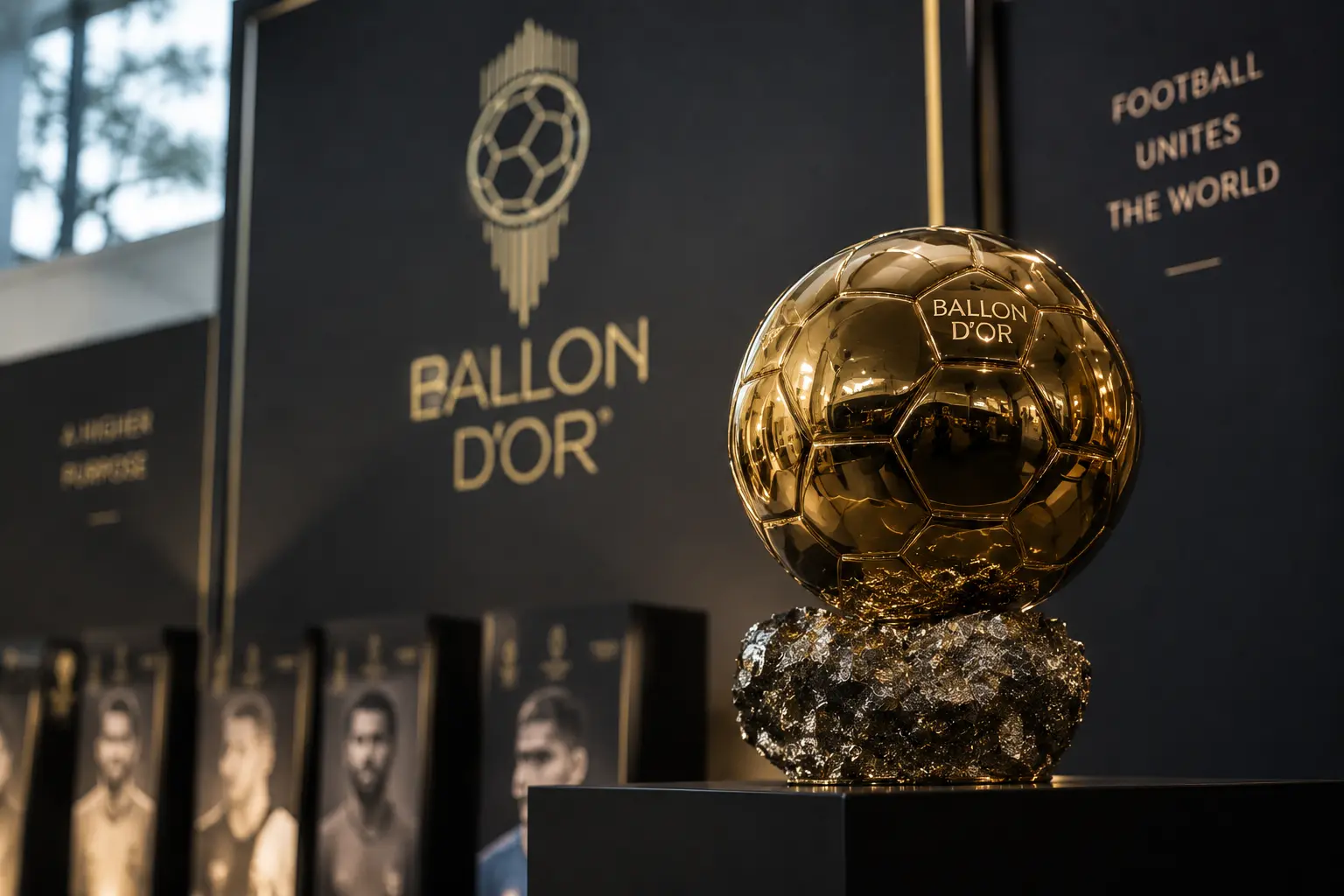
The Ballon d’Or 2026 top contenders are now clearer after the official shortlist was confirmed, shifting attention from who made the cut to who can actually win.
Harry Kane has emerged as the leading men’s contender in post-shortlist assessments, with Lamine Yamal, Rodri and Kylian Mbappé among the strongest challengers. Ousmane Dembélé remains in contention as the defending champion, while Lionel Messi and Michael Olise are among the other prominent names in the race.
The women’s contest is more open after three-time defending champion Aitana Bonmatí missed the shortlist following an injury-hit season. Alexia Putellas, Ewa Pajor, Melchie Dumornay and Alessia Russo are among the leading contenders. This guide focuses on the Ballon d’Or 2026 top contenders, what strengthens their cases and the key details for the October 26 ceremony in London.
Key takeaways
- Harry Kane is the current leading favorite for the men’s Ballon d’Or, with Lamine Yamal, Rodri and Kylian Mbappé among his strongest challengers.
- Ousmane Dembélé is defending the men’s title, while Lionel Messi is back on the 30-player shortlist; Cristiano Ronaldo is not.
- The women’s race has no defending champion in the field, with Aitana Bonmatí absent after an injury-hit season.
- Alexia Putellas, Ewa Pajor, Melchie Dumornay and Alessia Russo are among the leading names in the women’s race.
- The winners will be revealed on October 26 at the London Palladium Theatre, the first Ballon d’Or ceremony held in London
- Cristiano Ronaldo, the competition’s all-time nominations record holder with 18 shortlist appearances, is not on the 2026 shortlist, while eight-time winner Lionel Messi has returned to the 30-player list.
How the 2026 Ballon d’Or Race Is Structured
The official shortlists were published on September 8, with 30 players competing for both the men’s and women’s Ballon d’Or. Rather than reproduce the full nominee lists here, this guide focuses on the players with the strongest cases for the trophy and how the final vote works.
The men’s Striker of the Year (Gerd Müller Trophy), the women’s equivalent, and the Socrates Award for social impact are also presented on the night but don’t carry a published shortlist size. For context, last year’s winners across the board were Ousmane Dembelé (men’s Ballon d’Or), Aitana Bonmatí (women’s), Lamine Yamal (men’s Kopa), Gianluigi Donnarumma (men’s Yashin), Luis Enrique (men’s Cruyff), Viktor Gyökeres (men’s Gerd Müller) and Paris Saint-Germain (men’s Club of the Year).
| Detail | 2026 Ballon d’Or |
|---|---|
| Ceremony date | October 26, 2026 |
| Venue | London Palladium Theatre |
| Host city | London |
| Edition | 70th anniversary |
| Men’s shortlist | 30 players |
| Women’s shortlist | 30 players |
| Men’s jury | Journalists from the top 100 FIFA-ranked nations |
| Women’s jury | Journalists from the top 50 FIFA-ranked nations |
Ballon d’Or 2026 Top Contenders: Who Leads the Men’s Race?
Harry Kane currently has the clearest claim to favorite status. The Bayern Munich striker scored 61 goals in 51 club appearances and added six goals for England at the World Cup, combining elite individual numbers with major performances across the season. Betting markets have also moved strongly in his direction ahead of the October vote.
Lamine Yamal remains one of Kane’s strongest challengers after helping Barcelona win La Liga and playing a major role in Spain’s World Cup triumph. Rodri’s influence in Spain’s success keeps him firmly in the conversation, while Kylian Mbappé strengthened his case by finishing as the World Cup’s leading scorer.
Ousmane Dembélé is attempting to retain the award he won in 2025, while Lionel Messi’s return to the shortlist adds another major storyline. Michael Olise is another name worth watching after an outstanding club season and a strong World Cup. At this stage, however, the race remains a vote
Women’s Ballon d’Or 2026: Leading Contenders
The women’s contest is unusually open because Aitana Bonmatí, winner of the previous three editions, is not on the 2026 shortlist after a season disrupted by injury. That removes the defending champion and creates a much less predictable vote.
Alexia Putellas is bidding for a third Ballon d’Or, while Ewa Pajor enters the race after another major season with Barcelona. Melchie Dumornay has strengthened her case through an outstanding campaign with OL Lyonnes, and Alessia Russo remains a serious contender after finishing third in last year’s voting and delivering another strong scoring season.
What Will Decide the 2026 Ballon d’Or Vote?
The Ballon d’Or is not decided by goals or trophies alone. The official 2026 regulations rank three criteria in order: individual and decisive performances, collective achievements and titles, and finally class and fair play. That makes the race more nuanced than a simple comparison of scoring totals.
World Cup performances are particularly difficult to ignore in a 2026 vote, but they do not automatically outweigh an entire club season. Kane’s scoring output, Yamal and Rodri’s role in Spain’s World Cup success, Mbappé’s individual tournament numbers and Dembélé’s attempt to defend the title give voters very different cases to compare.

Ballon d’Or 2026 Ceremony Date and Venue
The 2026 Ballon d’Or ceremony will take place on Monday, October 26, at the London Palladium Theatre. It will be the first Ballon d’Or ceremony held in London and marks the award’s 70th anniversary. The choice of London also pays tribute to Stanley Matthews, the English footballer who won the inaugural Ballon d’Or in 1956.
The winner is decided by an international jury of specialized journalists, with one representative from each of the top 100 FIFA-ranked nations for the men’s award and the top 50 for the women’s award. Each juror ranks 10 players from the 30-player shortlist, awarding 15, 12, 10, 8, 7, 5, 4, 3, 2 and 1 points. The player with the highest total wins the Ballon d’Or. Official voting criteria prioritize individual and decisive performance first, followed by collective achievements and trophies, then class and fair play.
Official voting criteria prioritize individual and decisive performance first, followed by collective achievements and trophies, then class and fair play.