
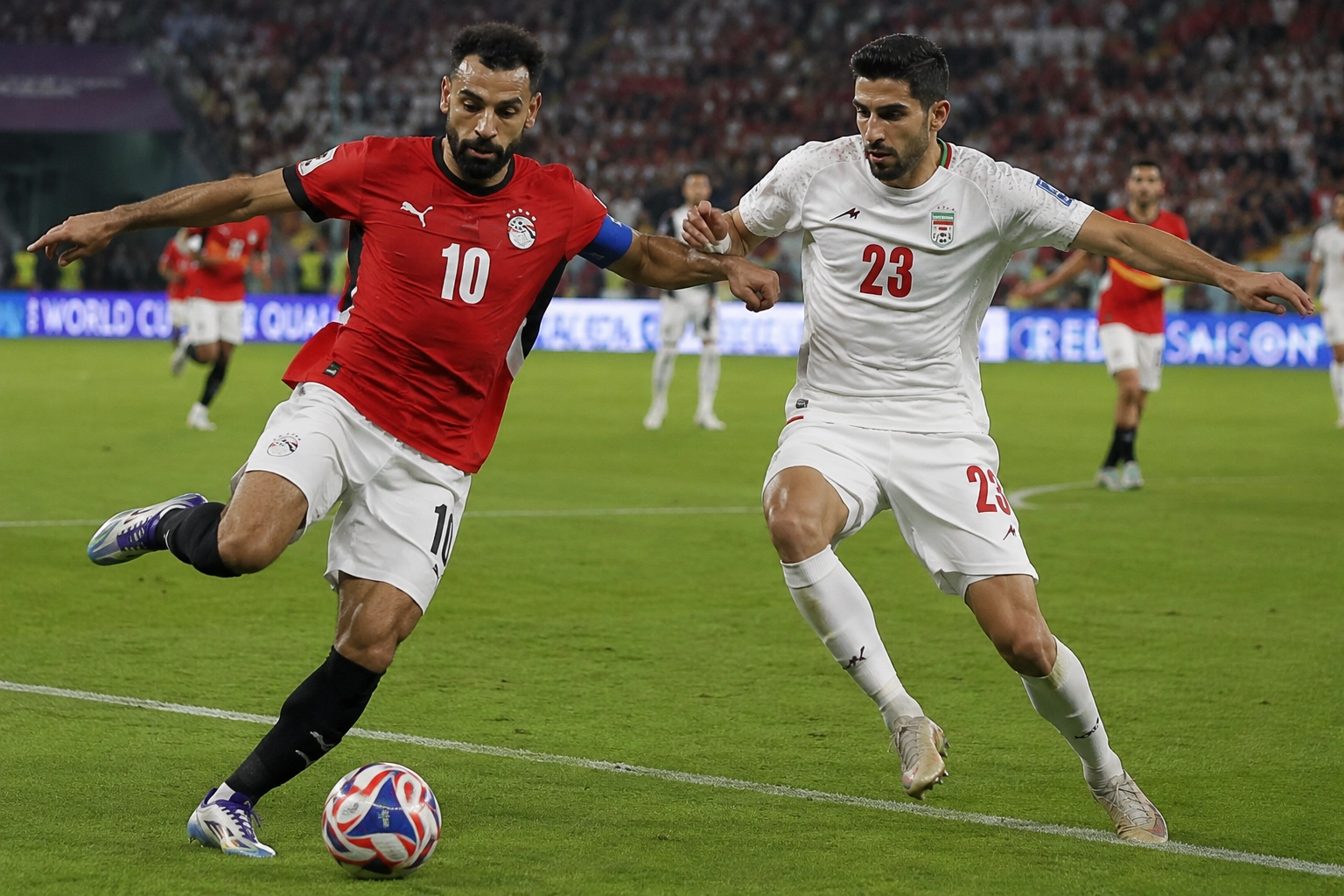
Egypt secured their place in the knockout stage of the 2026 FIFA World Cup after a tense 1-1 draw with Iran in their final Group G match at Seattle Stadium. Seattle is one of the key World Cup 2026 host cities, and this match added another dramatic qualification story to the tournament. The result was enough for Egypt to finish second in the group with five points, behind Belgium on goal difference, while Iran ended the group stage in third place with three points and must now wait to see whether they qualify as one of the best third-placed teams. Egypt had already strengthened their position earlier in the group after they beat New Zealand 3-1, making the draw with Iran enough to move forward.
The match started at a remarkable speed. Egypt took the lead in the 5th minute through Mahmoud Saber after a quick attacking move involving Mohamed Salah. The ball eventually fell to Saber, whose effort found its way past Iran goalkeeper Alireza Beiranvand to give Egypt an early 1-0 advantage. For Egypt, the goal appeared to settle nerves and put them in control of their qualification situation.
Iran, however, responded almost immediately. Mehdi Taremi won a penalty shortly after Egypt’s opener, but his spot-kick was saved by Egypt goalkeeper Mostafa Shobeir. The save was a major moment, but Iran did not lose belief. In the 14th minute, Ramin Rezaeian reacted sharply to the rebound from another Shobeir stop and finished from a tight angle to make it 1-1.
After the frantic opening, the match became more physical and cautious. Egypt knew that a draw would likely be enough to secure progression, while Iran needed a win to guarantee their own place in the next round. As a result, the rhythm slowed, with both teams struggling to create clear chances through the middle stages of the game.
The second half was tense rather than fluent. Egypt defended deeper and focused on protecting the result, while Iran tried to build pressure without fully opening themselves up. Salah was substituted early in the second half after asking to come off, creating some concern for Egypt ahead of the knockout rounds.
The biggest drama came in stoppage time. Iran thought they had scored a famous winner when Shoja Khalilzadeh fired into the net in the 90+2nd minute, sending the Iranian bench into wild celebrations. However, after a VAR review, the goal was ruled out for offside. Iran then hit the crossbar late on, but Egypt survived and the match finished 1-1.
Tactically, Egypt were pragmatic. They started sharply, then managed the game with caution once qualification was within reach. Iran showed resilience and created the more dramatic late moments, but the missed penalty and disallowed goal left them frustrated.
For Egypt, this was a historic result, sending them into the Round of 32, where they will face Australia. The result also gives Egypt another memorable chapter in FIFA World Cup history, especially after surviving late Iranian pressure and a VAR scare. For Iran, the draw means their fate is no longer fully in their own hands. They remain in contention as a third-placed team, but their qualification depends on results from other groups.