
The World Cup 2026 host cities will make the next FIFA World Cup the biggest and most geographically ambitious edition in tournament history. For the first time, the FIFA World Cup will be hosted by three countries: the United States, Canada, and Mexico. The tournament will also expand to 48 teams and 104 matches, creating a much larger event than the 32-team format used from 1998 to 2022. FIFA confirms that the 2026 tournament will take place across 16 host cities in North America.
For fans, the 2026 World Cup host cities are not just match locations. They are travel destinations, football hubs, cultural centers, and major event zones. From Mexico City’s historic Estadio Azteca to New York/New Jersey’s final venue, the tournament will stretch across different climates, time zones, stadium styles, and fan experiences.
This guide covers the full 2026 FIFA World Cup host cities list, stadiums, capacities, travel tips, fan-friendly destinations, and what makes this World Cup unique.

What Are the World Cup 2026 Host Cities?
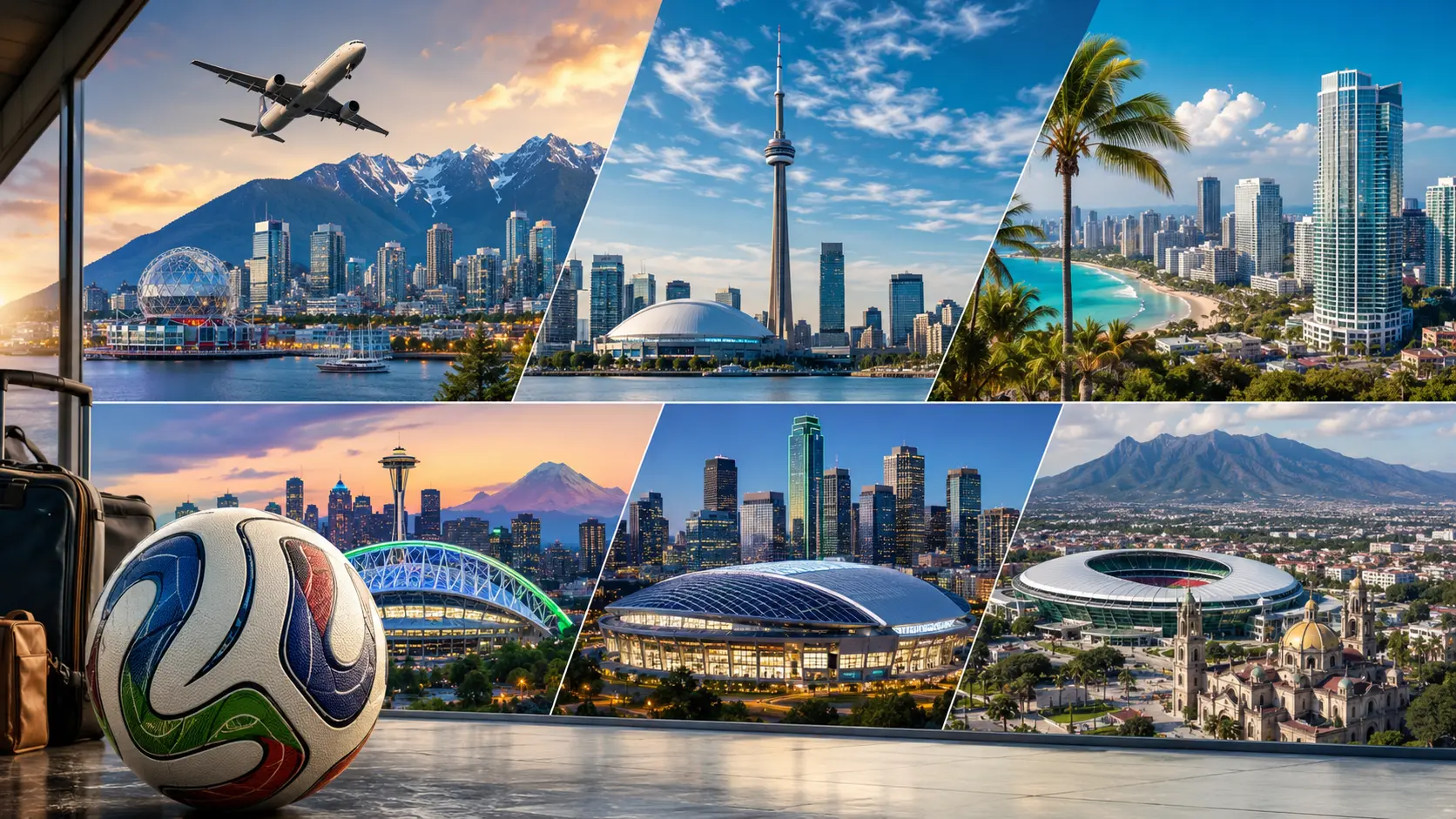
The World Cup 2026 host cities are the 16 cities selected to stage matches during the FIFA World Cup 2026 in Canada, Mexico, and the United States. These cities include major football markets, large stadiums, strong transport infrastructure, international airports, and proven experience hosting major sports and entertainment events.
The host cities are:
Atlanta, Boston, Dallas, Guadalajara, Houston, Kansas City, Los Angeles, Mexico City, Miami, Monterrey, New York/New Jersey, Philadelphia, San Francisco Bay Area, Seattle, Toronto, and Vancouver.
The United States will host 11 cities, Mexico will host three, and Canada will host two. This distribution reflects the size of the tournament, stadium availability, and the larger number of matches scheduled in the United States. FIFA states that the World Cup 2026 will feature 48 teams and 104 fixtures, making city selection much more important than in previous editions.
How the 2026 FIFA World Cup host cities were selected
The 2026 FIFA World Cup host cities list was selected based on several factors, including stadium quality, transport systems, airport access, hotel capacity, security planning, fan experience, commercial potential, and regional balance.
Unlike previous World Cups hosted by one country, the 2026 edition needed a cross-border structure. FIFA and the local organizing bodies had to consider how fans, teams, media, and officials would travel across three countries during a 39-day tournament. The final city selection created regional clusters across western, central, and eastern North America to reduce travel complexity where possible.
Stadium readiness also played a major role. Many venues are NFL stadiums or large multi-purpose stadiums that require temporary football-specific modifications, including pitch changes, seating adjustments, media facilities, and hospitality areas.
2026 FIFA World Cup Host Cities List
The table below gives a simple overview of the world cup host cities 2026, including country and host region.
| Host City | Country | Region |
|---|---|---|
| Atlanta | United States | Southeast |
| Boston | United States | Northeast |
| Dallas | United States | South / Central |
| Houston | United States | South |
| Kansas City | United States | Midwest |
| Los Angeles | United States | West Coast |
| Miami | United States | Southeast |
| New York/New Jersey | United States | Northeast |
| Philadelphia | United States | Northeast |
| San Francisco Bay Area | United States | West Coast |
| Seattle | United States | Pacific Northwest |
| Toronto | Canada | Eastern Canada |
| Vancouver | Canada | Western Canada |
| Guadalajara | Mexico | Western Mexico |
| Mexico City | Mexico | Central Mexico |
| Monterrey | Mexico | Northern Mexico |
Host cities in the United States
The United States has the largest share of World Cup 2026 host cities, with 11 venues. These cities cover almost every major region of the country: East Coast, West Coast, South, Midwest, and Pacific Northwest.
New York/New Jersey will host the final at MetLife Stadium in East Rutherford, New Jersey. Dallas will host the most matches of any venue, with nine fixtures, according to tournament schedule reporting and venue planning information. Los Angeles, Miami, Atlanta, Houston, Seattle, and Philadelphia are also expected to be among the busiest fan destinations because of their airport connections, tourism appeal, and large international communities.
For traveling supporters, the US host cities offer the biggest variety. Fans can combine football with beaches in Miami and Los Angeles, music and culture in Atlanta, history in Philadelphia and Boston, and major city tourism in New York/New Jersey.
Host cities in Canada and Mexico
Canada will host matches in Toronto and Vancouver. Toronto Stadium will stage matches in Canada’s largest city, while BC Place Vancouver will bring World Cup football to the west coast. Both cities are major international destinations with strong multicultural communities and established football fan bases.
Mexico will host matches in Mexico City, Guadalajara, and Monterrey. Mexico City Stadium, better known internationally as Estadio Azteca, is one of the most historic football venues in the world. It hosted World Cup finals in 1970 and 1986 and will become the first stadium to feature in three men’s FIFA World Cups. Guadalajara and Monterrey add strong regional football culture and passionate local fan environments.
2026 FIFA World Cup Host Cities Stadiums List
The 2026 FIFA World Cup host cities stadiums list includes 16 venues across three countries. FIFA’s official ticketing FAQ provides official stadium names, addresses, and capacities, while noting that net capacities may change due to stadium configuration.
| Host City | Stadium Name for World Cup 2026 | Country | Official Capacity |
|---|---|---|---|
| Vancouver | BC Place Vancouver | Canada | 48,821 |
| Toronto | Toronto Stadium | Canada | 44,315 |
| Mexico City | Mexico City Stadium | Mexico | 72,766 |
| Guadalajara | Guadalajara Stadium | Mexico | 44,330 |
| Monterrey | Monterrey Stadium | Mexico | 50,113 |
| Atlanta | Atlanta Stadium | United States | 67,382 |
| Boston | Boston Stadium | United States | 63,815 |
| Dallas | Dallas Stadium | United States | 70,122 |
| Houston | Houston Stadium | United States | 68,311 |
| Kansas City | Kansas City Stadium | United States | 67,513 |
| Los Angeles | Los Angeles Stadium | United States | 69,650 |
| Miami | Miami Stadium | United States | 64,091 |
| New York/New Jersey | New York New Jersey Stadium | United States | 78,576 |
| Philadelphia | Philadelphia Stadium | United States | 65,827 |
| San Francisco Bay Area | San Francisco Bay Area Stadium | United States | 69,391 |
| Seattle | Seattle Stadium | United States | 65,123 |
Biggest stadiums hosting the 2026 FIFA World Cup
The biggest venue on the official stadium capacity list is New York New Jersey Stadium, with a listed capacity of 78,576. This stadium will host the FIFA World Cup 2026 final on July 19, making it the most important venue of the tournament.
Mexico City Stadium is another major venue, with a listed capacity of 72,766. Its history makes it one of the most iconic stadiums in the tournament. Dallas Stadium is also one of the largest, with a listed capacity of 70,122, and is expected to host more matches than any other venue.
Other large venues include Los Angeles Stadium, San Francisco Bay Area Stadium, Houston Stadium, Kansas City Stadium, and Atlanta Stadium. These stadiums are built for major sports and entertainment events, giving the tournament strong infrastructure for high-attendance matches.
Stadium capacities and locations for World Cup 2026
The stadium capacities for World Cup 2026 host cities range from 44,315 at Toronto Stadium to 78,576 at New York New Jersey Stadium. FIFA notes that capacities may change due to stadium configuration, which is common for World Cup events because venues need temporary modifications for pitch dimensions, media operations, hospitality, security, and broadcast requirements.
Location will matter heavily for fans. Some venues are inside or close to major city centers, while others are located in surrounding metropolitan areas. For example, New York New Jersey Stadium is in East Rutherford, not Manhattan. Boston Stadium is in Foxborough, outside central Boston. San Francisco Bay Area Stadium is in Santa Clara, not downtown San Francisco. Fans should plan local transport early rather than assuming every stadium is downtown.
Best World Cup 2026 Host Cities for Fans
The best World Cup 2026 host cities for fans depend on what kind of experience they want. Some cities are better for football atmosphere, some for nightlife, some for affordability, and others for travel convenience.
For international visitors, New York/New Jersey, Los Angeles, Miami, Mexico City, Toronto, and Vancouver will likely be among the most attractive destinations because they combine matches with major tourism infrastructure. For fans seeking local football passion, Mexico City, Guadalajara, Monterrey, Seattle, and Kansas City should be especially interesting.
Best cities for football atmosphere and entertainment
Mexico City may offer one of the strongest football atmospheres of the entire tournament. Estadio Azteca’s history, Mexican football culture, and the city’s size make it a must-visit for football purists.
Seattle is another strong football city. It has one of the most passionate club football cultures in the United States, and the stadium environment is known for high energy.
New York/New Jersey will be a global media and fan hub because it hosts the final. Even though the stadium is outside New York City, the region will likely become one of the tournament’s biggest gathering points.
Miami should be one of the most entertaining destinations for fans who want football, beaches, nightlife, and Latin American culture. Los Angeles will also be popular because of its international airport, tourism appeal, and huge global sports market.
Most affordable World Cup 2026 host cities for travelers
Affordability will depend on ticket demand, hotel pricing, flight routes, and match schedule. Generally, cities like Kansas City, Houston, Dallas, Guadalajara, and Monterrey may be more affordable than New York, Los Angeles, Miami, Vancouver, and Toronto.
That said, World Cup demand can change normal travel pricing. Even traditionally affordable cities may become expensive during match windows. Fans should compare hotel prices, public transport access, airport distance, and local match schedules before booking.
For budget-conscious travelers, the best approach is to avoid final-week destinations unless necessary, book early, and consider cities with multiple nearby transport options. Fans should also check whether staying outside the central tourist zone can reduce accommodation costs.
Travel and Transportation Between World Cup 2026 Host Cities
Travel between 2026 World Cup host cities will be one of the biggest planning challenges for fans. Unlike compact tournaments in smaller countries, this World Cup spans three countries and several time zones.
A fan traveling from Vancouver to Miami, or from Toronto to Mexico City, is not making a short domestic trip. These are long flights that require planning. Even within the United States, distances between host cities can be large. Los Angeles to New York/New Jersey, Seattle to Dallas, or Miami to Kansas City are all major journeys.
Flights and transportation options during the tournament
Flights will be the main travel method between most host cities. The tournament’s major airport hubs include New York, Los Angeles, Atlanta, Dallas, Houston, Miami, Toronto, Vancouver, and Mexico City. These airports offer strong international and domestic connectivity.
Train travel may be useful only in certain corridors. For example, fans can travel between New York/New Jersey, Philadelphia, and Boston more easily than between most other host cities. In Canada, local transport will matter more than intercity train options for most international fans. In Mexico, domestic flights will likely be the easiest way to move between Mexico City, Guadalajara, and Monterrey.
Local transport is just as important as long-distance travel. Some stadiums are not located in the city center, so matchday travel may require trains, buses, shuttles, rideshare, or dedicated event transport. Fans should check official host city transport plans closer to the tournament.
What Makes the 2026 FIFA World Cup Unique?
The 2026 tournament will be different from every previous World Cup because of its size, geography, and format. It will not feel like a traditional single-country tournament. Instead, it will operate more like a continental football festival across North America.
First FIFA World Cup hosted by three countries
The 2026 edition will be the first FIFA World Cup hosted by three countries: Canada, Mexico, and the United States. This is a major milestone for FIFA and for North American football. FIFA confirms that the three host countries are Canada, Mexico, and the United States.
Mexico will become the first country to host men’s World Cup matches in three different editions, having previously hosted in 1970 and 1986. The United States hosted the tournament in 1994, while Canada will host men’s World Cup matches for the first time.
This three-country structure gives the tournament a larger cultural footprint. Fans will experience different languages, climates, cuisines, football traditions, and travel systems depending on where they follow matches.
Expanded tournament format and more matches
The 2026 World Cup will expand to 48 teams and 104 matches. FIFA states that 48 teams will compete in 104 fixtures, making this the largest edition in tournament history.
The expanded format means more countries, more group-stage drama, and an additional knockout round. For fans, it means more matches to attend and more chances to watch teams from different confederations. For host cities, it means larger event calendars and longer periods of tourism activity.
The expanded tournament also creates more travel complexity. Fans following one team may need to move between several cities, especially if their team advances deep into the knockout stages. This makes planning around the 2026 FIFA World Cup host cities stadiums list even more important.
Final Thoughts on the 2026 FIFA World Cup Host Cities
The World Cup 2026 host cities represent the largest and most diverse host network in FIFA World Cup history. With 16 cities across Canada, Mexico, and the United States, the tournament will offer fans a mix of historic stadiums, modern NFL venues, major tourism destinations, and passionate football markets.
For football atmosphere, Mexico City, Guadalajara, Monterrey, Seattle, and New York/New Jersey should be among the most exciting destinations. For travel and entertainment, Miami, Los Angeles, Toronto, Vancouver, and New York/New Jersey will attract huge international attention. For fans seeking more affordable options, Kansas City, Houston, Dallas, Guadalajara, and Monterrey may offer better value, depending on match schedules and hotel availability.
The key for fans is planning. The world cup host cities 2026 are spread across a vast region, so flights, accommodation, local transport, and ticket timing will matter more than ever. Anyone planning to attend should study the match schedule, stadium locations, and regional travel options before booking.
World Cup 2026 will not be just a football tournament. It will be a North American mega-event, combining sport, tourism, culture, and global fan movement on a scale the World Cup has never seen before.
FAQ About World Cup 2026 Host Cities
- How many host cities are in the 2026 FIFA World Cup?
There are 16 World Cup 2026 host cities across three countries. The United States has 11 host cities, Mexico has three, and Canada has two.
- Which stadium will host the 2026 FIFA World Cup final?
The 2026 FIFA World Cup final will be hosted at New York New Jersey Stadium in East Rutherford, New Jersey, on July 19. The stadium has an official listed capacity of 78,576, although FIFA notes that net capacity may change due to stadium configuration.
- Which countries are hosting the 2026 FIFA World Cup?
The 2026 FIFA World Cup will be hosted by Canada, Mexico, and the United States. It will be the first men’s FIFA World Cup hosted by three countries.