
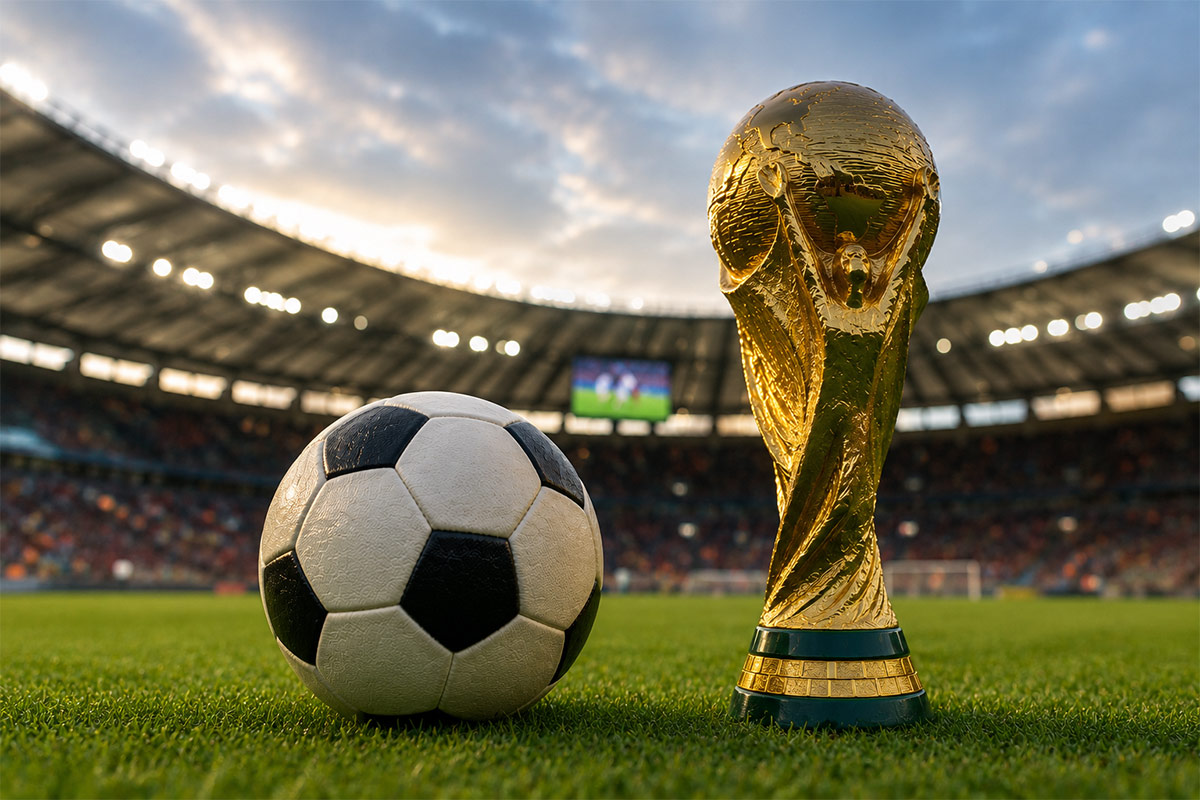
The history of the FIFA World Cup is one of the greatest stories in sports. Since the first tournament in 1930, the FIFA World Cup has grown from a small international competition into the biggest sporting event on Earth, watched by billions of fans across every continent. More than just a football tournament, the World Cup has become a global cultural phenomenon that creates legendary players, unforgettable goals, emotional rivalries, and historic moments that define generations of football fans.
Throughout FIFA World Cup history, the tournament has produced some of the greatest athletes and most iconic matches ever seen in sports. From Pelé leading Brazil to glory as a teenager to Diego Maradona’s brilliance in 1986, Zinedine Zidane’s dominance in 1998, and Lionel Messi finally winning the trophy in 2022, every era of the World Cup has introduced new legends and unforgettable stories.
The competition has also created some of football’s most important records. Fans around the world continue searching questions like “who has the most goals in FIFA World Cup history?” and “which countries have the most World Cup titles?” because these records help define football greatness. The World Cup is where careers become immortal, where nations build football legacies, and where moments of pressure, drama, heartbreak, and celebration become part of sports history forever.
Another reason FIFA World Cup history remains so fascinating is the tournament’s ability to evolve across different generations. The World Cup has witnessed tactical revolutions, changes in football technology, global superstars, political moments, shocking upsets, and emotional finals that continue to shape the modern game. From black-and-white television broadcasts decades ago to today’s global digital audiences, the FIFA World Cup remains the ultimate stage for football excellence.
Today, debates about the greatest World Cup players of all time, the countries with the most World Cup titles, and the most goals in World Cup history continue to fuel football culture around the world. Whether someone supports Brazil, Argentina, Germany, France, or another football nation, the history of the FIFA World Cup connects generations of fans through unforgettable memories and legendary moments that continue to inspire the sport today.
What Is the FIFA World Cup?
The FIFA World Cup is the most important and prestigious international football tournament in the world. Organized by FIFA, the tournament brings together national football teams from around the globe to compete for the title of world champion every four years. Since the first World Cup was held in 1930, the competition has become the biggest event in international sports, attracting billions of viewers and creating some of the most legendary moments in football history.
The tournament begins with a long qualification process where national teams compete across different continents for a place in the final competition. Once qualified, teams travel to the host country to compete in the World Cup finals, which include group-stage matches followed by knockout rounds leading to the final match. Winning the FIFA World Cup is considered the highest achievement in international football.
Throughout FIFA World Cup history, the tournament has expanded significantly. Early editions featured only a small number of teams, while modern World Cups include dozens of nations from every continent. The 2026 FIFA World Cup is expected to be the largest tournament ever, featuring 48 national teams hosted across the United States, Canada, and Mexico.
The FIFA World Cup is also known for creating global football icons. Players such as Pelé, Diego Maradona, Zinedine Zidane, Ronaldo Nazário, Cristiano Ronaldo, and Lionel Messi became part of football history through their World Cup performances. For many fans, the World Cup is where the greatest World Cup players of all time prove themselves on the biggest stage under the highest pressure.
Another reason the competition is so important is its cultural and emotional impact. Entire countries stop to watch matches, cities celebrate victories for days, and legendary goals become permanent parts of sports culture. Questions like “who has the most goals in FIFA World Cup history?” and “which countries have the most World Cup titles?” continue to drive debates among football fans because the World Cup represents the ultimate measure of football greatness.
Unlike club football, where players represent professional teams, the FIFA World Cup allows athletes to represent their nations. This creates emotional rivalries and unforgettable moments that go beyond sports. From historic finals and shocking underdog victories to dramatic penalty shootouts and iconic celebrations, the FIFA World Cup remains the ultimate global football tournament and one of the most watched events in the world.
How the FIFA World Cup became the biggest football tournament in the world
The FIFA World Cup became the biggest football tournament in the world because it combines national pride, elite competition, global media attention, and unforgettable moments on one stage. When FIFA organized the first World Cup in 1930, international football was still developing globally. Over the decades, improvements in television broadcasting, international travel, sponsorships, and digital media transformed the tournament into a worldwide event followed by billions of fans. Unlike club football, where players compete for professional teams, the World Cup creates emotional national rivalries that unite entire countries behind their teams.
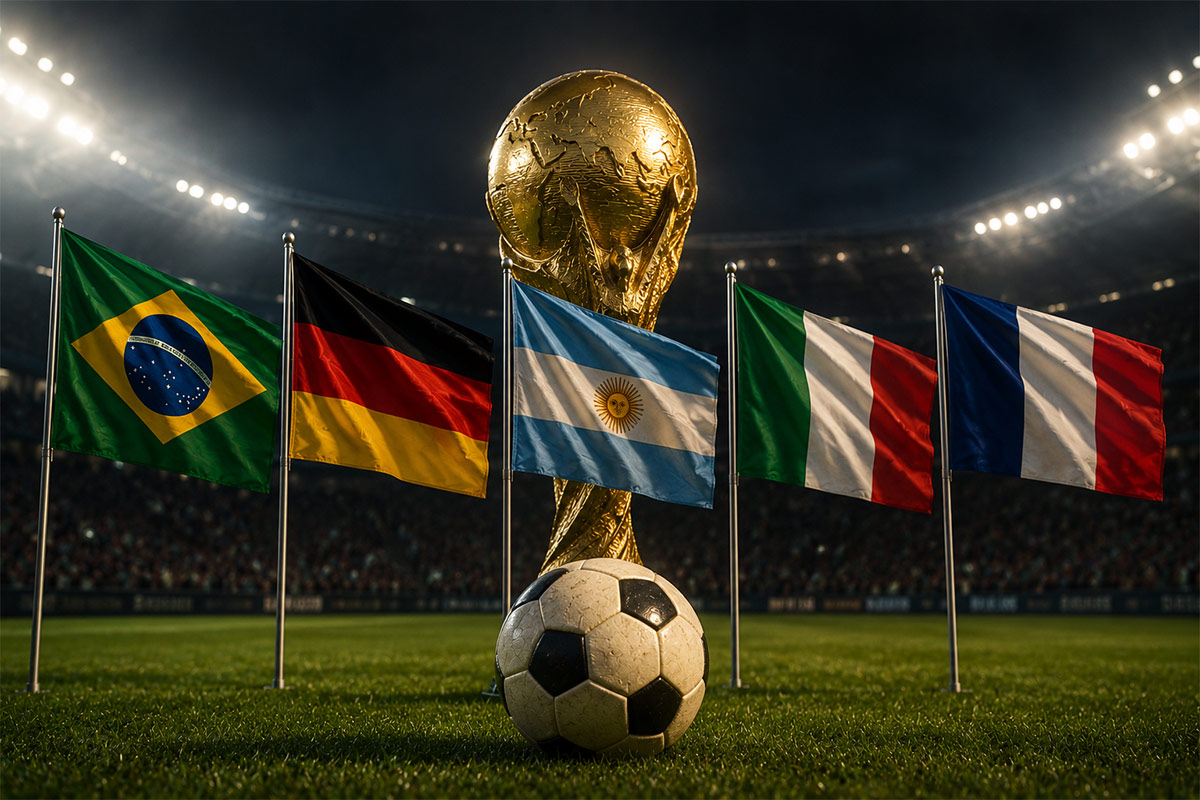
Another reason the tournament became so powerful is the legendary history built around it. Historic teams like Brazil national football team, Argentina national football team, Germany national football team, and France national football team helped create iconic finals, unforgettable goals, and some of the greatest World Cup players of all time. Every tournament adds new records, dramatic underdog stories, and moments that become part of global sports culture. Questions about the countries with most World Cup titles or the most goals in World Cup history continue to fuel worldwide football debates, helping the FIFA World Cup remain the ultimate symbol of football greatness across generations.
FIFA World Cup History Timeline
The history of the FIFA World Cup is filled with legendary players, unforgettable finals, tactical revolutions, political moments, and iconic football stories that changed the sport forever. Since the tournament began in 1930, every World Cup era has introduced new champions, historic rivalries, and moments that became part of global sports culture. Over time, the FIFA World Cup evolved from a small international event into the most watched football tournament in the world.
Here is a timeline of some of the most important moments in FIFA World Cup history:
- 1930 – The first FIFA World Cup is held in Uruguay, with Uruguay national football team winning the inaugural tournament
- 1958 – Pelé wins his first World Cup with Brazil at only 17 years old
- 1966 – England national football team wins its first and only World Cup title at home
- 1970 – Brazil wins its third World Cup and Pelé becomes a global football icon
- 1986 – Diego Maradona delivers one of the greatest individual performances in football history during the Mexico World Cup
- 1998 – France national football team wins its first World Cup led by Zinedine Zidane
- 2002 – Ronaldo Nazário leads Brazil to its fifth World Cup title
- 2010 – Spain national football team wins its first World Cup with its famous possession-based football style
- 2014 – Germany defeats Brazil 7–1 in one of the most shocking matches in FIFA World Cup history
- 2022 – Lionel Messi wins the World Cup with Argentina in an unforgettable final against France
These moments helped define modern football and continue to shape debates about the greatest World Cup players of all time and the most iconic matches ever played.
Most important moments in FIFA World Cup history
Some moments in FIFA World Cup history became larger than football itself because of their emotional, cultural, and sporting impact. One of the most famous examples is Maradona’s “Hand of God” goal and his incredible solo run against England in 1986, which became part of football mythology forever. Another legendary moment came in 1970 when Pelé and Brazil’s attacking football changed how the sport was viewed globally.
The World Cup has also produced unforgettable underdog stories and emotional national victories. Italy national football team winning the 2006 World Cup after the country’s football scandal, Spain dominating world football in 2010, and Argentina’s dramatic triumph in 2022 are all considered defining moments in tournament history. Matches like Germany’s 7–1 victory over Brazil in 2014 or France’s comeback against Argentina in the 2022 final continue to be discussed as some of the most dramatic events ever seen in international football.
Greatest FIFA World Cup finals of all time
The FIFA World Cup final is considered the biggest match in football, and several finals are remembered as masterpieces of drama, skill, and emotion.
Some of the greatest FIFA World Cup finals of all time include:
| World Cup Final | Why It Was Legendary |
|---|---|
| Argentina vs France (2022) | Often called the greatest World Cup final ever because of the drama, penalties, and Messi vs Mbappé storyline |
| Brazil vs Italy (1970) | Pelé’s Brazil produced one of the greatest team performances in football history |
| Argentina vs West Germany (1986) | Maradona led Argentina to glory in one of football’s most iconic tournaments |
| France vs Brazil (1998) | Zidane dominated the final and gave France its first World Cup title |
| Italy vs France (2006) | Famous for Zidane’s final match and the dramatic penalty shootout |
| Germany vs Argentina (2014) | Mario Götze’s extra-time goal delivered Germany’s fourth title |
Many football fans consider the 2022 final between Argentina national football team and France national football team the greatest World Cup final ever played because it combined legendary performances, dramatic momentum swings, extra time, penalties, and the emotional story of Lionel Messi finally winning the trophy. The match perfectly captured why FIFA World Cup history continues to fascinate football fans across generations.
Countries With Most World Cup Titles
In FIFA World Cup history, only a small group of countries have managed to win the tournament multiple times. These nations are considered football giants because they have produced legendary players, iconic teams, and unforgettable moments across different generations. As of 2026, before the 2026 FIFA World Cup champion is decided, Brazil remains the most successful country in World Cup history.
| Country | World Cup Titles | Winning Years |
|---|---|---|
| Brazil | 5 | 1958, 1962, 1970, 1994, 2002 |
| Germany | 4 | 1954, 1974, 1990, 2014 |
| Italy | 4 | 1934, 1938, 1982, 2006 |
| Argentina | 3 | 1978, 1986, 2022 |
| France | 2 | 1998, 2018 |
| Uruguay | 2 | 1930, 1950 |
| England | 1 | 1966 |
| Spain | 1 | 2010 |
This table shows why debates about the countries with most World Cup titles are such an important part of football history. Brazil’s five titles make it the most successful nation, while Germany and Italy remain close behind with four titles each. Argentina’s 2022 victory also strengthened its place among the greatest football nations in FIFA World Cup history.
Which country has won the most FIFA World Cups?
Brazil has won the most FIFA World Cups, with five titles. The Brazilian national team won the tournament in 1958, 1962, 1970, 1994, and 2002, making Brazil the most successful country in World Cup history.
Brazil’s dominance is also connected to some of the greatest World Cup players of all time, including Pelé, Ronaldo Nazário, Romário, Rivaldo, Ronaldinho, and many other legendary footballers. The country’s attacking style, technical skill, and long history of producing world-class players have made Brazil a symbol of World Cup excellence.
Who Has the Most Goals in FIFA World Cup History?
The player with the most goals in FIFA World Cup history is Miroslav Klose of Germany, who scored 16 goals across four World Cup tournaments. His record is one of the most important individual achievements in FIFA World Cup history because it shows consistency across several generations of international football, not just one great tournament.
Klose broke the previous record held by Brazilian legend Ronaldo Nazário during the 2014 FIFA World Cup. Since then, his name has remained at the top of the all-time World Cup scoring list. Players like Ronaldo, Gerd Müller, Just Fontaine, Lionel Messi, and Kylian Mbappé also rank among the top scorers, making this one of the most debated records in football.
| Rank | Player | Country | World Cup Goals |
|---|---|---|---|
| 1 | Miroslav Klose | Germany | 16 |
| 2 | Ronaldo Nazário | Brazil | 15 |
| 3 | Gerd Müller | Germany | 14 |
| 4 | Just Fontaine | France | 13 |
| 5 | Lionel Messi | Argentina | 13 |
| 6 | Kylian Mbappé | France | 12 |
| 7 | Pelé | Brazil | 12 |
| 8 | Sándor Kocsis | Hungary | 11 |
| 9 | Jürgen Klinsmann | Germany | 11 |
| 10 | Helmut Rahn | Germany | 10 |
| 11 | Gary Lineker | England | 10 |
| 12 | Gabriel Batistuta | Argentina | 10 |
| 13 | Teófilo Cubillas | Peru | 10 |
| 14 | Grzegorz Lato | Poland | 10 |
| 15 | Thomas Müller | Germany | 10 |
Players with the most goals in World Cup history
When discussing the most goals in World Cup history, Miroslav Klose stands above every other player. His 16 goals came across the 2002, 2006, 2010, and 2014 tournaments, showing how difficult it is to stay effective at the highest international level for more than a decade.
Ronaldo Nazário is second with 15 goals and remains one of the most iconic World Cup forwards ever. His comeback story in 2002, when he led Brazil to the title and finished as the tournament’s top scorer, is one of the most famous chapters in FIFA World Cup history.
Lionel Messi and Kylian Mbappé are also important names in modern World Cup scoring history. Messi reached 13 goals after Argentina’s 2022 victory, while Mbappé reached 12 goals at a young age, including a hat-trick in the 2022 final. This makes Mbappé one of the few active players with a realistic chance of challenging Klose’s all-time record in future tournaments.
Most goals scored in a single FIFA World Cup tournament
The record for the most goals scored in a single FIFA World Cup tournament belongs to Just Fontaine of France, who scored 13 goals in the 1958 World Cup. This remains one of the most remarkable records in football because Fontaine achieved it in only one tournament.
| Player | Country | Goals | Tournament |
|---|---|---|---|
| Just Fontaine | France | 13 | 1958 |
| Sándor Kocsis | Hungary | 11 | 1954 |
| Gerd Müller | West Germany | 10 | 1970 |
| Eusébio | Portugal | 9 | 1966 |
| Ronaldo Nazário | Brazil | 8 | 2002 |
Fontaine’s 13-goal record is especially impressive because modern World Cups are more tactical and defensive, making it extremely difficult for one player to score at that level in a single edition. While many legends have dominated individual tournaments, Fontaine’s 1958 performance remains the greatest single-tournament scoring achievement in FIFA World Cup history.
Greatest World Cup Players of All Time
The greatest World Cup players of all time are not remembered only for their talent, but for what they did on football’s biggest stage. FIFA World Cup history is filled with players who carried their nations, scored unforgettable goals, changed matches under pressure, and became symbols of football greatness. Some players became legends because they won the trophy, while others are remembered for individual brilliance even without winning the tournament.
A strong list of legendary World Cup players usually includes:
- Pelé – Three-time World Cup winner and one of the greatest footballers in history
- Diego Maradona – The star of the 1986 World Cup and one of football’s most iconic figures
- Lionel Messi – Led Argentina to the 2022 title and became one of the defining players in World Cup history
- Ronaldo Nazário – Legendary Brazilian striker and 2002 World Cup hero
- Zinedine Zidane – Dominated the 1998 final and became France’s greatest World Cup icon
- Miroslav Klose – All-time top scorer in FIFA World Cup history with 16 goals
- Franz Beckenbauer – World Cup winner as both player and manager
- Johan Cruyff – Changed football with the Netherlands in 1974 despite not winning the trophy
- Kylian Mbappé – Already one of the greatest modern World Cup performers
- Gerd Müller – One of the most clinical scorers in World Cup history
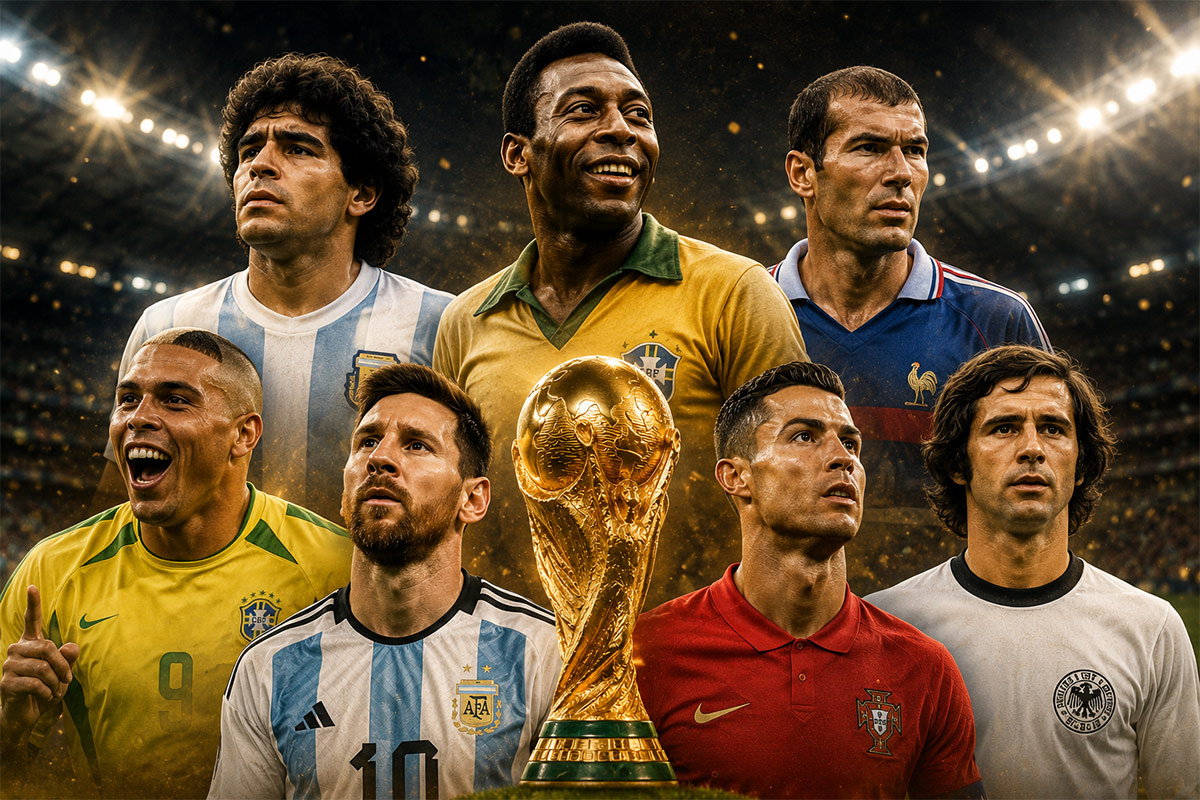
These players shaped the tournament in different ways. Pelé represented the rise of Brazil as a global football superpower. Maradona showed how one player could dominate an entire tournament. Messi’s 2022 triumph completed one of the greatest football careers ever. Ronaldo and Zidane defined late-1990s and early-2000s World Cup football, while Klose became the standard for scoring consistency at the tournament.
Most iconic performances in FIFA World Cup history
Some performances in FIFA World Cup history are remembered because they changed the meaning of greatness. Pelé’s 1958 tournament remains legendary because he became a world champion as a teenager and scored in the final. Maradona’s 1986 World Cup is often considered the greatest individual tournament ever, especially because of his performances against England and West Germany.
Ronaldo Nazário’s 2002 comeback is another iconic chapter. After years of serious injuries, he scored eight goals in the tournament and delivered two goals in the final against Germany. Zidane’s 1998 final performance against Brazil also became part of football history, as his two headed goals helped France win its first World Cup.
In modern football, Lionel Messi’s 2022 World Cup campaign stands among the greatest performances ever. He scored in every knockout round, led Argentina emotionally and technically, and lifted the trophy after one of the greatest finals in history. Kylian Mbappé’s hat-trick in the same final also became one of the most extraordinary individual performances ever seen in a World Cup final.
Greatest captains and leaders in World Cup history
Great World Cup captains are remembered not only for skill, but for leadership, mentality, and the ability to carry a team through pressure. In FIFA World Cup history, several captains became symbols of national pride because they led their countries to unforgettable victories.
Some of the greatest captains and leaders in World Cup history include:
- Diego Maradona – Led Argentina to the 1986 title with unmatched influence
- Franz Beckenbauer – Captained West Germany to the 1974 World Cup title
- Dino Zoff – Captained Italy to victory in 1982 at the age of 40
- Carlos Dunga – Led Brazil to the 1994 World Cup with discipline and control
- Zinedine Zidane – Inspired France in 1998 and 2006 with leadership and elite performance
- Iker Casillas – Captained Spain to its first World Cup title in 2010
- Philipp Lahm – Led Germany to the 2014 title with tactical intelligence and consistency
- Lionel Messi – Captained Argentina to victory in 2022 after years of pressure and expectation
Among these leaders, Maradona and Messi hold a special place because both carried Argentina through emotionally intense tournaments and became national icons. Beckenbauer and Lahm represent German leadership, structure, and discipline, while Casillas gave Spain calmness and authority during its golden generation. These captains helped turn strong teams into world champions, proving that leadership is one of the most important qualities in World Cup success.
FIFA World Cup Records and Statistics
FIFA World Cup history is full of records that show how dramatic, unpredictable, and competitive the tournament has become. Some records belong to legendary players, while others belong to teams that created unforgettable scorelines, dominant campaigns, or historic moments. These records help fans compare different eras and understand why the World Cup remains the biggest stage in football.
Some of the most important FIFA World Cup records include:
| Record | Holder | Detail |
|---|---|---|
| Most World Cup titles by a country | Brazil | 5 titles |
| Most goals in World Cup history | Miroslav Klose | 16 goals |
| Most goals in a single tournament | Just Fontaine | 13 goals in 1958 |
| Fastest goal in World Cup history | Hakan Şükür | 11 seconds in 2002 |
| Most World Cup appearances by a player | Lionel Messi | 26 matches |
| Biggest World Cup win | Hungary, Yugoslavia, Germany | 9-goal margin victories |
| Most World Cup wins by a team | Brazil | 76 wins |
| Most World Cup goals by a team | Brazil | 237 goals |
Fastest goals and biggest wins in FIFA World Cup history
The fastest goal in FIFA World Cup history was scored by Hakan Şükür for Turkey against South Korea in 2002, after only 11 seconds. Other famous fast goals include Václav Mašek’s goal for Czechoslovakia in 1962 after 15 seconds and Ernest Lehner’s goal for Germany in 1934 after 25 seconds.
Some of the biggest wins in FIFA World Cup history came from dominant attacking performances. The largest winning margin is 9 goals, achieved in matches such as Hungary 10–1 El Salvador in 1982, Yugoslavia 9–0 Zaire in 1974, and Hungary 9–0 South Korea in 1954. Germany’s 7–1 win over Brazil in 2014 is also one of the most shocking results in World Cup history because it happened in a semi-final against the host nation.
Most appearances in FIFA World Cup history
The record for the most appearances in FIFA World Cup history belongs to Lionel Messi, who played 26 World Cup matches for Argentina. His record reflects both longevity and consistency across several tournaments, from his early appearances in 2006 to leading Argentina to the title in 2022.
Other players with many World Cup appearances include Lothar Matthäus, Miroslav Klose, Paolo Maldini, Cristiano Ronaldo, and Diego Maradona. These players are remembered not only because they played many matches, but because they remained important for their national teams across multiple World Cup eras.
FAQ About FIFA World Cup History
- Who has the most goals in FIFA World Cup history?
Miroslav Klose has the most goals in FIFA World Cup history with 16 goals for Germany.
- Which country has the most World Cup titles?
Brazil national football team has won the most FIFA World Cups with 5 titles.
- Who are the greatest World Cup players of all time?
Some of the greatest World Cup players of all time include Pelé, Diego Maradona, Lionel Messi, Zinedine Zidane, and Ronaldo Nazário.