
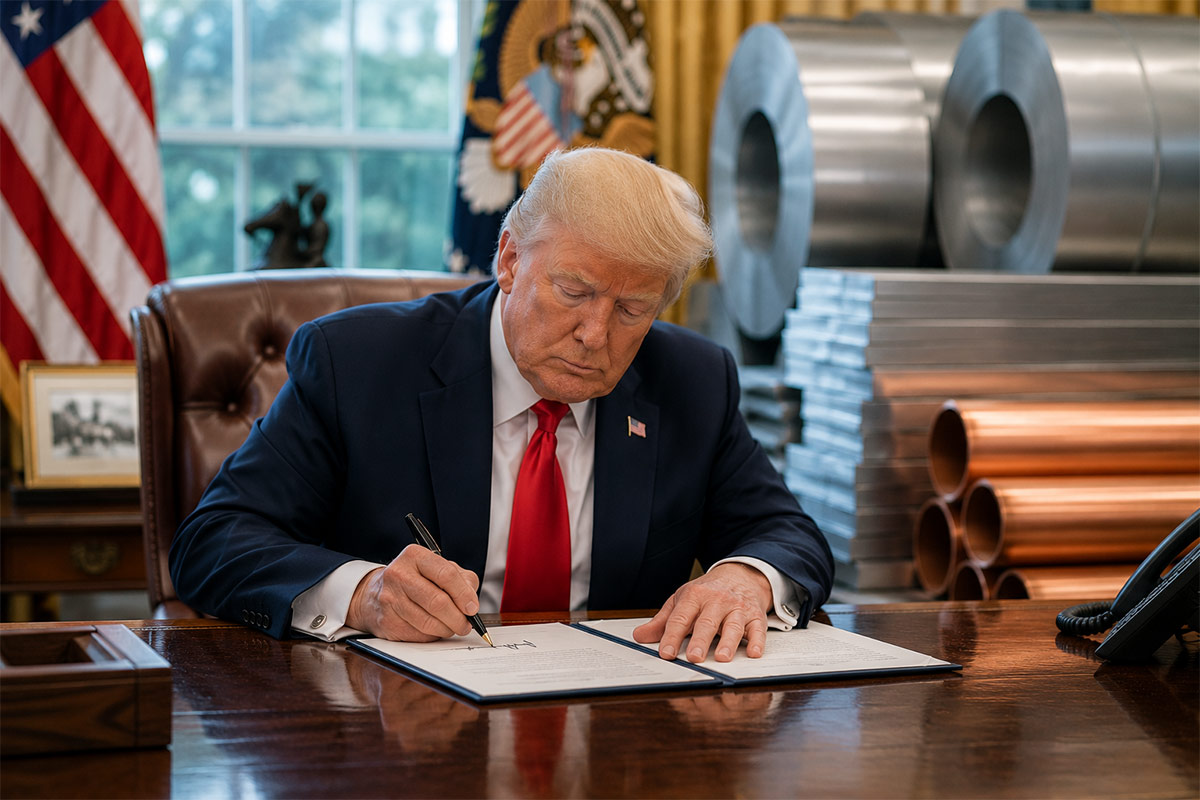
US President Donald Trump has signed a new proclamation amending tariffs on certain steel, aluminium and copper imports, the White House announced. The changes affect parts of the existing Section 232 national security tariffs, which are used by the United States to impose duties on imports considered important to national security and domestic industrial capacity.
The latest order adjusts tariff rates on selected derivative products, adds new categories to the tariff list and introduces temporary rules designed to encourage near-term investment in US industrial production.
Some Steel and Aluminium Product Tariffs Cut to 15%
Under the new proclamation, tariffs on certain steel and aluminium derivative products will be reduced from 25% to 15%. The lower rate will apply to selected products, including some types of agricultural machinery and residential heating, ventilation and air conditioning equipment.
The move appears aimed at easing tariff pressure on specific equipment categories while keeping broader import protections in place for steel and aluminium-related goods.
Industrial Equipment From Trade Deal Countries Gets 15% Tariff
The order also places a 15% tariff on mobile industrial equipment such as bulldozers and forklifts when imported from countries covered by qualifying trade agreements. According to the White House, this treatment applies only when the equipment comes from “trade deal countries” entitled to that tariff rate.
This means some industrial machinery imports will face a lower rate than the standard 25% tariff, depending on the country of origin and whether the importer meets the conditions set out in the proclamation.
Foreign Companies Can Qualify for 10% Tariff in Some Cases
The proclamation also creates a pathway for some foreign companies to qualify for a 10% tariff. To receive that rate, their capital equipment must include at least 85% US melted and poured steel or US smelted and cast aluminium by weight.
This provision is designed to encourage manufacturers to use more US-produced steel and aluminium in equipment that is later imported into the country. In practice, it rewards companies that rely heavily on American metal inputs, even if the finished equipment is produced abroad.
New 25% Duties Added for Steel Racks and Aluminium Plates
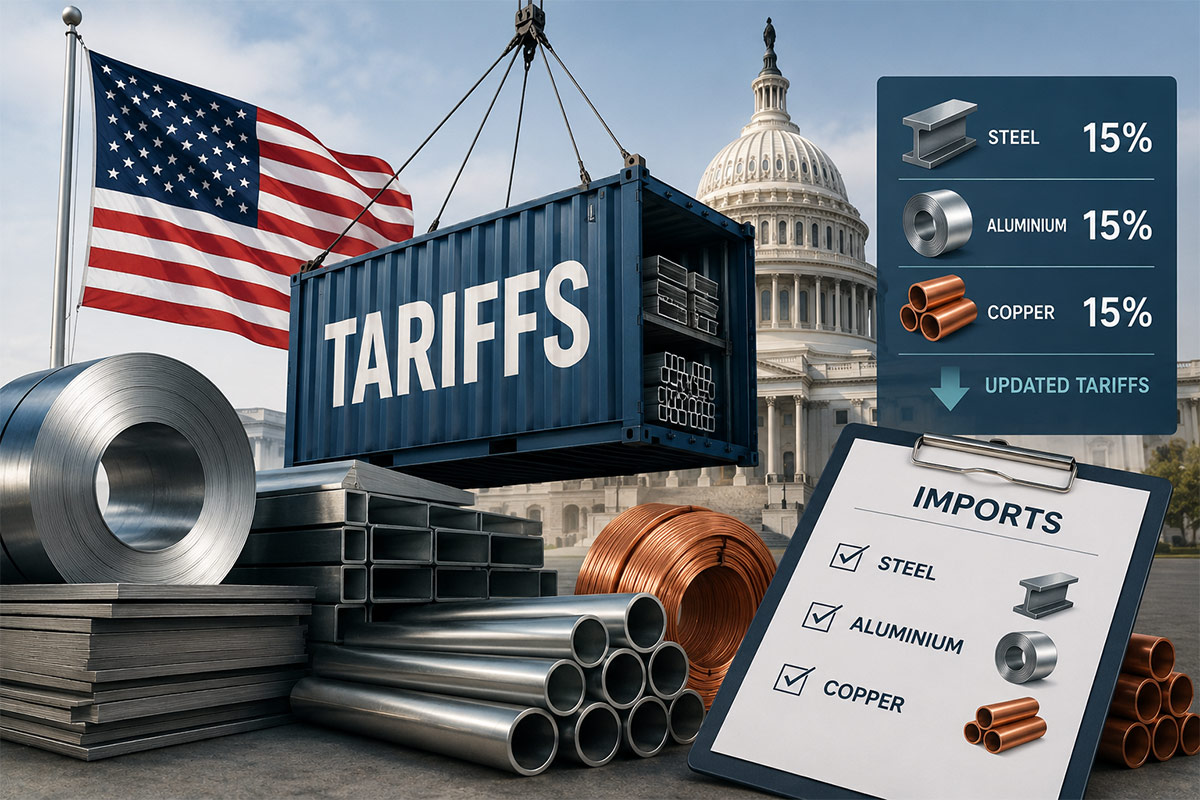
While some tariff rates are being reduced, the order also expands the list of products subject to higher duties. Two new categories will now face 25% tariffs: The inclusion of these products shows that the administration is not simply reducing tariffs across the board. Instead, it is reshaping the tariff structure by lowering duties on some goods while tightening import rules for others.
When Will the New Tariff Changes Begin?
The tariff adjustments will take effect for goods imported into the United States, or withdrawn from bonded warehouses, after 12.01am EST on June 8, 2026. The changes are scheduled to remain in place until December 31, 2027. According to the White House, the temporary structure is intended to encourage short-term investments that support the rebuilding of the country’s industrial base.
Why the Tariff Changes Matter
The changes could affect manufacturers, importers, construction companies, machinery suppliers and businesses that rely on steel, aluminium or copper-related products. For some companies, the lower 15% tariff may reduce import costs on selected equipment. For others, the new 25% duties on steel racks and aluminium lithographic plates could raise costs.
The 10% tariff pathway for equipment containing high levels of US-produced steel or aluminium also creates a financial incentive for foreign manufacturers to use American metal in their supply chains.
Trump Keeps Focus on Industrial Policy
The proclamation reflects Trump’s continued focus on tariffs as a tool for supporting US manufacturing and protecting domestic industrial sectors. By adjusting rates instead of removing them entirely, the administration is trying to balance two goals: reducing pressure on some imported machinery and equipment while still encouraging companies to invest in US steel and aluminium production.
The tariff changes will remain a key issue for importers and manufacturers as they prepare for the June 8 implementation date.