
Odyssey’s Ending depends on which version of the myth you follow. Homer’s epic ends after the king of Ithaca returns home, defeats Penelope’s suitors and reclaims his household, but later writers imagined very different futures for him, ranging from another voyage to a violent death and even punishment in Dante’s Hell.
In Christopher Nolan’s 2026 film The Odyssey, Matt Damon’s Odysseus does return to Ithaca, where he must prove his identity to Penelope and Telemachus after years away from home. With Matt Damon leading the film, The Odyssey also connects to the wider conversation around the highest paid actors in the world and how major stars shape big-budget cinema. The film follows the central shape of Homer’s story, but it takes a more cinematic and symbolic approach to the ending. Instead of focusing heavily on the threatened civil conflict after the suitors are killed, Nolan points toward the end of one age and the beginning of another.
Nolan’s The Odyssey Gives Odysseus a Different Final Image
In Homer’s poem, Odysseus kills the suitors, reunites with Penelope and later faces the anger of the dead suitors’ families. The story ends only when Athena imposes peace on Ithaca, stopping further bloodshed.
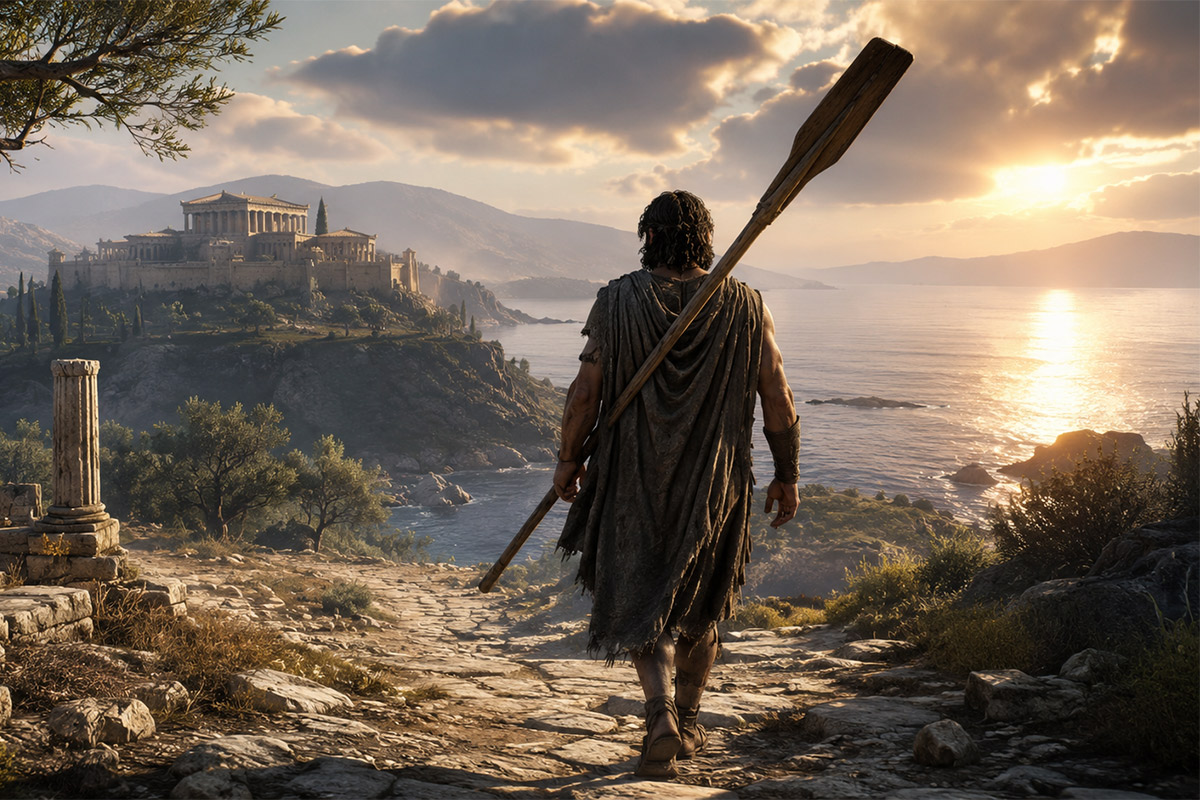
Nolan’s ending reportedly moves away from that divine intervention. Instead, Odysseus gives Ithaca to Telemachus and sails away with Penelope, creating a quieter and more romantic final image. This choice makes the ending feel less like a political settlement and more like the passing of an older, violent world into legend.
The Telegony Gives Odysseus a Tragic Death
One of the most famous ancient continuations of the story is The Telegony, a lost epic known through later summaries. In that version, Odysseus does not simply live peacefully after returning home.
He travels again, rules elsewhere for a time, and eventually returns to Ithaca. Meanwhile, Telegonus, his son with Circe, grows up and goes searching for his father. After arriving on Ithaca without knowing where he is, Telegonus clashes with Odysseus and kills him with a spear tipped with the poisonous spine of a stingray.
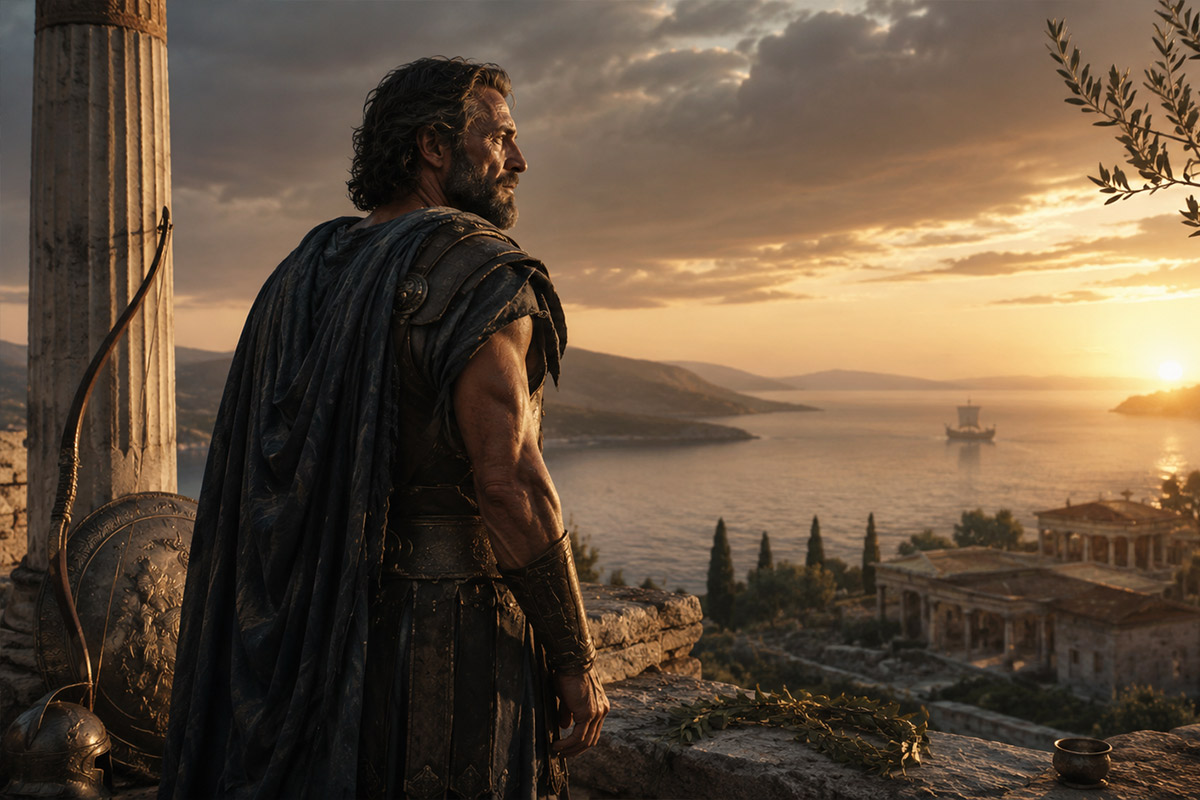
The irony is that the prophet Tiresias had told Odysseus that his death would come “from the sea.” In The Telegony, that prophecy is fulfilled in a strange and tragic way.
Tennyson Imagines Odysseus Leaving Again
In Alfred, Lord Tennyson’s poem Ulysses, Odysseus survives his homecoming but cannot accept a quiet life as an aging king. He is bored by domestic rule and leaves Telemachus to govern Ithaca while he sails west with his old companions.
This version presents Odysseus as a restless explorer who cannot stop searching for new worlds. Nolan’s ending seems closer to this idea than to The Telegony, though Nolan gives the journey a softer emotional tone by sending Penelope with him.
Dante Sends Odysseus to Hell
Dante’s Divine Comedy offers a much darker version. In Inferno, Odysseus, called Ulysses, appears in the eighth circle of Hell, punished for fraud. Dante focuses on his cleverness as something dangerous when used to manipulate others.
In Dante’s version, Ulysses never truly returns home. Instead, he convinces his crew to sail beyond the known world. Their ship is destroyed, and they die before reaching their goal. For Dante, Odysseus becomes a warning about pride, ambition and the misuse of intelligence.
So What Really Happens After The Odyssey? Odyssey’s Ending!
There is no single official answer about Odyssey’s Ending. In Homer, Odysseus regains his home and peace is restored. In The Telegony, he dies at the hands of his unknown son. In Tennyson, he leaves again in search of new horizons. In Dante, his endless curiosity leads him to damnation.
Nolan’s version appears to choose a more emotional middle path. Odysseus survives, passes Ithaca to Telemachus and sails away with Penelope. It is not the most traditional ending, but it fits the film’s larger idea: after years of war, monsters and suffering, Odysseus does not simply return to the old world. He leaves it behind.