

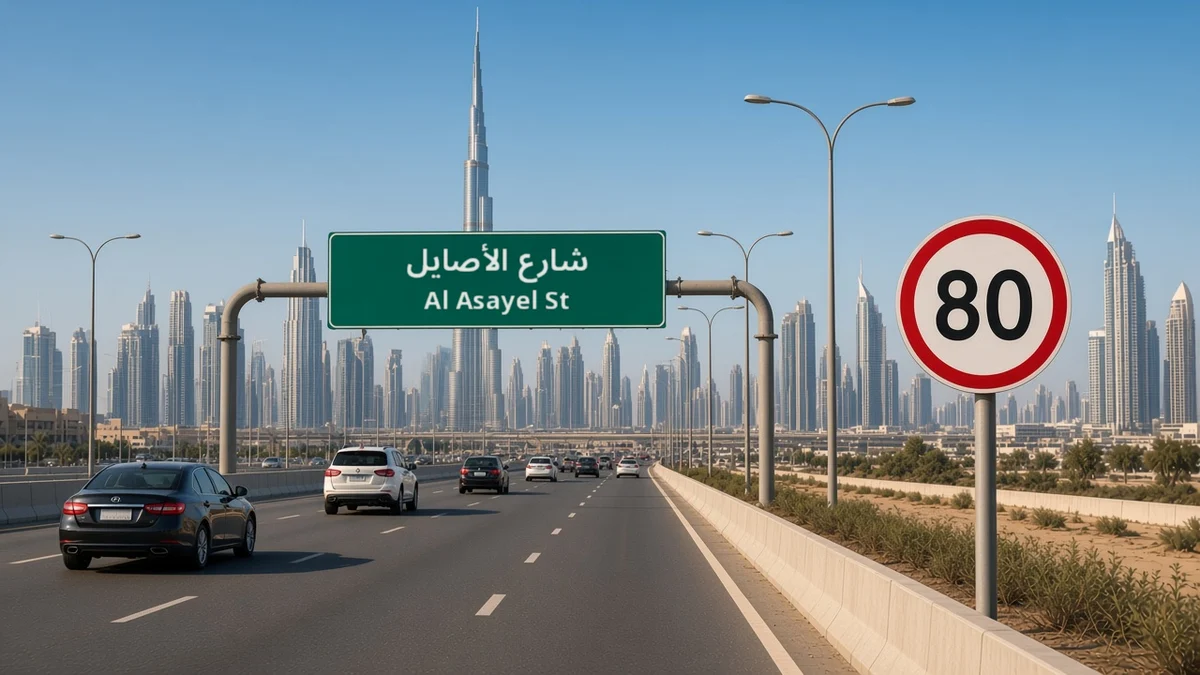
Dubai new speed limits come into force on Sunday, 1 November 2026, on sections of five main streets. Three of them get a higher limit and two get a lower one, so a road you use every day may have a different number on its signs from 1 November. The Roads and Transport Authority (RTA) announced the change on 21 October with Dubai Police General Command, and the new limits apply in both directions.
Key points
- The new limits start on 1 November 2026.
- Al Asayel, Al Mustaqbal and Latifa bint Hamdan streets go up.
- Al Rebat Street and Sheikh Sabah Al Ahmad Al Jaber Al Sabah Street go down by 10 km/h.
- RTA says new signs and reprogrammed speed cameras will be in place by 1 November.
Which roads get Dubai’s new speed limits?
Only the sections listed below are affected, not the whole length of each street.
| Street | Section | Current limit | From 1 November |
|---|---|---|---|
| Al Asayel Street | Oud Maitha Street to Al Meydan Street | 60 km/h | 80 km/h |
| Al Mustaqbal Street | Sheikh Rashid Street to Al Meydan Street | 60 km/h | 70 km/h |
| Latifa bint Hamdan Street | Sheikh Zayed Road to Al Khail Road | 60 km/h | 70 km/h |
| Al Rebat Street | Marrakech Street to Sheikh Mohammed bin Zayed Road | 100 km/h | 90 km/h |
| Sheikh Sabah Al Ahmad Al Jaber Al Sabah Street | 2nd December Street to Khalid bin Al Waleed Street | 80 km/h | 70 km/h |
The largest change is on Al Asayel Street, where the limit rises by 20 km/h. The two reductions matter more for your licence, though. If you drive Al Rebat Street or Sheikh Sabah Street on autopilot, it is easy to keep the old speed in your head. The same five changes were reported by Khaleej Times. RTA says it will replace the speed limit signs on the affected sections and reprogram speed cameras before the new limits take effect.
Why is RTA changing the limits?
RTA said the update follows the Dubai Traffic Safety Strategy and the indicators of the 2025 action plan for evaluating road safety performance. It is based on the 2026 updates to the technical specifications in the Dubai Speed Management Manual and on an engineering study carried out with an international consultant. The aim is smoother traffic, safer roads and limits that suit each road.
To set a limit, RTA looks at traffic volumes, the speed the road was designed for, the buildings and development along it, and the speed that 85% of drivers do not exceed. It also considers how many people walk along or cross the road and which key facilities are nearby.
Is there a radar margin on Dubai roads?
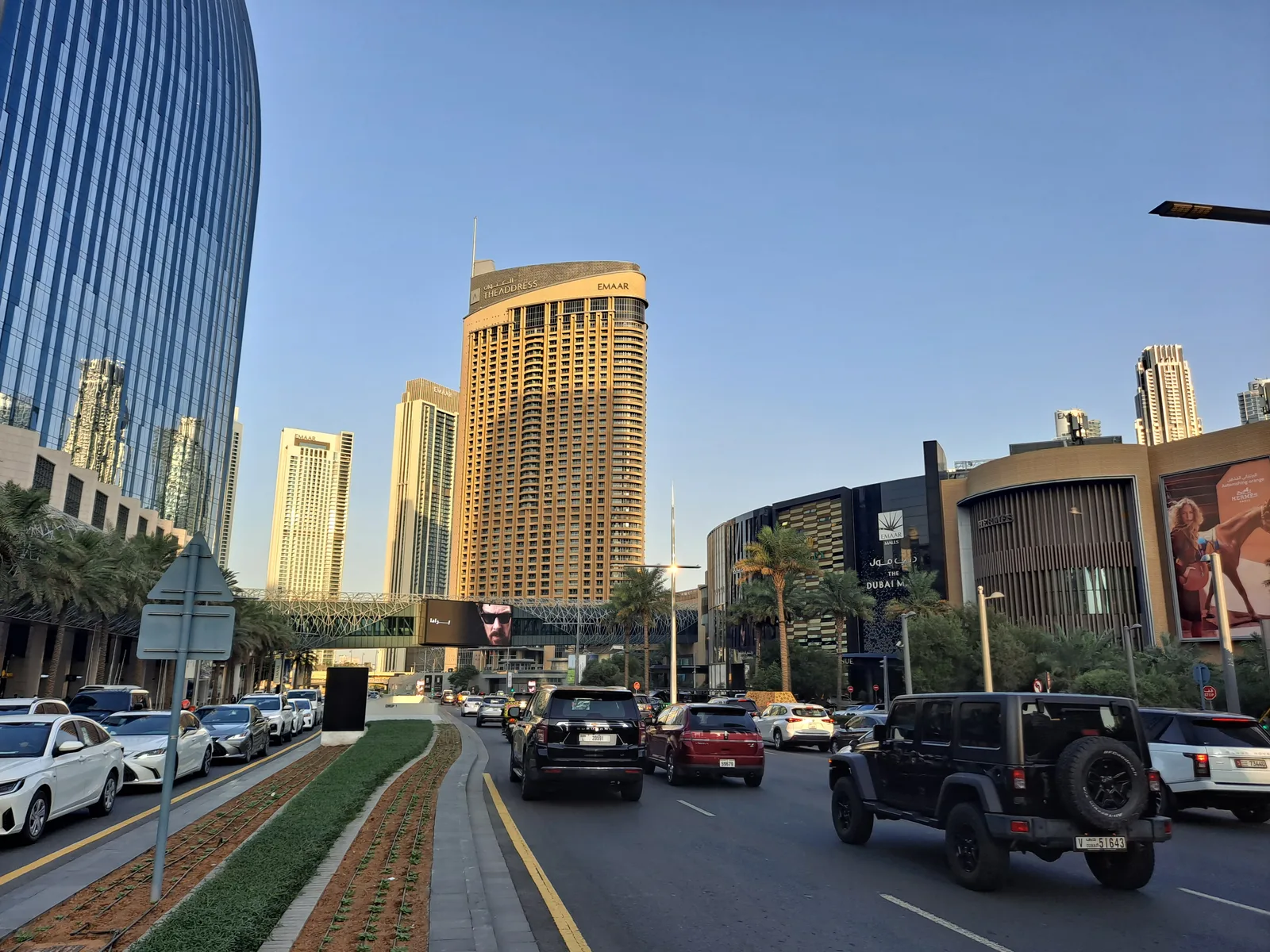
Dubai Police treats the posted limit and the radar trigger speed as two separate things. On many major roads, the radar is typically set about 20 km/h above the posted limit, so a camera on an 80 km/h road may only flash at 101 km/h, Gulf News explained. That margin is not permission to speed, and you should not assume it applies on every road or that it will stay the same.
How much are speeding fines in the UAE?
According to Gulf News, the fines for going over the enforcement limit are:
- Up to 20 km/h over: AED 300.
- Up to 30 km/h over: AED 600.
- Up to 40 km/h over: AED 700.
- Up to 50 km/h over: AED 1,000.
- Up to 60 km/h over: AED 1,500, 6 black points and 15 days’ vehicle impoundment.
- More than 60 km/h over: AED 2,000, 12 black points and 30 days’ impoundment.
- More than 80 km/h over: AED 3,000, 23 black points and 60 days’ impoundment.
What should drivers do before 1 November?
Keep to the limits on the signs you see today until the start date, then watch for the new signs on these five sections. On Al Rebat Street and Sheikh Sabah Street, slow down by 10 km/h from what you are used to. Gulf News also advises drivers to check the posted limits carefully on these two roads. If you are new to driving here, our guide on how to get a UAE driving license covers the rules and tests, and our breakdown of the cost of living in Dubai includes what it costs to run a car.
Main image: Al Asayel Street, Dubai (illustrative image).
For more news from across the Emirates, see our UAE section.