
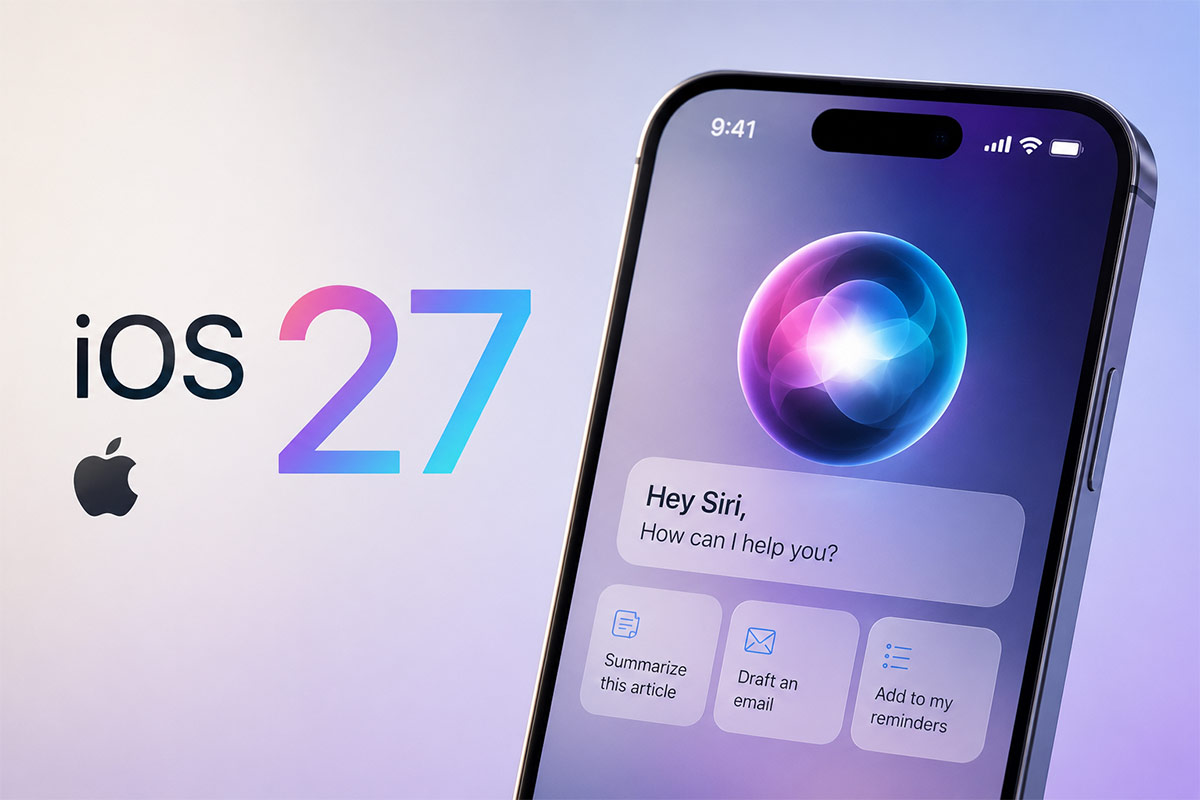
Apple is expected to reveal iOS 27 at its Worldwide Developers Conference on June 8, and early reports suggest the update could become one of the biggest iPhone software releases in recent years. While the company has not officially confirmed its full plans, leaks and analyst reports point to a strong focus on artificial intelligence. The biggest expected changes include a major redesign of Siri, deeper integration of Apple Intelligence and smarter tools across several built-in iPhone apps.
If the reports are accurate, iOS 27 may mark the moment Apple turns the iPhone into a more personal, context-aware AI device.
Siri Could Finally Get a Major AI Upgrade
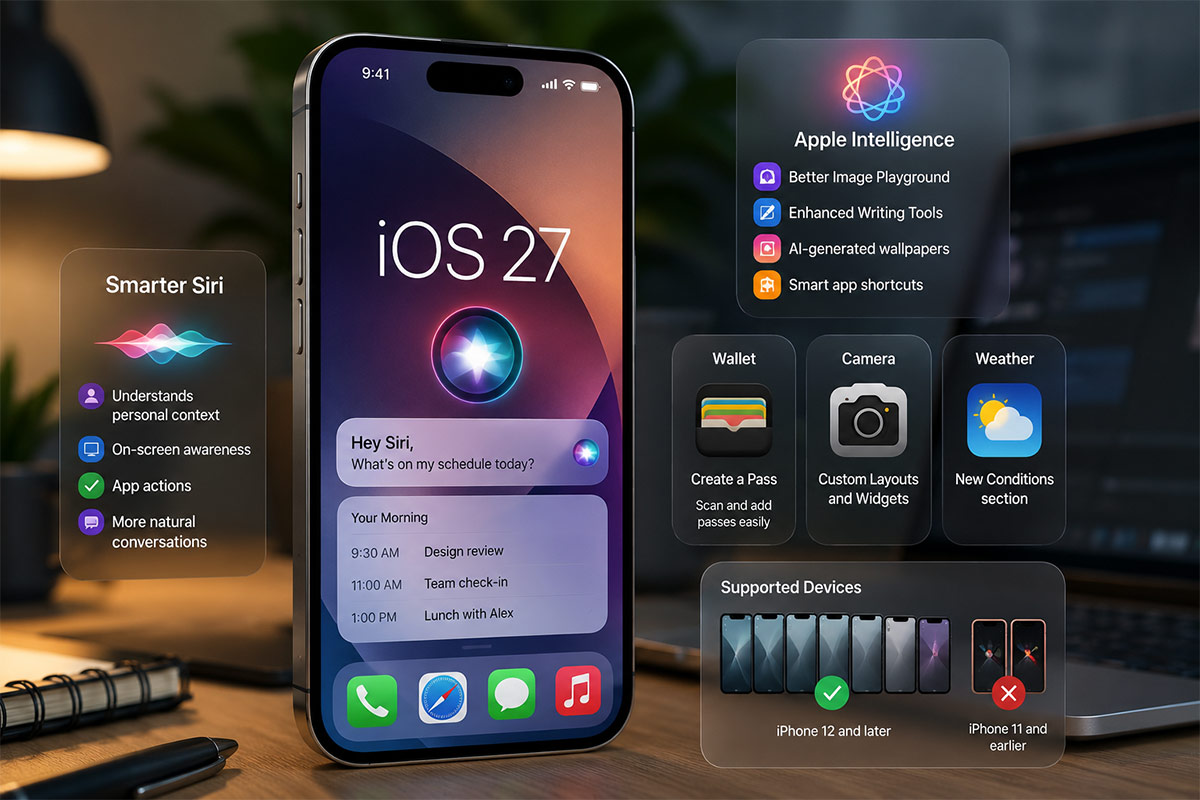
The most anticipated feature in iOS 27 is a major upgrade to Siri. Apple’s voice assistant is expected to become far more capable, moving closer to a modern AI chatbot that can understand context, respond more naturally and perform actions across multiple apps.
The new Siri may be able to understand what is happening on the screen, remember personal context and help users complete tasks without needing step-by-step instructions. This could make it more useful for daily actions such as sending messages, finding information, summarising content or managing app-based tasks.
Users are still expected to activate Siri through voice commands or the iPhone power button, but reports suggest Apple may introduce a new interface connected to the Dynamic Island. There are also claims that Siri could receive its own standalone app, which would place it closer to AI assistants such as ChatGPT and Gemini.
Apple May Let Users Choose AI Models
Another major possibility is that Apple may allow users to choose between different AI models for some Apple Intelligence features. Reports suggest that Apple could include options from outside partners, potentially including Google and other AI providers. This would be a notable shift for Apple, which usually prefers tightly controlled in-house experiences.
If introduced, this approach could give users more flexibility depending on whether they want stronger writing help, image tools, chatbot-style answers or productivity support. It may also help Apple close the gap with other AI platforms while keeping Apple Intelligence integrated directly into the iPhone.
Apple Intelligence Expected to Get Smarter
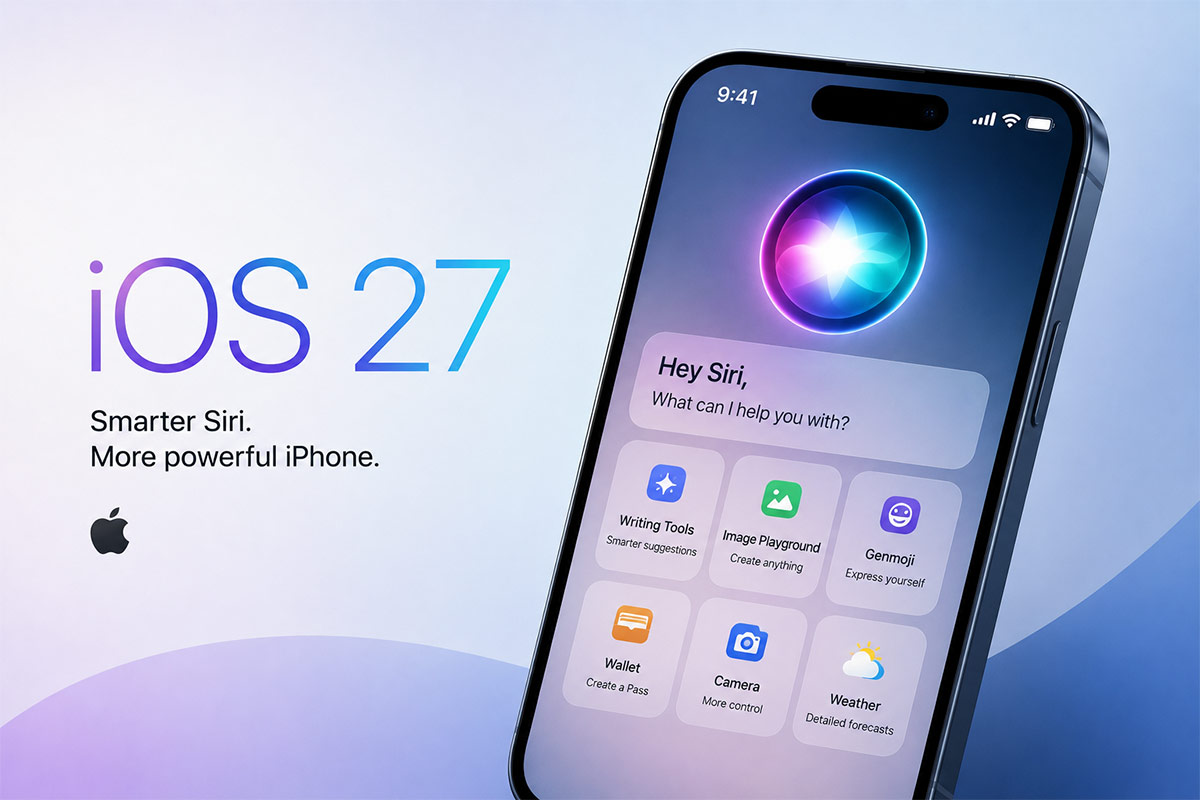
Beyond Siri, Apple Intelligence is expected to receive several upgrades in iOS 27. Image tools such as Image Playground and Genmoji may deliver better quality results, giving users more polished AI-generated images and custom emoji-style creations.
Apple is also reportedly working on AI-generated wallpapers, allowing users to create personalised iPhone backgrounds using text prompts or visual styles. These updates could make Apple’s creative AI tools feel more useful and less experimental than earlier versions.
Writing Tools Could Become More Advanced
Apple’s Writing Tools may also become more powerful in iOS 27. Instead of focusing mainly on spelling corrections or simple rewriting, the updated tools could provide more advanced suggestions for grammar, structure, tone and clarity. This would make the feature more useful for writing emails, notes, messages, work documents and social media captions directly on the iPhone.
For users who rely on their phone for daily communication, smarter Writing Tools could become one of the most practical Apple Intelligence upgrades.
Natural Language Shortcuts Could Make Automation Easier
iOS 27 may also improve how users create shortcuts and automations. Reports suggest that natural language commands could allow people to build custom app shortcuts simply by describing what they want. For example, instead of manually configuring a multi-step shortcut, users may be able to tell the iPhone to create a routine for travel, work, fitness or reminders in plain language. This would make automation easier for everyday users who find the current Shortcuts app powerful but complicated.
Wallet App Could Turn Physical Cards Into Digital Passes
Several built-in Apple apps are also expected to receive upgrades. The Wallet app may introduce a feature called Create a Pass, which could scan physical tickets, membership cards and similar documents, then convert them into digital passes.
This would make Wallet more useful for people who still carry paper tickets, loyalty cards or membership documents. It could also help users organise more daily items inside their iPhone instead of relying on physical cards.
Camera and Weather Apps May Get New Features
The Camera app is also expected to receive more customisation options. Reports suggest users may be able to create personalised control layouts and widgets, making the camera interface more flexible depending on how they shoot photos or videos. The Weather app may add a new Conditions section, offering more detailed forecasts and clearer information about local weather changes.
These may not be as headline-grabbing as the Siri update, but they could improve everyday iPhone use for many people.
Which iPhones Could Support iOS 27?
According to recent leaks, Apple may drop support for the iPhone 11 series and the second-generation iPhone SE. If that is correct, iOS 27 would require an iPhone 12 or newer. However, support for iOS 27 does not necessarily mean every device will receive all Apple Intelligence features. The full AI feature set is expected to remain limited to newer models, including the iPhone 15 Pro, the iPhone 16 lineup and future iPhones. This means older compatible iPhones may receive the operating system update, but not the most advanced AI tools.
WWDC 2026 Could Define Apple’s AI Direction
Apple will officially reveal iOS 27 during its WWDC 2026 keynote on June 8. The event is expected to show how the company plans to compete in the next phase of AI-powered computing. While Apple has moved more cautiously than some rivals, iOS 27 could bring its AI strategy much closer to everyday iPhone users.
If the expected Siri overhaul, Apple Intelligence upgrades and app improvements arrive together, iOS 27 could significantly change how people interact with their iPhones. Instead of simply opening apps and tapping through menus, users may begin relying more on natural language, personal context and AI-powered actions to get things done faster.