

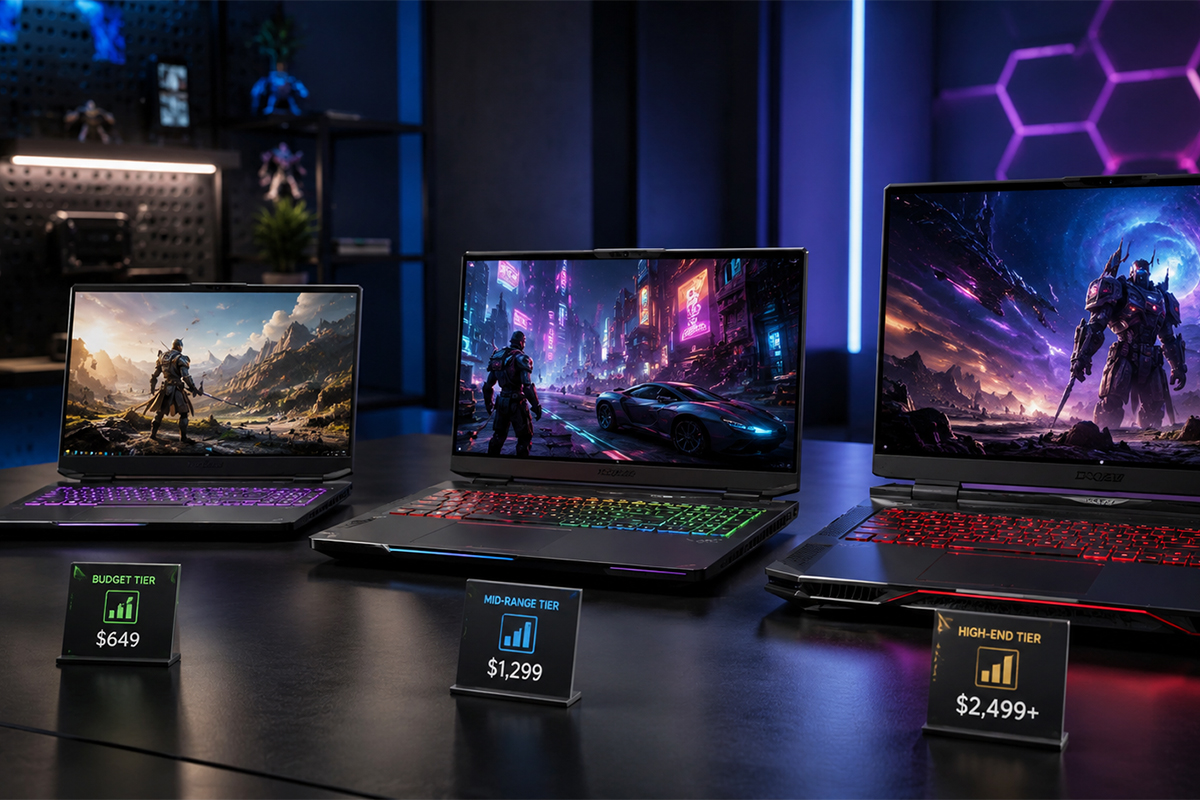
The best gaming laptop in 2026 depends on how much power you need and how far you plan to carry it. The Razer Blade 16 is the strongest all-round premium choice, the ASUS ROG Strix SCAR 18 delivers the most raw performance, the Lenovo Legion Pro 7i offers the best value among high-end models, and the Acer Nitro V 16 is the most practical budget pick. Choosing among the best gaming laptops of 2026 takes more than comparing graphics cards, because processor performance, GPU power limits, screen quality, memory, storage, upgradeability and cooling all shape the real gaming experience.
For some players, cloud gaming services can reduce the need for the most expensive hardware, especially when easy access to games matters more than maximum local performance. If you also play on mobile, comparing the best gaming phones in 2026 can help you decide whether a laptop, a phone or both suit your setup. This guide compares ten laptops across every budget, with specifications, GPU power and the buyer each one suits.
Updated: 28 October 2026. Specifications were checked on this date against the manufacturers’ own pages where they are available. Most laptops are sold in several configurations, so confirm the exact processor, GPU, display and memory before you buy.
Best Gaming Laptops at a Glance
Start here if you already know what you want. Each pick is explained in full further down.
| If you want | Choose | Why |
|---|---|---|
| The best premium all-rounder | Razer Blade 16 | RTX 5090 option and a 240Hz OLED display in a slim body |
| Maximum performance | ASUS ROG Strix SCAR 18 | RTX 5090 at up to 175W and an 18-inch 4K screen |
| The best premium value | Lenovo Legion Pro 7i | Strong cooling and RTX 5090 power without the highest prices |
| The most portable option | Razer Blade 14 | 14-inch OLED screen at 1.63kg |
| The best mid-range pick | ASUS TUF Gaming 16 | Up to RTX 5070 with upgradeable memory and storage |
| The best budget pick | Acer Nitro V 16 | RTX 50-series graphics at an entry-level price tier |
Best Gaming Laptops in 2026
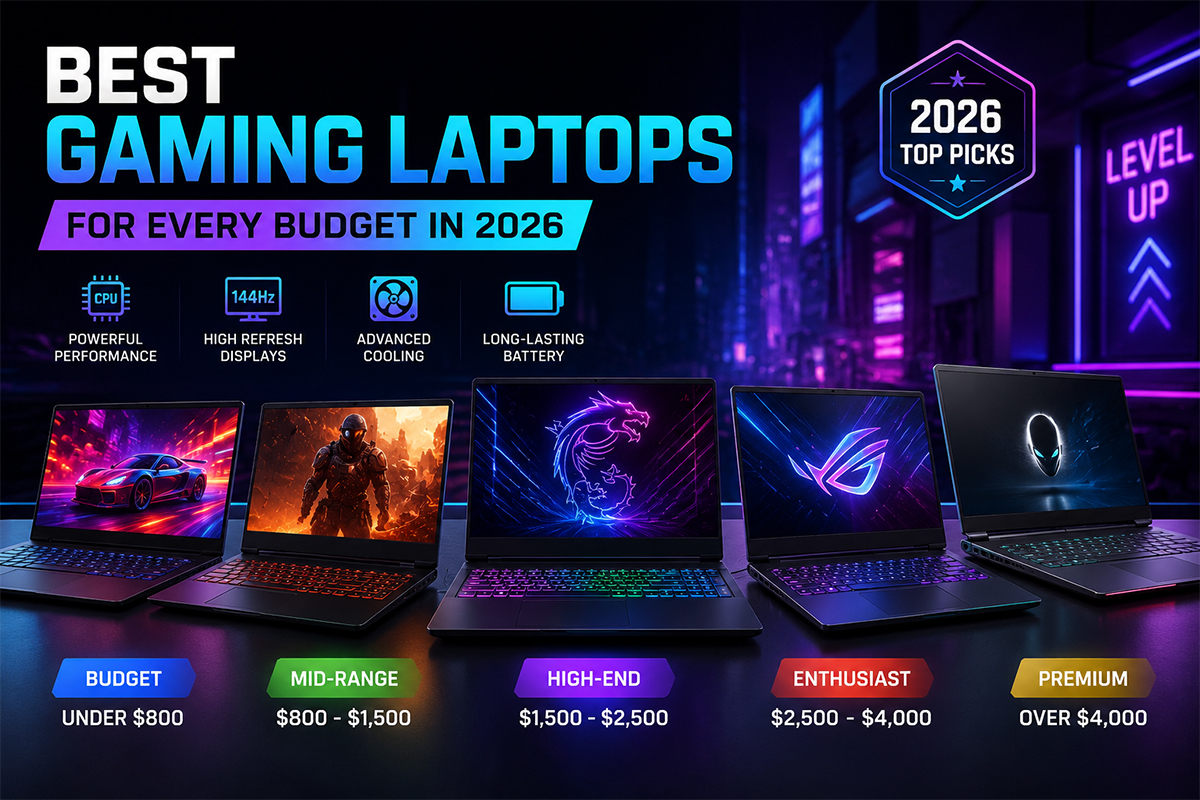
The ten laptops below run from affordable 1080p machines to desktop replacements with RTX 5090 graphics and high-refresh OLED or Mini LED displays. The graphics-card name alone does not decide the result: GPU power limits, cooling, processor performance, resolution, memory capacity and upgrade options can separate laptops that look alike on paper. The specifications describe the strongest or most representative configuration of each model.
1. Razer Blade 16: Best Gaming Laptop Overall
The Razer Blade 16 is the strongest all-round choice for gamers who want high-end performance in a slim, premium body. The latest model combines an Intel Core Ultra 9 processor with NVIDIA GeForce RTX 50-series laptop graphics, including configurations with the RTX 5090, and Razer gives the thickness as 14.9mm. Its fast QHD+ OLED display also suits content creation, streaming and visually demanding single-player games.
Key specifications:
- Processor: Up to Intel Core Ultra 9 386H
- Graphics: Up to NVIDIA GeForce RTX 5090 Laptop GPU with 24GB GDDR7, rated at 165W by Razer (115W on the RTX 5070 and RTX 5060 versions)
- Display: 16-inch QHD+ OLED with a refresh rate of up to 240Hz
- Memory: Up to 64GB of LPDDR5X, soldered to the board so it cannot be upgraded later
- Storage: High-speed NVMe SSD options
- Weight: About 2.1kg (4.6lb)
- Best for: Gamers and creators seeking power in a thin premium design
- Main drawback: Premium configurations are considerably more expensive than thicker performance-focused alternatives
2. ASUS ROG Strix SCAR 18: Best for Maximum Gaming Performance
The 2026 ROG Strix SCAR 18 is built for users who put raw gaming power ahead of portability. It can be configured with an Intel Core Ultra 9 290HX Plus processor, an RTX 5090 Laptop GPU running at up to 175W and as much as 128GB of DDR5 memory. Its 18-inch 4K Mini LED screen gives a large, detailed picture. ASUS sets the refresh rate at 120Hz by default, and the full 240Hz needs the GPU mode switched to Ultimate.
Key specifications:
- Processor: Intel Core Ultra 9 290HX Plus
- Graphics: Up to NVIDIA GeForce RTX 5090 Laptop GPU, 24GB GDDR7, up to 175W (150W plus 25W of Dynamic Boost, according to ASUS)
- Display: 18-inch 4K Mini LED ROG Nebula HDR display, 240Hz in Ultimate GPU mode (120Hz by default)
- Memory: Up to 128GB DDR5-6400
- Storage: 1TB, 2TB or 2 x 2TB PCIe 4.0 NVMe SSD options, depending on configuration
- Weight: About 3.7kg (8.2lb)
- Battery: 90Wh
- Best for: Competitive gaming, 4K gaming, streaming and demanding creative workloads
- Main drawback: Large size, heavy chassis, loud cooling under maximum load and limited portability
3. Lenovo Legion Pro 7i: Best Performance-to-Price Premium Laptop
The Legion Pro 7i remains one of the most appealing high-performance gaming laptops because it generally delivers strong cooling and gaming performance without the extreme pricing of some luxury models. The current generation uses high-end Intel Core Ultra HX processors and NVIDIA RTX 50-series graphics, while its 16-inch display is a more portable alternative to 18-inch desktop replacements. Independent 2026 testing has also identified the refreshed model as one of the strongest gaming performers in its class.
Key specifications:
- Processor: Up to Intel Core Ultra 9 290HX Plus on current high-end configurations
- Graphics: NVIDIA GeForce RTX 50-series Laptop GPU options
- Display: 16-inch high-resolution gaming display with a fast refresh rate
- Memory: Upgradeable DDR5 memory
- Storage: PCIe NVMe SSD with additional upgrade potential on selected configurations
- Best for: Gamers who want near-flagship performance without buying the most expensive premium chassis
- Main drawback: Heavier and less understated than ultraportable gaming laptops
4. Razer Blade 14: Best Compact Gaming Laptop
The Razer Blade 14 is built for users who want serious gaming performance in a highly portable format. Razer gives its thickness as 15.7mm (about 0.62 inches), and current configurations combine an AMD Ryzen AI 9 365 processor with NVIDIA RTX 50-series graphics up to the RTX 5070. The smaller screen and lower thermal capacity mean it cannot match the sustained performance of an 18-inch system, but it remains one of the more attractive options for frequent travellers.
Key specifications:
- Processor: AMD Ryzen AI 9 365
- Graphics: Up to NVIDIA GeForce RTX 5070 Laptop GPU at 115W, according to Razer
- Display: 14-inch 3K OLED, 120Hz
- Memory: Fast onboard memory, up to 64GB depending on configuration
- Storage: NVMe SSD
- Thickness: Approximately 0.62 inches (15.7mm)
- Weight: 1.63kg
- Battery: 72Wh
- Best for: Students, travellers and gamers who prioritise portability
- Main drawback: Limited upgradeability and lower sustained GPU power than larger laptops
5. Alienware 18 Area-51: Best Desktop Replacement
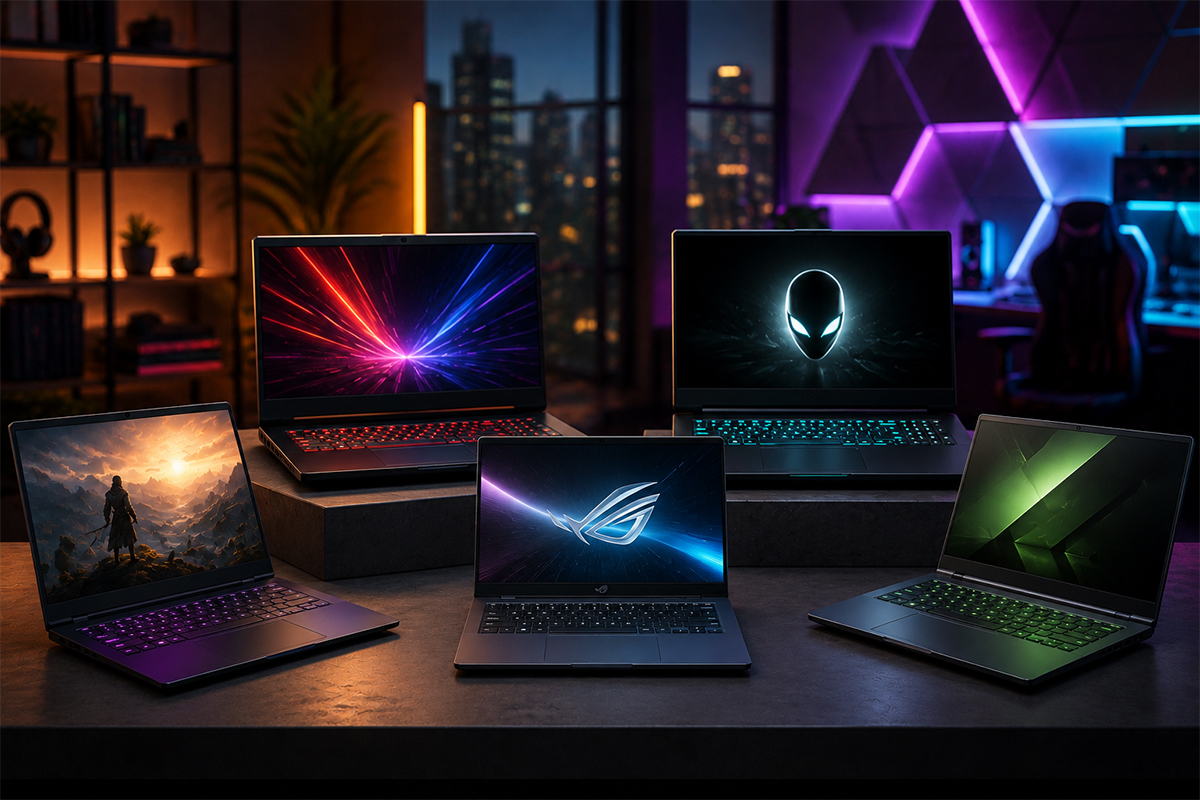
The Alienware 18 Area-51 offers a large-screen experience for users who want a gaming laptop that will stay mainly on a desk. Dell offers Intel Core Ultra HX processors with RTX 50-series graphics from the RTX 5060 up to the RTX 5090, while the 18-inch WQXGA display supports a 300Hz refresh rate, G-SYNC, Advanced Optimus, 500 nits of brightness and full DCI-P3 colour coverage. These specifications suit competitive gaming and demanding visual workloads.
Key specifications:
- Processor: Up to Intel Core Ultra 9 290HX Plus
- Graphics: NVIDIA GeForce RTX 5060 up to RTX 5090 Laptop GPU options, according to Dell
- Display: 18-inch WQXGA, 300Hz, 500 nits, 100% DCI-P3
- Memory: 32GB DDR5 as standard, up to 64GB
- Storage: From 1TB of PCIe NVMe storage, with much larger options
- Battery: 96Wh
- Weight: Up to 4.34kg (9.56lb)
- Best for: Desktop-replacement gaming and high-refresh competitive play
- Main drawback: Bulky, heavy and less practical for daily commuting
6. ASUS TUF Gaming 16: Best Mid-Range Gaming Laptop
The ASUS TUF Gaming 16 is one of the more balanced choices for buyers who want strong gaming specifications without paying for a luxury chassis. The 2026 lineup includes Intel and AMD configurations, with graphics reaching the RTX 5070 and displays offering up to 2.5K resolution at 165Hz. ASUS also emphasises durable construction, accessible memory and storage options and USB-C charging support.
Key specifications:
- Processor: Options including Intel Core i7-14650HX, Core Ultra 9 290HX Plus or AMD Ryzen processors
- Graphics: Up to NVIDIA GeForce RTX 5070 Laptop GPU, with up to 115W of GPU power in Manual Mode on the TUF Gaming F16, according to ASUS
- Display: Up to 16-inch 2.5K, 165Hz (OLED on the 2026 TUF Gaming F16)
- Memory: Up to two DDR5 memory modules, depending on configuration
- Storage: Up to 2TB PCIe 4.0 NVMe SSD, with upgrade options on selected models
- Battery: 63Wh on some configurations and 90Wh on the TUF Gaming F16, with support for 100W USB-C charging
- Weight: Just under 2.3kg on the TUF Gaming F16
- Best for: Mid-range buyers seeking strong 1440p-class performance and upgradeability
- Main drawback: Build materials, speakers and screen quality may be less refined than premium models
7. Acer Nitro V 16: Best Budget Gaming Laptop
The Acer Nitro V 16 is a practical entry point for buyers who want modern RTX 50-series features without moving into premium pricing. That makes it a sensible choice for players focused on esports titles and the best multiplayer games in 2026, where smooth frame rates often matter more than ultra settings. Available configurations include RTX 5050, RTX 5060 and RTX 5070 graphics, although GPU power limits can be lower than those in more expensive laptops. One representative configuration combines an AMD Ryzen 7 260 processor, RTX 5060 graphics, 16GB of memory, a 1TB SSD and a 180Hz WUXGA display.
Key specifications:
- Processor: AMD Ryzen 7 260 or configuration-dependent Intel alternatives
- Graphics: NVIDIA GeForce RTX 5050, RTX 5060 or RTX 5070 Laptop GPU (Acer lists up to the RTX 5070)
- Display: 16-inch WUXGA with refresh rates of up to 180Hz on selected models
- Memory: Commonly 16GB, with upgrade options depending on the model
- Storage: Typically 1TB PCIe NVMe SSD
- Best for: Affordable 1080p or 1200p gaming and competitive esports titles
- Main drawback: Lower GPU power limits, more basic construction and a less colour-rich display than premium machines
8. HP OMEN 16: Best Balanced Gaming and Work Laptop
The HP OMEN 16 suits users who want a gaming system that can also work as a fairly understated everyday workstation. Available configurations include Intel Core i7 or AMD Ryzen processors, RTX 5070 graphics, up to 32GB or more of memory and WQXGA displays with high refresh rates. HP’s OMEN cooling system and less aggressive exterior design make the laptop suitable for gaming, office work and creative applications. If work comes first and games second, our guide to the best AI laptops of 2026 covers laptops built for that.
Key specifications:
- Processor: Intel Core i7-14650HX or AMD Ryzen 9-class options, depending on model
- Graphics: Up to NVIDIA GeForce RTX 5070 Laptop GPU with 8GB GDDR7, according to HP
- Display: 16-inch WQXGA, with refresh rates reaching 240Hz on selected configurations
- Memory: Commonly 16GB or 32GB DDR5, with higher-capacity configurations available
- Storage: 1TB NVMe SSD or larger
- Weight: About 2.43kg (5.36lb) on the version HP lists
- Best for: Users combining gaming, productivity, study and content creation
- Main drawback: Performance and display quality vary significantly between configurations
9. MSI Stealth 16 AI+: Best Thin 16-Inch Alternative
The 2026 MSI Stealth 16 AI+ pairs a relatively slim design with high-end components, including an Intel Core Ultra 9 386H processor and configurations reaching the RTX 5080. Its 16-inch 2500 × 1600 OLED display runs at 240Hz, which gives strong colour performance and a fast gaming experience in the same machine. The design is more understated than that of many conventional gaming laptops, although fan noise and limited performance away from a power outlet remain important considerations.
Key specifications:
- Processor: Intel Core Ultra 9 386H
- Graphics: Up to NVIDIA GeForce RTX 5080 Laptop GPU, according to MSI
- Display: 16-inch OLED, 2500 × 1600, 240Hz
- Memory: Up to 32GB in commonly reviewed configurations
- Storage: 1TB SSD
- Weight: Approximately 1.99kg
- Battery: 90Wh
- Best for: Gamers wanting a slim OLED laptop with high-end performance
- Main drawback: Loud fans, reflective display and reduced performance away from a power outlet
10. HyperX OMEN 15: Best New OLED Mid-Range Option
The 2026 HyperX OMEN 15 is a smaller gaming design with a high-resolution OLED option and modern AMD and Intel hardware. HP lists configurations with up to an AMD Ryzen 9 8945HX or Intel Core Ultra 9 386H processor, RTX 5070 graphics, 32GB of DDR5 memory and a 3K 120Hz OLED panel. Its display prioritises image quality and fast response times over the extremely high refresh rates used by dedicated esports machines.
Key specifications:
- Processor: Up to AMD Ryzen 9 8945HX or Intel Core Ultra 9 386H
- Graphics: Up to NVIDIA GeForce RTX 5070 Laptop GPU, according to HP
- Display: Up to 15-inch 3K OLED, 120Hz, 0.2ms response time
- Memory: Up to 32GB DDR5 (DDR5-5200 on the AMD model, DDR5-5600 on the Intel model)
- Storage: Up to 1TB PCIe Gen5 NVMe SSD
- Best for: Story-driven games, creative work and buyers prioritising OLED image quality
- Main drawback: A 120Hz screen is slower than the 240Hz or 300Hz panels available in esports-focused alternatives
Best Gaming Laptops 2026 Compared: Which Model Should You Buy?
The best gaming laptops of 2026 serve very different users. Large systems such as the ASUS ROG Strix SCAR 18 and Alienware 18 Area-51 put maximum performance and cooling first, while the Razer Blade 14 focuses on portability. The Razer Blade 16, Lenovo Legion Pro 7i and MSI Stealth 16 AI+ strike a stronger balance between performance, display quality and everyday usability. Budget-conscious buyers are generally better served by the Acer Nitro V 16 or ASUS TUF Gaming 16, while the HP OMEN models are practical middle-ground options for gaming, study, work and content creation.
Specifications and availability vary between configurations and countries. The comparison below uses representative or highest available configurations, so check the exact GPU, screen, memory and power limit before purchasing.
| Gaming laptop | Maximum GPU | Display | Portability | Performance level | Best for | Main limitation |
|---|---|---|---|---|---|---|
| Razer Blade 16 | RTX 5090 Laptop GPU, up to 165W | 16-inch QHD+ OLED, 240Hz | Good for a flagship (about 2.1kg) | Excellent | Best overall premium balance | Very expensive |
| ASUS ROG Strix SCAR 18 | RTX 5090 Laptop GPU, up to 175W | 18-inch 4K Mini LED, 240Hz | Poor (about 3.7kg) | Exceptional | Maximum gaming performance and 4K visuals | Large, heavy and costly |
| Lenovo Legion Pro 7i | RTX 5090 Laptop GPU, 175W | 16-inch 2560 × 1600 OLED, 240Hz | Moderate | Exceptional | Best high-end performance-to-price balance | Bulkier than slim premium models |
| Razer Blade 14 | RTX 5070 Laptop GPU, up to 115W | 14-inch 3K OLED, 120Hz | Excellent (1.63kg) | Very good | Travel, university and portable gaming | Lower GPU ceiling and limited upgrades |
| Alienware 18 Area-51 | Up to RTX 5090 Laptop GPU | 18-inch WQXGA, up to 300Hz | Poor (up to 4.34kg) | Exceptional | Desktop replacement and competitive gaming | Extremely heavy and difficult to carry |
| ASUS TUF Gaming 16 | Up to RTX 5070 Laptop GPU, up to 115W | Up to 16-inch 2.5K, 165Hz | Moderate (just under 2.3kg) | Good to very good | Mid-range gaming and upgradeability | Less premium construction and display |
| Acer Nitro V 16 | Commonly RTX 5060 Laptop GPU at 75W to 85W | 16-inch WUXGA, up to 180Hz | Moderate | Good | Affordable 1080p and 1200p gaming | Lower GPU wattage limits performance |
| HP OMEN 16 | Up to RTX 5070 Laptop GPU | Up to 16-inch WQXGA, 240Hz | Moderate (about 2.43kg) | Very good | Gaming, productivity and content creation | Major specification differences between versions |
| MSI Stealth 16 AI+ | Up to RTX 5080 Laptop GPU | 16-inch QHD+ OLED, 240Hz | Good (1.99kg) | Excellent | Thin high-end gaming and creative work | Premium pricing and potential fan noise |
| HyperX OMEN 15 | Up to RTX 5070 Laptop GPU | Up to 15-inch 3K OLED, 120Hz | Good | Good to very good | Story-driven games and OLED image quality | 120Hz is slower than esports-focused panels |
The Razer Blade 16 combines an RTX 5090 option with a bright 240Hz OLED display in a thinner body than most extreme-performance laptops, which makes it the strongest all-round premium choice. Its RTX 5090 runs at up to 165W, slightly below the 175W offered by larger systems such as the SCAR 18 and the Legion Pro 7i. The Lenovo Legion Pro 7i is the strongest value-oriented alternative in the premium category. It supports an RTX 5090 at up to 175W and a 16-inch WQXGA OLED display with a 240Hz refresh rate, 500 nits of brightness, G-SYNC and full DCI-P3 coverage, which gives it desktop-replacement performance without an 18-inch chassis. The MSI Stealth 16 AI+ competes directly with the Blade 16 as a slim premium option, with RTX 5080 configurations and a 16-inch 2560 × 1600 OLED panel at 240Hz. It is especially attractive to gamers who also edit video, create graphics or need a professional-looking laptop.
The ASUS ROG Strix SCAR 18 is the better choice when raw performance and screen size matter more than mobility. Its Intel Core Ultra 9 290HX Plus, RTX 5090 option, 175W graphics power and 18-inch 4K 240Hz Mini LED panel place it among the most powerful and visually impressive gaming laptops available. The Alienware 18 Area-51 is designed as a desktop replacement rather than a conventional portable laptop. Configurations can include RTX 5090 graphics, an 18-inch 300Hz display, up to 64GB of memory and a 96Wh battery, which suits gamers who want a large screen and sustained performance but do not expect to carry the laptop regularly.
For portable gaming, the Razer Blade 14 is the clear winner. Its compact body can be configured with an RTX 5070 running at up to 115W and a 3K OLED display, although the 120Hz refresh rate and smaller cooling system make it less suitable than larger models for maximum-frame-rate competitive gaming.
In the mid-range category, the ASUS TUF Gaming 16 emphasises accessible pricing, replaceable memory, practical connectivity and Intel Core HX processor options. It is less refined than the Blade or Legion models, but it is the more sensible purchase for users who do not need flagship graphics or a premium metal chassis. The HP OMEN 16 is one of the more practical choices for people who need a gaming and productivity laptop. Current configurations can include an RTX 5070, 32GB of memory, 1TB of storage and a WQXGA display, but HP sells many versions under the OMEN 16 name, so check the display resolution, colour coverage, processor and GPU memory carefully. The HyperX OMEN 15 supports up to an RTX 5070 and a 3K 120Hz OLED screen. It cannot match the 240Hz panels of esports-focused rivals, but its image quality suits story-driven games and creative work.
The Acer Nitro V 16 is the strongest entry-level option in this comparison. Representative configurations include RTX 5060 graphics, 16GB of memory, 1TB of storage and a 16-inch 180Hz screen. However, some RTX 5060 configurations use a 75W or 85W graphics limit, which means they can be noticeably slower than higher-powered RTX 5060 laptops that carry the same GPU name.
For most buyers, the Lenovo Legion Pro 7i offers the best combination of performance and value, while the Razer Blade 16 is the better premium all-rounder. The ROG Strix SCAR 18 is the strongest choice for maximum power, the Razer Blade 14 is best for portability, and the Acer Nitro V 16 is the most practical budget option. Among the best gaming laptops of 2026, the final choice should depend on whether you prioritise frame rates, display quality, portability or price. If you are still deciding between a laptop and a handheld screen, our comparison of a gaming laptop and a gaming phone covers the trade-offs.
How to Choose a Gaming Laptop
Check the system requirements of the games you play most, then choose the GPU tier that meets them. Our guide to the biggest upcoming games of 2026 shows what is coming, and the sections below explain the specifications that matter.
Start with the GPU and its power limit
The graphics card has a bigger effect on frame rates than any other part. The table shows where the laptops in this guide sit in NVIDIA’s RTX 50-series range. Upscaling features such as DLSS can lift frame rates further, and our explainer on NVIDIA DLSS 5 covers the latest version.
| Laptop GPU | Video memory | Generally suited to | In this guide |
|---|---|---|---|
| RTX 5060 | 8GB GDDR7 | 1080p and 1200p gaming | Acer Nitro V 16 (representative configuration) |
| RTX 5070 | 8GB GDDR7 | 1440p-class gaming | Razer Blade 14, ASUS TUF Gaming 16, HP OMEN 16, HyperX OMEN 15 |
| RTX 5070 Ti | 12GB GDDR7 | High-refresh 1440p and some 4K gaming | Alienware 18 Area-51 (option) |
| RTX 5080 | 16GB GDDR7 | High settings at 1440p and above | MSI Stealth 16 AI+, ASUS ROG Strix SCAR 18 (option) |
| RTX 5090 | 24GB GDDR7 | Maximum settings, 4K and creative work | Razer Blade 16, ASUS ROG Strix SCAR 18, Lenovo Legion Pro 7i, Alienware 18 Area-51 |
Video memory figures come from the manufacturers’ configuration pages, for example Dell’s Alienware 18 Area-51 page.
Two laptops with the same GPU name can perform very differently, because manufacturers set different power limits. The RTX 5090 in the Razer Blade 16 is rated at 165W, while ASUS rates the SCAR 18’s at 175W, and some RTX 5060 versions run at only 75W or 85W. Read the wattage on the specification sheet, not just the GPU name.
Display: refresh rate and panel type
A refresh rate of 165Hz or 240Hz gives smoother motion in fast games, while resolution decides how much GPU power you need. OLED panels, as on the Razer Blade 14 and HyperX OMEN 15, give deep blacks and response times as low as 0.2ms. The 4K Mini LED screen on the SCAR 18 offers a large, detailed picture. Check the small print as well: the SCAR 18 runs at 120Hz by default and reaches 240Hz only in Ultimate GPU mode.
Memory, storage and upgrades
16GB of memory is the practical minimum for current games, and 32GB helps if you stream, edit video or keep many apps open. Some modern games need well over 100GB of storage, so a 1TB SSD is a sensible starting point. Upgrade options differ by model: the Razer Blade 16’s memory is soldered to the board, while the SCAR 18 uses removable memory modules and the ASUS TUF Gaming 16 offers accessible memory and storage slots.
Cooling, weight and battery
Thin laptops run hotter and louder under load, which is the trade-off behind the MSI Stealth 16 AI+ and the Razer Blade 14. Gaming laptops also drain their batteries quickly, and performance usually drops when unplugged, so plan to play with the charger connected. Weight runs from 1.63kg for the Razer Blade 14 to about 3.7kg for the SCAR 18 and up to 4.34kg for the Alienware 18 Area-51.
Buying a Gaming Laptop in the UAE
Configurations differ between countries, so match the exact model number on the listing to the specification you want. Prices in the UAE are subject to the standard VAT rate of 5%, according to the Federal Tax Authority, so check whether a listed price already includes it.
Buy from an authorised retailer or the brand’s own store so the warranty is valid in the UAE, and keep the receipt. Check the keyboard layout and the charger plug before you pay, because some listings ship with an English-only keyboard or a plug from another country. If you are weighing a laptop purchase against other electronics, our look at duty-free electronics prices in Dubai shows how far airport prices compare.
Gaming laptops produce a lot of heat, and the UAE summer makes cooling harder. Use the laptop on a hard surface in an air-conditioned room, keep the vents clear and never leave it in a parked car. For more buying guides and device news, see our Technology section.
FAQ About Best Gaming Laptops
What Is the Best Gaming Laptop in 2026?
The Razer Blade 16 is one of the best overall gaming laptops in 2026 because it combines powerful RTX 50-series graphics, a fast OLED display and a relatively slim premium design. Buyers who prioritise maximum performance may prefer the ASUS ROG Strix SCAR 18, while the Lenovo Legion Pro 7i offers stronger value in the premium category.
Which Gaming Laptop Offers the Best Value for Money?
The Lenovo Legion Pro 7i offers one of the best combinations of performance and price among premium gaming laptops. For mid-range buyers, the ASUS TUF Gaming 16 provides strong gaming performance, upgradeable memory and storage, and more affordable configurations than luxury models.
What Is the Best Budget Gaming Laptop in 2026?
The Acer Nitro V 16 is one of the best budget gaming laptops in 2026. It offers modern RTX 50-series graphics, a high-refresh display and enough performance for 1080p or 1200p gaming. However, buyers should check the GPU power limit because lower-wattage configurations may deliver reduced performance.
What Should You Check Before Buying a Gaming Laptop?
Before buying a gaming laptop, check the exact processor, GPU model and wattage, display resolution, refresh rate, memory, storage, cooling system and upgrade options. Two laptops with the same graphics-card name can perform differently because of differences in GPU power limits and thermal design.
How Much RAM and Storage Does a Gaming Laptop Need?
Aim for at least 16GB of memory, and choose 32GB if you stream, edit video or run many apps while gaming. A 1TB SSD is a sensible starting point because some modern games need well over 100GB. Check whether memory and storage can be upgraded, since the Razer Blade 16’s memory is soldered to the board.
Is an RTX 5060 Laptop Good Enough for Gaming in 2026?
Yes, for 1080p and 1200p gaming. The Acer Nitro V 16 is a typical example, with an RTX 5060, 16GB of memory and a 180Hz screen. Check the power limit before buying, because some RTX 5060 versions run at 75W or 85W and are slower than higher-powered laptops with the same GPU name.
Is OLED or Mini LED Better for Gaming Laptops?
It depends on what you value. OLED screens, such as those on the Razer Blade 14 and HyperX OMEN 15, give deep blacks and response times as low as 0.2ms. A Mini LED screen, such as the 4K panel on the ASUS ROG Strix SCAR 18, offers a large, detailed picture. Refresh rate matters too: the OLED screens here run at 120Hz to 240Hz.
Is VAT Included in Gaming Laptop Prices in the UAE?
The standard VAT rate in the UAE is 5%, so check whether the price on a listing already includes it. If the listing does not say, ask the retailer before you pay.
Can Cloud Gaming Replace a Gaming Laptop?
For some players it can. Cloud gaming reduces the need for expensive hardware when easy access to games matters more than maximum local performance, but it depends on a stable connection. Our guide to cloud gaming in the UAE explains the options available in the UAE.