
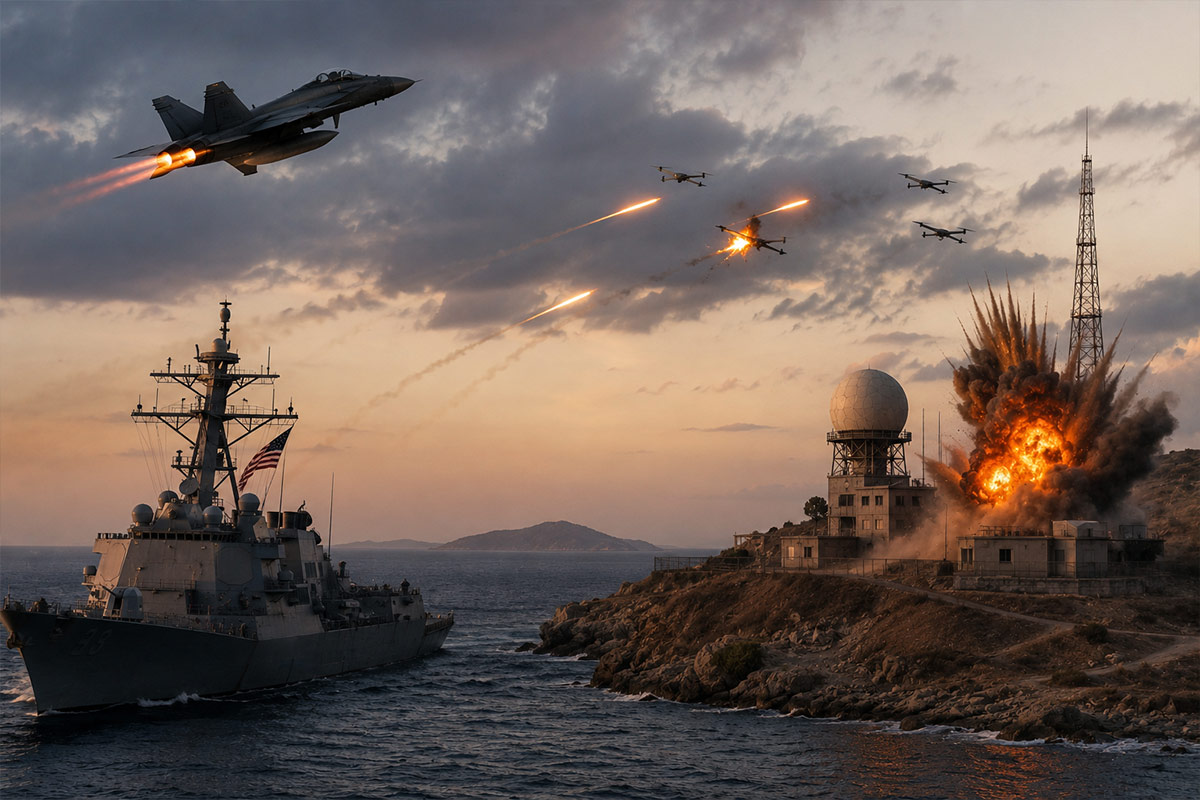
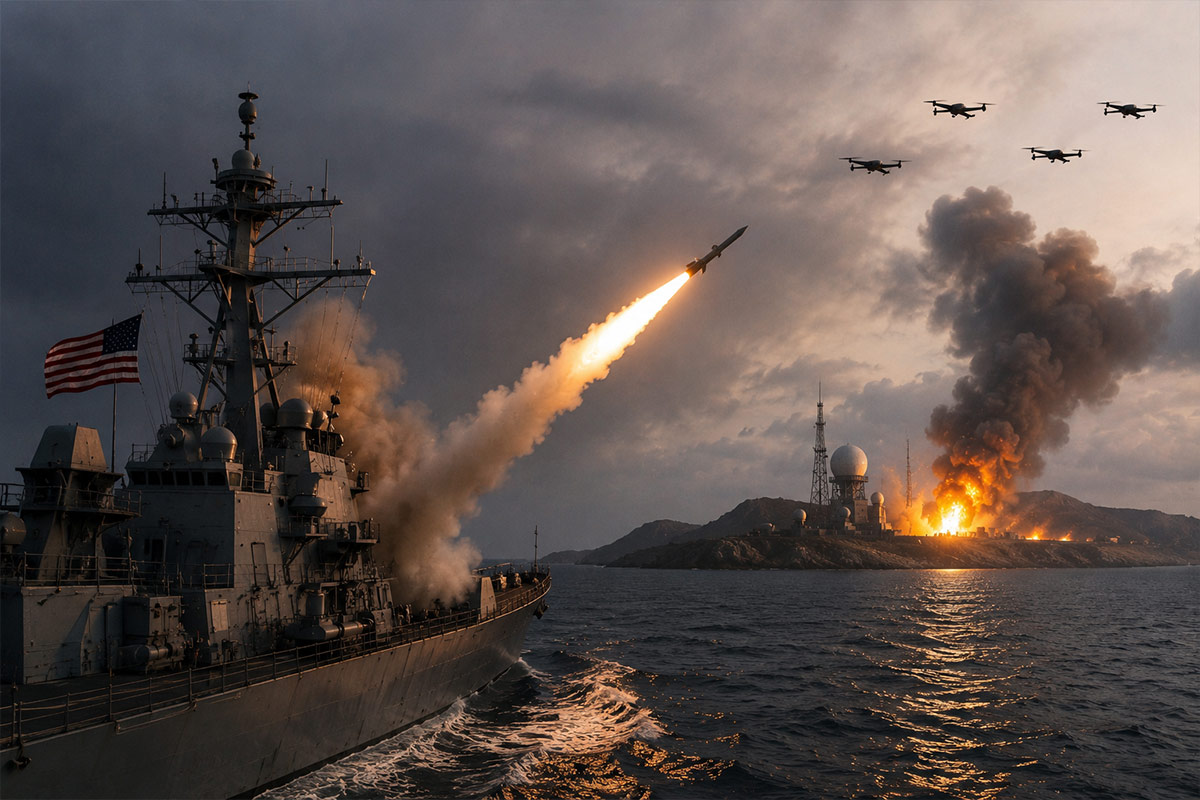
US forces struck Iranian coastal radar and surveillance sites on Saturday after intercepting drones launched by Iran toward the Strait of Hormuz, according to the US military. The latest exchange marks another escalation in the Gulf at a time when Washington and Tehran are still trying to reach an interim agreement to pause their three-month conflict.
US Central Command said American forces targeted Iranian surveillance sites in Goruk and on Qeshm Island, both located near the Strait of Hormuz. A US official said the four Iranian drones were believed to be aimed at regional maritime traffic.
Iran Says It Targeted US Bases in Retaliation
Iran’s Revolutionary Guard Corps said it had launched missiles at US bases in the region in response to American strikes. The group also said it fired on four tankers attempting to cross the Strait of Hormuz without Iranian permission. The Strait remains one of the world’s most important maritime corridors, and any military activity around it can quickly affect oil markets, shipping routes and regional security.
The US military said six missiles were intercepted, while a seventh failed to reach its target. Iran said it had struck US bases in Kuwait and Bahrain, though the US account said the missiles were either intercepted or did not hit their intended target.
Kuwait and Bahrain Report Security Alerts
The escalation was also felt in neighbouring Gulf states. Kuwaiti state media reported that the country’s air defence systems were intercepting missile and drone attacks of undisclosed origin. In Bahrain, sirens sounded and residents were urged to seek shelter.
The alerts show how quickly the US-Iran conflict can spill into the wider Gulf region, particularly when missile, drone and maritime incidents occur near key military and shipping zones.
Talks Continue but Deal Remains Out of Reach
The United States and Iran have been engaged in largely indirect negotiations aimed at securing an interim deal to halt the war. The proposed arrangement would reportedly leave some of the most difficult issues, including Iran’s nuclear programme, for later talks. However, repeated clashes have made progress difficult.
A deal has remained elusive as both sides continue to exchange military actions while also discussing possible terms for de-escalation.
Iran Wants Sanctions Relief and Access to Oil Revenue
As part of any agreement, Tehran is seeking access to billions of dollars in oil revenue, waivers on sanctions affecting crude exports, an end to the US blockade on Iranian ports and leverage over the Strait of Hormuz.
Iran has effectively blocked much of the strait, a waterway that carried about one-fifth of the world’s oil before the war. The disruption has had global consequences, pushing up oil prices and increasing pressure on shipping, transport and supply chains.
Trump Faces Pressure Over Rising Fuel Prices
US President Donald Trump is facing growing domestic political pressure as fuel prices rise during the conflict. In comments to NBC News, Trump said most of Iran’s drone and missile manufacturing facilities had been destroyed, but that Tehran still retained part of its missile arsenal.
He said Iran still had around 21 to 22 per cent of its missiles, describing that as a significant number but far below what Tehran had at the start of the conflict. Trump also said Iranian leaders remained difficult to bring to an agreement because they were “strong” and “proud,” adding that accepting some of the required terms would take time.
Conflict Has Disrupted Energy and Food Systems
The war began after the US and Israel launched attacks against Iran on February 28. Since then, Tehran has fired missiles and drones at Gulf states and sharply reduced shipping through the Strait of Hormuz. The conflict has pushed oil prices higher and disrupted supply chains for other goods.
The UN World Food Programme warned that rising fuel and transport costs are pushing millions of people closer to hunger, showing how a regional military conflict can quickly become a global economic and humanitarian issue.
Iranian Adviser Warns Against Renewed US Attacks
Mohsen Rezaei, an adviser to Iran’s supreme leader, told CNN that a peace deal depends on the Trump administration unfreezing $24 billion in Iranian assets. He also warned that the United States would enter a “dark corridor” if it resumed attacks. His comments underline how far apart the two sides remain, even as pressure grows for a diplomatic pause to the conflict.
Strait of Hormuz Remains at the Centre of the Crisis
The latest strikes again place the Strait of Hormuz at the centre of the US-Iran confrontation. For Iran, the waterway is a major source of leverage. For the United States and its Gulf partners, keeping it open is essential for maritime security and global energy flows.
The drone interceptions, radar site strikes, missile alerts and tanker incidents show that the conflict remains active despite ongoing negotiations. Unless the two sides can agree on a temporary halt, the Gulf may continue to face cycles of military escalation, disrupted shipping and pressure on global energy markets.