
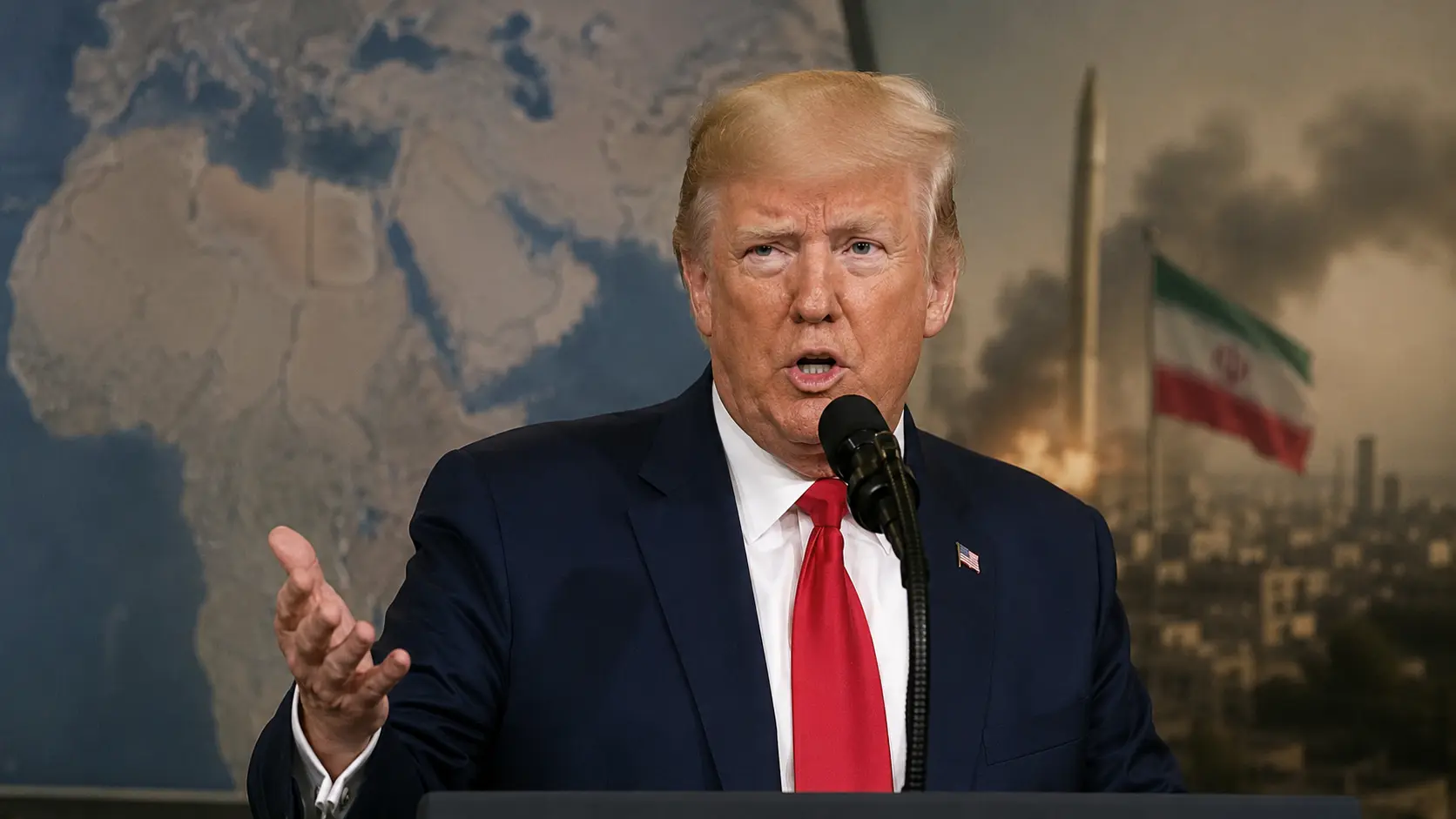
US President Donald Trump has said Iran’s enriched uranium stockpile must either be transferred to the United States for destruction or eliminated under international supervision, as diplomatic efforts continue to prevent a renewed escalation in the Middle East.
The statement adds a major nuclear demand to already sensitive negotiations between Washington and Tehran, taking place against the backdrop of a fragile ceasefire, new US military strikes in southern Iran and broader regional tensions involving Israel and Hezbollah.
In a social media post, Trump said Iran’s enriched uranium should either be sent to the United States and destroyed or eliminated inside Iran, or at another agreed location, with an appropriate international authority witnessing the process.
It remains unclear whether the proposal is part of a formal agreement currently being discussed with Iran or represents a broader condition set by Washington for any future settlement.
Trump referred in his post to the US Atomic Energy Commission or an equivalent organisation overseeing the destruction process. The Atomic Energy Commission no longer exists under that name, having been abolished under the Energy Reorganization Act of 1974 and replaced through functions now associated with the US Nuclear Regulatory Commission and the Department of Energy.
US Strikes Raise New Questions Over Fragile Ceasefire
Trump’s statement came as the United States carried out what its military described as self-defence strikes in southern Iran. The operation targeted missile launch sites and boats that US Central Command said were attempting to lay mines.
The military action has increased uncertainty over efforts to maintain the ceasefire and reach a wider political settlement. While Washington has continued to present diplomacy as an option, the latest strikes underline how quickly the conflict could return to a more dangerous phase.
Iranian negotiators have travelled to Doha as regional diplomatic efforts continue, with Qatar and Pakistan playing central roles in attempts to keep discussions moving and prevent a return to wider fighting.
Qatar has publicly backed Pakistan’s mediation efforts, stressing the importance of continuing negotiations and avoiding further escalation. Doha has also emphasised the need to protect regional stability and restore secure navigation through the Strait of Hormuz.
Nuclear Programme Remains a Central Obstacle
Iran’s uranium enrichment programme remains one of the most difficult issues in negotiations with the United States.
Washington has repeatedly insisted that any lasting agreement must prevent Iran from developing a nuclear weapon. Tehran has denied seeking nuclear weapons and has maintained that discussions concerning its nuclear programme should not be resolved separately from wider political and security issues.
Iranian officials have suggested progress has been made on parts of the negotiations, but have also warned that an agreement should not be considered imminent.
The latest demand from Trump could make discussions more difficult, particularly if Iran views the transfer or destruction of its enriched uranium as a condition imposed before wider issues, including sanctions relief and security guarantees, are resolved.
Trump Links Wider Regional Diplomacy to Iran Deal
Trump has also argued that additional countries in the region should join the Abraham Accords as part of a wider approach to peace and stability.
The agreements, launched in 2020, normalised relations between Israel and countries including the United Arab Emirates and Bahrain. Trump has now called on countries such as Saudi Arabia, Qatar, Pakistan, Egypt, Turkey and Jordan to join the framework.
However, the proposal may face major political barriers. Regional governments remain focused on security concerns, the conflict involving Iran and Israel, and the unresolved Palestinian issue. Pakistan has also indicated that the Abraham Accords and negotiations with Iran should be treated as separate matters.
Regional Tension Remains High
As US-Iran negotiations continue, hostilities elsewhere in the region are adding pressure to diplomatic efforts. Israel has increased military action against Iran-backed Hezbollah in southern Lebanon, while Israeli Prime Minister Benjamin Netanyahu has maintained that any final agreement with Iran must completely remove the nuclear threat.
For Gulf states, the immediate priority remains preventing another round of escalation that could affect civilians, aviation, energy markets, maritime security and regional trade.
The coming days may determine whether diplomacy can create a wider agreement or whether the dispute over Iran’s nuclear programme and renewed military activity pushes the region closer to another major confrontation.