
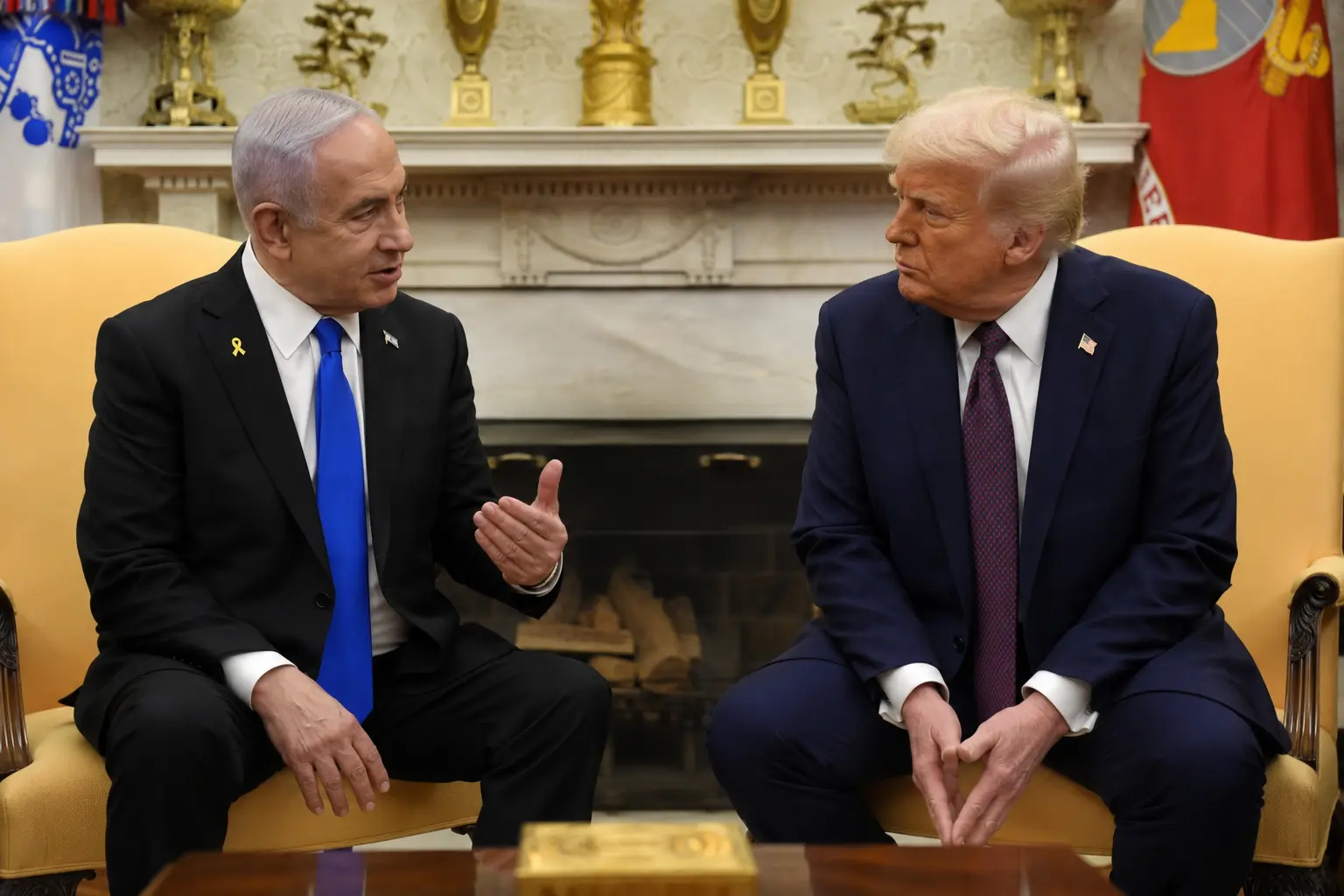
Israeli Prime Minister Benjamin Netanyahu’s latest visit to Washington is expected to look very different from his previous meetings with US President Donald Trump. For years, their encounters followed a familiar pattern of warm handshakes, public praise and repeated declarations about the strength of the US-Israel alliance. This time, however, Netanyahu arrives as tensions over Iran, diplomacy and the direction of the war have created visible divisions between the two leaders.
The meeting is Netanyahu’s seventh visit to the United States since Trump returned to office, more than any other foreign leader. It is also their first face-to-face meeting since the United States and Israel launched a joint military campaign against Iran five months ago. Netanyahu is expected to make Iran the central issue, presenting updated intelligence on Tehran’s nuclear and military activities while pressing Washington not to make concessions in ongoing negotiations.
Trump, however, has increasingly signalled that he does not want Netanyahu to dictate the next phase of US policy. When asked about reports that the Israeli leader would warn him about Iranian nuclear rebuilding, Trump said he already had detailed information and suggested Netanyahu wanted to keep the United States involved in the conflict. At the same time, Trump has said Washington is holding “good talks” with Iran and believes there is still a chance of reaching an agreement.
The disagreement reflects a wider shift in their relationship. At the beginning of the Iran war, both leaders praised the unprecedented coordination between their militaries and presented the campaign as a decisive effort to weaken Iran’s nuclear capabilities. As the conflict continued without removing the Iranian government or producing a clear strategic victory, their priorities began to separate. Netanyahu favoured maintaining military pressure, while Trump increasingly looked for a way to reduce US involvement and negotiate an exit.
Netanyahu also enters the meeting under domestic political pressure ahead of Israel’s elections. A tougher position on Iran could strengthen his security credentials at home, but openly confronting Trump would risk damaging Israel’s most important international relationship. Pro-Netanyahu political figures and media outlets have already criticised senior Trump advisers involved in negotiations with Tehran, further complicating relations with the White House.
Despite those tensions, officials from both governments continue to describe the alliance as strong. The agenda is expected to include Iran, the US-Israel framework with Lebanon over the Hezbollah conflict and possible expansion of the Abraham Accords.
The meeting therefore carries more uncertainty than the carefully choreographed encounters of the past. Netanyahu wants renewed US military and diplomatic backing, while Trump appears determined to preserve his freedom to negotiate with Tehran. Whether they publicly emphasise unity or reveal deeper differences may shape not only the future of the Iran conflict, but also Netanyahu’s political standing and Washington’s broader Middle East strategy.