
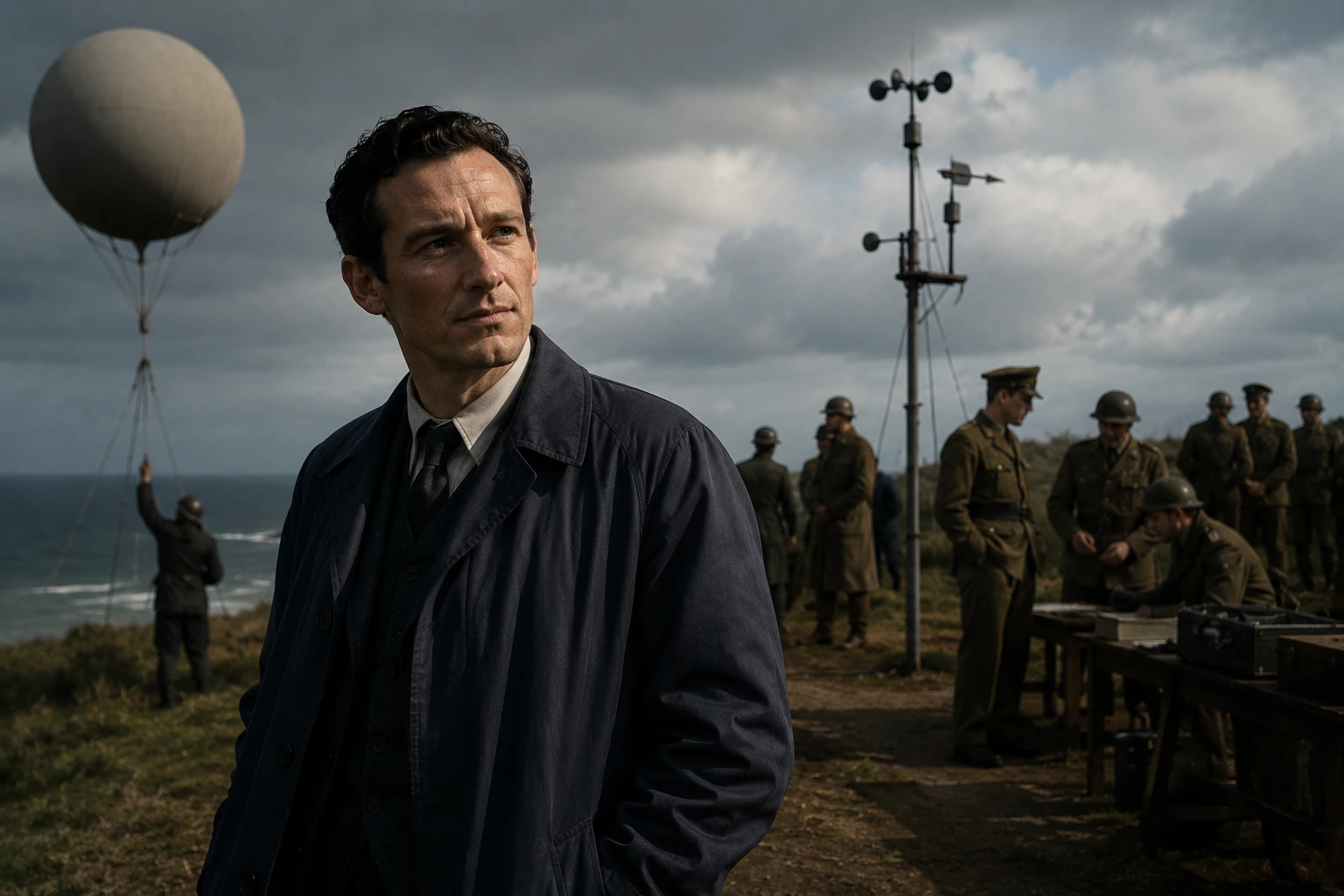
Pressure tries to turn one of the most unusual details behind D-Day into a tense wartime drama: the weather forecast that helped decide when the Allied invasion of Normandy would begin.
Directed by Anthony Maras, the film focuses on James Stagg, the chief meteorologist played by Andrew Scott, as he is asked to advise military leaders on whether conditions will allow the invasion to go ahead. With the fate of the operation hanging over every decision, the film builds its conflict around competing forecasts, limited data and the pressure of choosing the right day. On paper, the idea has historical weight. In practice, the film struggles to turn meteorological uncertainty into gripping cinema.
A High-Stakes Story With Limited Drama
The central question in Pressure is simple: will the weather hold long enough for D-Day to succeed?
General Dwight Eisenhower, played by Brendan Fraser, needs a clear answer before sending thousands of troops into one of the most important military operations of the Second World War. Stagg warns of dangerous storm conditions, while fellow meteorologist Irving Krick, played by Chris Messina, offers a more optimistic forecast.
That disagreement places Eisenhower in a difficult position. If he delays the invasion, the Allies may lose the element of surprise. If he moves too soon, bad weather could turn the operation into a disaster. The problem is that the film often explains these stakes more than it makes the audience feel them.
Weather Data Becomes the Main Battlefield
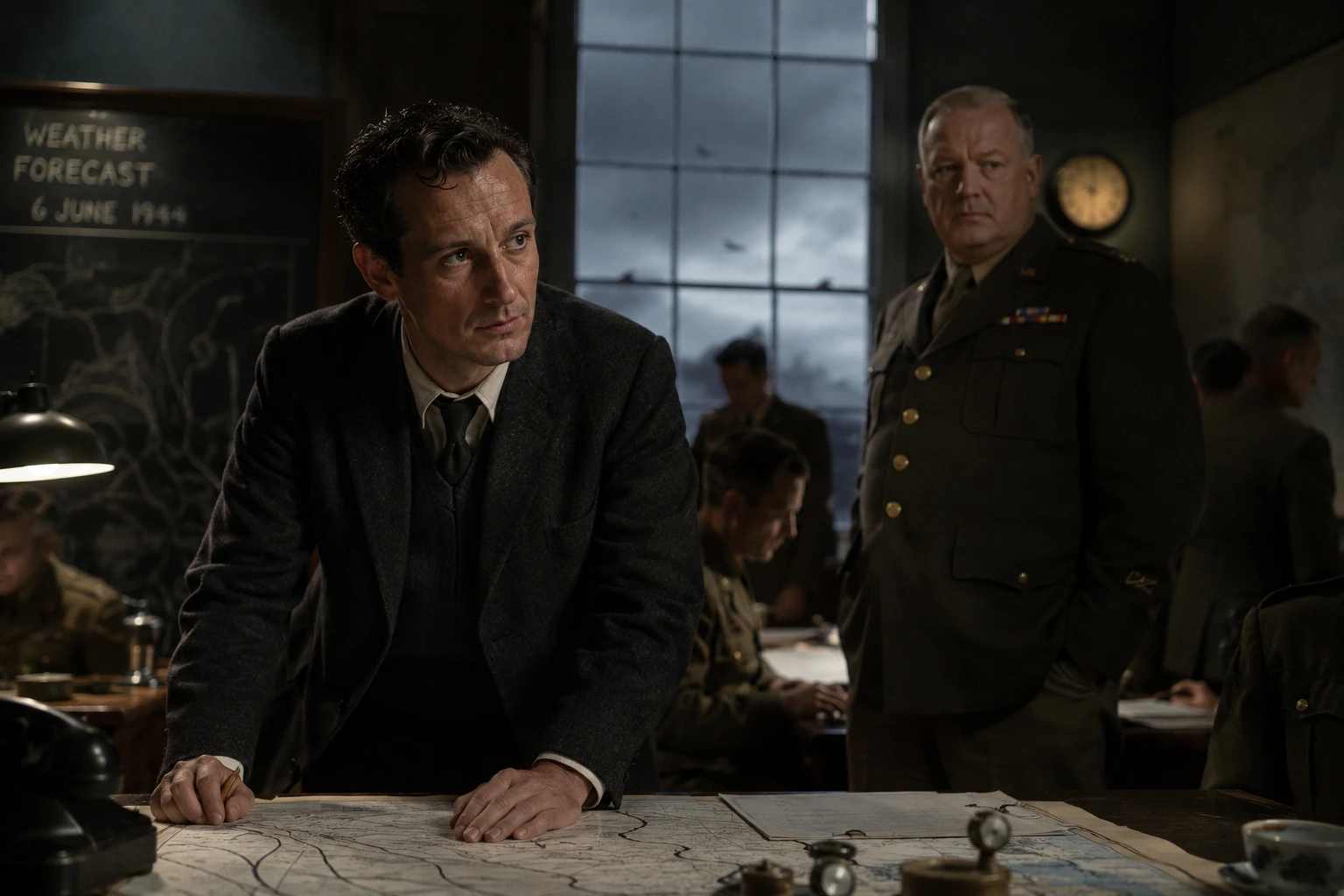
Rather than focusing primarily on combat, Pressure spends much of its running time inside rooms filled with military officials, meteorologists and anxious decision makers.
The drama comes from weather balloons, sea conditions, pressure systems, air patterns and conflicting interpretations of limited data. The film attempts to make these technical details feel urgent by placing them against the enormous historical importance of D-Day. But the result can feel strangely static. The characters repeatedly debate forecasts, dates and risks, yet the tension does not always build in a satisfying way. For a film about a decision that could change history, Pressure often feels more like an extended briefing than a fully dramatic thriller.
Andrew Scott Gives the Film Its Strongest Centre
Andrew Scott brings quiet intensity to the role of James Stagg. His performance gives the film some emotional grounding, especially as Stagg carries the burden of offering a forecast that could affect the lives of thousands of soldiers. Scott is at his best when portraying a man who understands both the limits of science and the consequences of being wrong.
The film also adds personal tension through Stagg’s pregnant wife, played by Tamsin Topolski, who is placed in danger while he remains trapped in the military command structure. However, this subplot feels more engineered to raise emotional stakes than naturally integrated into the main story.
Brendan Fraser Feels Miscast as Eisenhower
One of the film’s more noticeable weaknesses is Brendan Fraser’s performance as Eisenhower. Fraser is a talented actor, but the role requires a particular kind of authority and historical gravity. Eisenhower is meant to be the figure whose final decision carries the weight of the entire operation, yet the performance does not always communicate that level of command.
Instead, the character sometimes feels overly broad, especially when the film leans into dramatic speeches and tense exchanges. Fraser’s natural warmth and vulnerability have worked beautifully in other roles, but here they do not fully match the image of a wartime commander under impossible pressure.
A Strong Cast Cannot Fully Rescue the Film
Pressure has a capable cast, including Andrew Scott, Brendan Fraser, Chris Messina, Kerry Condon and Damian Lewis. Yet the film gives many of them limited room to elevate the material. Much of the dialogue is built around explaining the stakes, repeating the uncertainty and reminding the audience that the decision matters.
That makes the film feel more like a prestige war drama in structure than in emotional impact. It has the uniforms, command rooms, historical importance and moral seriousness of a major wartime film, but not enough momentum to make the story consistently compelling.
D-Day Finally Brings the Film Into Motion
When the invasion finally arrives, Pressure shifts into more familiar war-movie territory. The images of soldiers moving toward Normandy bring a sense of scale and consequence that the earlier scenes often lack. The battle sequences are not the main focus of the film, but they provide a release after long stretches of discussion and calculation. Ironically, the film becomes more engaging once it moves away from the weather debate and toward the visible reality of war.
Final Thoughts
Pressure has an interesting historical premise, but it does not always find the right way to dramatise it. The story of the weather forecast before D-Day is genuinely important, and James Stagg’s role in the operation deserves attention. However, the film stretches a narrow point of historical tension into a full-length drama without always giving it enough emotional or cinematic force.
Andrew Scott gives the film its strongest performance, but the surrounding drama often feels too restrained and repetitive. Brendan Fraser’s Eisenhower also struggles to bring the authority the role needs. As a World War II drama, Pressure is built around a fascinating piece of history. As a film, it often feels like a tense idea that never fully becomes a tense experience.