
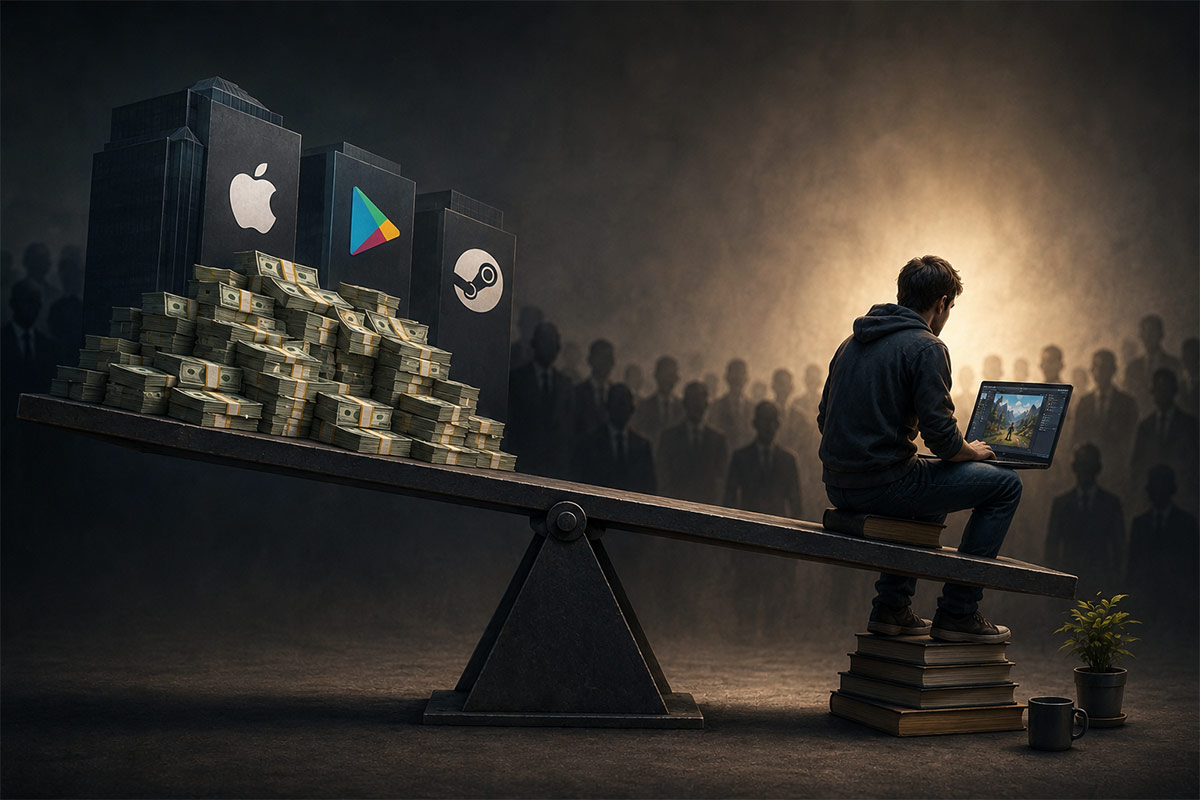
The gaming industry often describes itself as creator-first, but the economics behind many game creation platforms tell a different story. Across the market, platforms promote the idea that they empower developers, support independent creators and help new game makers reach global audiences. On the surface, that message sounds convincing, especially when major platforms point to billions of dollars paid out to creators each year.
But the real question is not only how much money platforms pay out in total. The more important question is how that money is divided once a player spends inside a game. When the numbers are examined closely, the current model looks far less creator-friendly than many platforms suggest.
In many cases, when a player spends $1 inside a game, the app store takes its commission first. After that, the platform takes a large share of what remains. By the time the creator converts their earnings back into cash, they may receive only around 25 cents from the original dollar. The rest goes to the platform and the distribution systems around it.
The Problem With Today’s Revenue Split
A 25 percent creator share creates a difficult reality for most game developers. At the top of the market, successful creators on major platforms can earn millions of dollars a year. Those examples are often used to show that the system works. However, they do not reflect the experience of the average creator.
Many developers never reach the minimum payout threshold required to cash out their earnings. Even among those who qualify, annual earnings can remain very low. That means millions of creators may spend months building, testing and improving games without receiving meaningful income.
This creates an economy where only the largest creators can survive. Smaller developers, experimental designers and niche communities are pushed to the margins, even when their work has value.
Why Low Creator Payouts Shape What Games Get Made
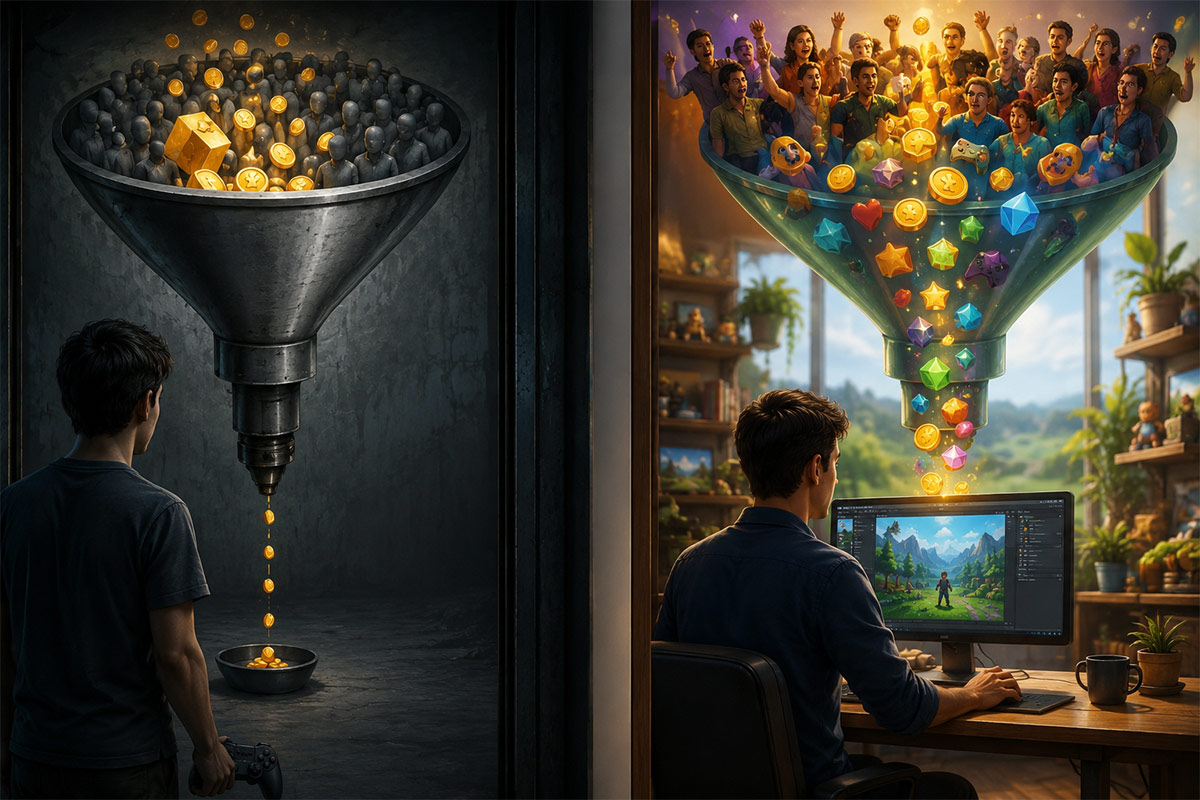
The issue is not only financial. It also affects creativity. When creators keep only a small share of player spending, they need massive scale to make development worthwhile. A game generating $5,000 a month in player spending may leave the creator with around $1,250 after platform deductions. That is not enough for most developers to live on, especially if they are working full time on the project.
As a result, creators are pushed toward the same strategies. They chase the broadest possible audience, copy mechanics that are already proven and optimise for engagement metrics that platforms reward.
This can make game ecosystems feel repetitive. Instead of rewarding originality, the system often rewards scale, retention loops and familiar formulas. The strange idea, the niche genre and the game built for a smaller but loyal audience become harder to justify financially.
A Fairer Split Could Change the Market
If the revenue split changes, the creative landscape changes with it. A creator receiving 70 percent of the same $5,000 monthly player spend would earn around $3,500. That may not be a fortune, but it can be enough to support independent work, cover basic expenses and allow developers to keep improving their games.
More importantly, it makes smaller communities economically viable. A creator does not need to build for everyone if they can earn a fair share from a focused audience. This is how more diverse creative ecosystems can emerge.
Creator funds, spotlight programmes and promotional campaigns can help, but they do not fix the core issue. A truly creator-first system needs economics that work at scale, not occasional bonuses for selected developers.
Platforms Do Have Real Costs
To be fair, game platforms are expensive to operate. Hosting a multiplayer game is not the same as hosting a video file. A game platform may need to support real-time servers, matchmaking, physics, cross-device networking, moderation, payments, player accounts and live updates across millions of users. Those services cost money, and no serious creator economy can expect platforms to provide infrastructure for free.
However, the gap between infrastructure costs and a platform keeping most of the revenue remains difficult to justify. Other creator platforms manage complex global systems while still offering creators a larger share. Video platforms, app stores and digital marketplaces all face infrastructure, moderation and compliance costs, yet many still leave creators with more than 25 percent.
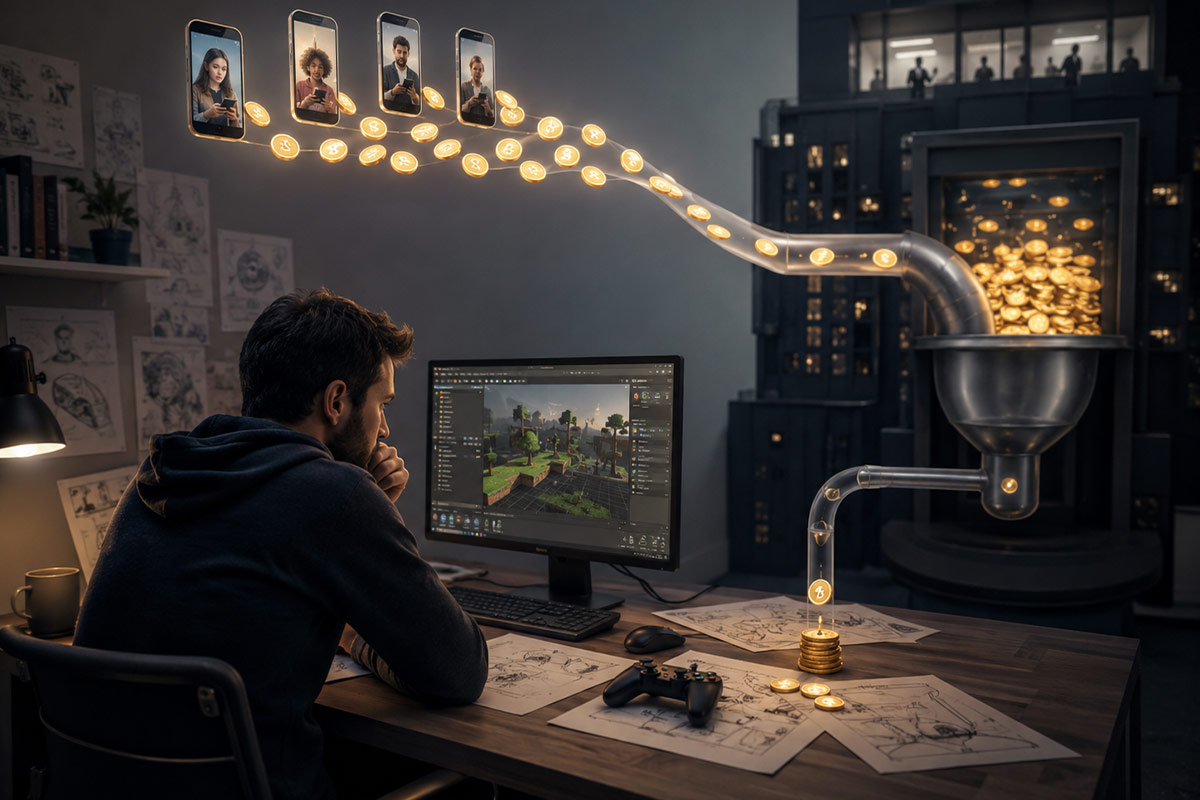
Gaming may be more technically demanding, but that does not mean creators should be left with only a fraction of the value they generate.
Why AI Could Force a Reset
The next phase of the gaming creator economy may look very different because of two major shifts. First, the creator class is expanding. Millions of people already earn money on video, music, writing, streaming and social media platforms. These creators understand revenue sharing and are unlikely to accept a system where most of the value goes to the platform rather than the person making the content.
Second, AI-native creation tools are reducing the technical barriers to game development. In the past, building a game required years of specialised skills, large teams or deep technical knowledge. AI tools are beginning to change that by helping creators move from an idea to a playable experience much faster.
As more people gain the ability to create games, the total market could expand significantly. But that growth will only benefit creators if the economic model is worth participating in.
The Rise of AI-Native Game Engines
AI-native game engines could become one of the most important changes in the industry. Instead of requiring every creator to master complex development pipelines, these tools can help with design, prototyping, assets, logic and gameplay systems. This could open game development to creators who previously worked in other media but never had the technical resources to build interactive experiences.
If the tools become easier and the economics become fairer, gaming could see a wave of new creators entering the market. That would not only increase the number of games available, but also expand the kinds of games being made. More creators from different backgrounds could mean more unusual ideas, more niche communities and more cultural variety across gaming platforms.
SPARQ and the Creator-First Model
This is where new platforms are trying to challenge the existing system. SPARQ, an AI-native game engine licensed at Innovation City Ras Al Khaimah, is being positioned around a creator-first model. Its stated approach is to pay creators 70 percent of revenue, not as a temporary promotion or creator fund, but as the core platform structure from the beginning.
That kind of model directly addresses one of the biggest complaints in the gaming creator economy: creators produce the value, but platforms capture most of the income.
If platforms with fairer economics can also provide strong tools, distribution and infrastructure, they may attract the next generation of game makers.
Why This Matters for the Future of Gaming
Gaming is now a massive global industry, but its creator economy is still uneven. The industry depends on creators to build the experiences that keep players engaged, yet many of those creators struggle to earn enough to continue. This is especially true for independent developers and smaller teams trying to build original games.
A better creator economy would not only help developers earn more. It would also improve the quality and diversity of games available to players. When creators can survive without chasing only the biggest audience, they have more freedom to take risks. That is how stronger creative ecosystems are built.
Final Thoughts
The gaming creator economy needs more than marketing language. It needs a structural reset. Platforms can call themselves creator-first, but the real test is how much value creators keep from the work they produce. If most of the money continues to flow to platforms and intermediaries, the system will keep rewarding scale over originality.
A fairer model, supported by AI-native tools and better revenue sharing, could open game development to millions of new creators. It could also make niche, experimental and community-driven games financially possible. The future of gaming will not be shaped only by better graphics or bigger platforms. It will be shaped by whether the people making the games can actually build sustainable careers from their work.