
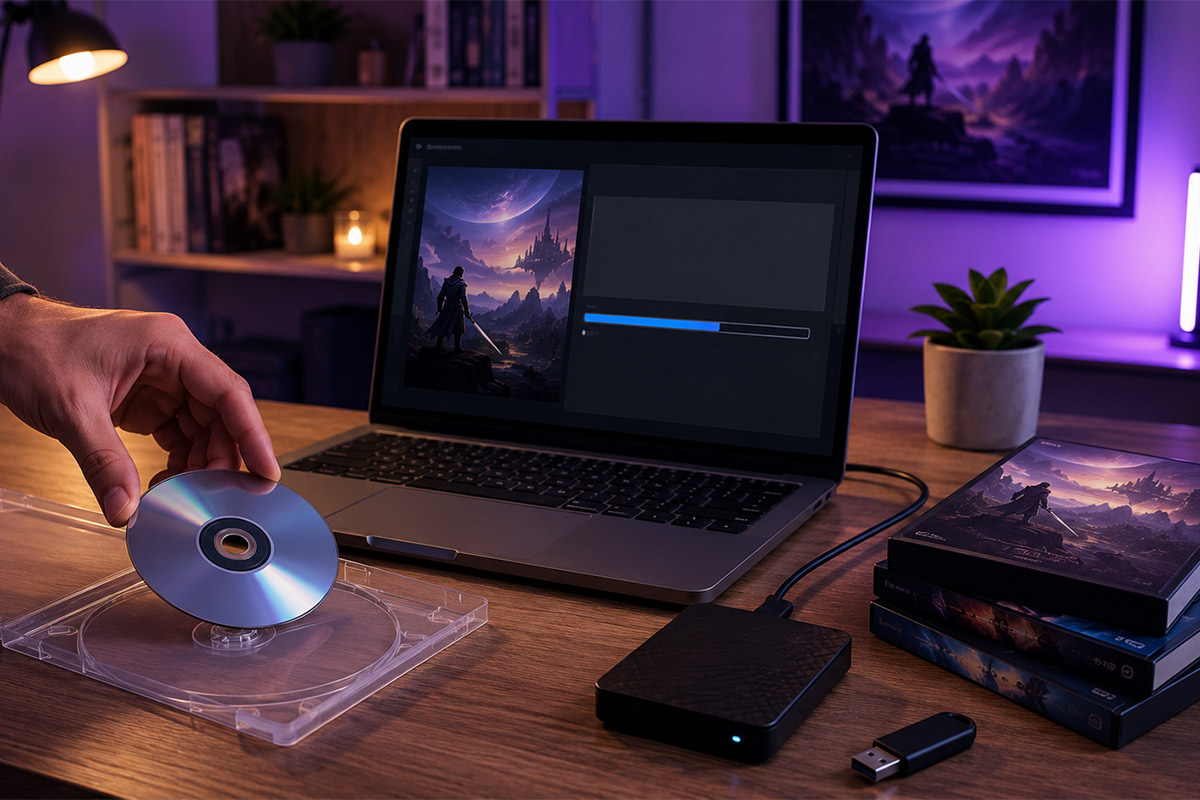
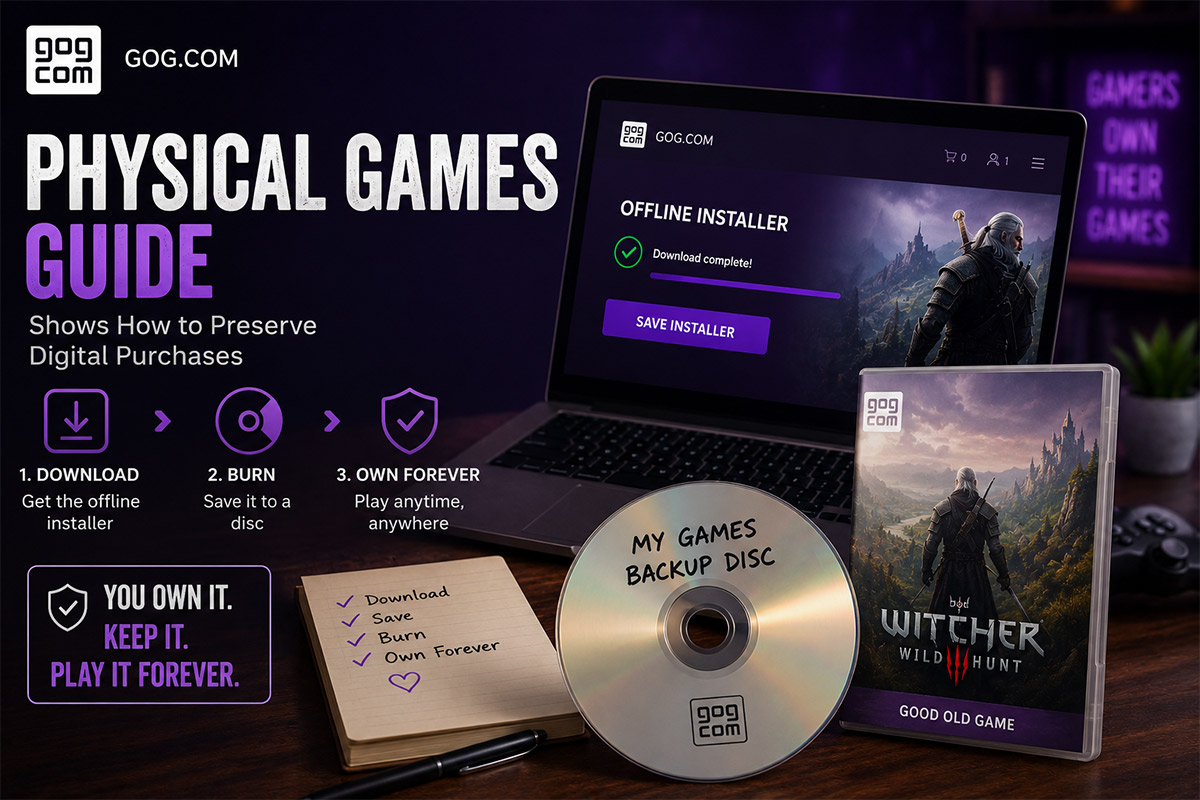
GOG physical games became part of the wider game preservation debate this week after GOG shared a simple reminder for players worried about losing access to digital purchases. The company told users that they can download offline installers for games they own on GOG, save them to a disc, and keep them as a personal backup.
The message came as more players expressed concern about the future of physical media and digital ownership. The debate also connects to cloud gaming services, where players often access games through online platforms instead of owning a permanent physical copy. Reports that Sony could move away from PlayStation disc production by 2028 have reignited frustration over a possible digital-only future, where access to purchased games may depend on storefronts, servers and platform policies.
GOG’s point is straightforward: if a game is available on its store with an offline installer, players can store that installer outside the platform. That means the game does not rely on the storefront being online every time someone wants to install or play it. In GOG’s own words, players should not need a storefront’s permission to play something they bought.
However, this is not a perfect solution for the entire industry. Not every game is available on GOG, and many major console games never receive a PC version on the platform. Some publishers also keep their catalogues away from DRM-free storefronts, which limits how many games can actually be preserved this way.
There is also the issue of always-online games. This matters even more for players who spend most of their time with the best multiplayer games in 2026, because many of those titles depend on active servers, live updates and online accounts. Even if a player saves an installer to a disc, the game may still become unplayable if it requires active servers and those servers are later shut down. In those cases, having the files is not enough, because the game’s core functions depend on outside infrastructure.
Still, GOG’s advice highlights a real difference between DRM-free games and many modern digital purchases. On some platforms, a player’s library is tied almost entirely to account access and store availability. If an old storefront closes, users may lose the ability to download games they previously bought unless those games are already installed.
That concern is especially relevant as older digital stores continue to disappear. Similar concerns appear whenever major franchises shift platforms, such as when Call of Duty moves on from PS4 and players start asking how long older hardware will remain supported. When storefronts close, preservation becomes harder not only for collectors, but also for ordinary players who simply want to revisit games they paid for years earlier.
GOG’s do-it-yourself approach is not a full answer to the ownership problem, but it gives players one practical option. Saving offline installers to physical media can protect some games from disappearing behind closed stores, revoked access or future platform changes.
The larger debate is still unresolved. If players are buying digital games, many want clearer rights, long-term access and better protection when companies shut down services. Until the industry offers stronger guarantees, GOG physical games may be one of the few simple ways players can take preservation into their own hands.