
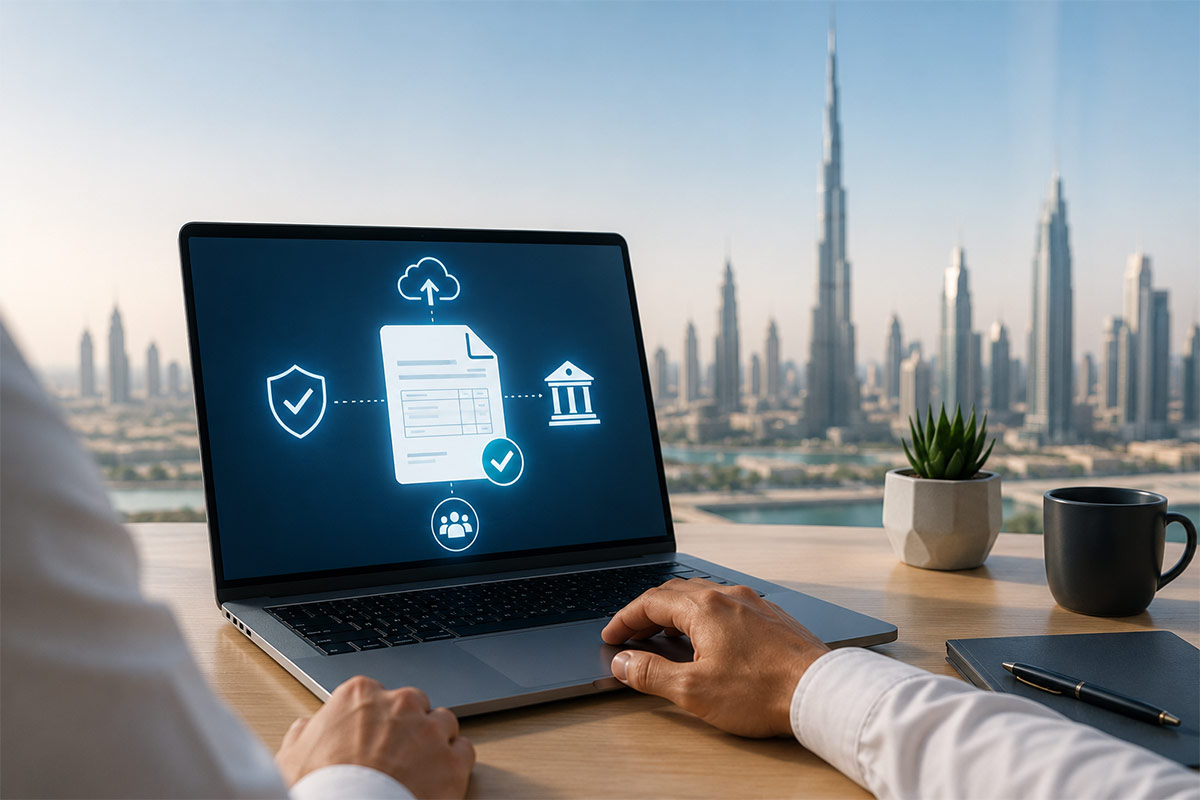
The UAE is moving closer to launching its new e-invoicing system, a major step in the country’s plan to build a more digital, transparent and efficient tax environment. The pilot phase is scheduled to begin on July 1, 2026, and businesses across the country are now trying to understand what the change means for them, who will be affected first, and how they should prepare.
Although the term may sound technical, experts say e-invoicing will not completely change the way companies do business. Instead, the biggest shift will be in how invoices are created, shared, recorded and reported.
What Is E-Invoicing?
E-invoicing is a digital method of issuing and processing invoices through a structured system connected to relevant authorities. In practice, businesses will still issue invoices for goods and services as they do today. The key difference is that those invoices will move through an approved digital network instead of being handled only as PDFs, printed documents or manual records.
Rishi Chawla, chairman of the ICAI Dubai Chapter, explained that the basic invoicing process will remain familiar, but it will become more automated and reported in real time.
Today, companies may send invoices by email, PDF or paper. Under the new system, invoice information will also be shared through a structured digital platform where it can be checked, validated and recorded. This is expected to reduce common problems such as missing invoices, delayed processing, data errors and payment disputes.
Who Will Be Affected First?
The UAE’s e-invoicing rollout will happen in stages rather than all at once. The first phase, beginning in July 2026, will focus on larger businesses with annual revenue of more than Dh50 million. Smaller businesses are expected to be brought into the system from January 2027, while full implementation across all business segments is expected by 2028.
This means that even if a company is not included in the first phase, most businesses operating in the UAE will eventually need to adapt to the new e-invoicing requirements.
What Will Change for UAE Businesses?
According to experts, the main change will not be the commercial transaction itself. Businesses will still sell products, provide services and issue invoices. What changes is how those invoices are recorded, verified and shared. Companies will need to connect their invoicing systems with approved service providers. These providers will act as intermediaries between the seller, the buyer and the authorities, helping make sure invoice data is complete, accurate and properly reported.
Chawla said businesses should not treat this as a last-minute technical update. They will need to review their systems, processes and internal approach because the change cannot be implemented overnight.
However, this does not necessarily mean companies must replace their entire accounting or invoicing setup. In many cases, existing systems may be upgraded or integrated with the required digital infrastructure.
How Will the UAE E-Invoicing System Work?
Under the new system, when a business issues an invoice, the invoice data will first pass through an approved service provider. The service provider will check whether the invoice information is accurate and complete. Once validated, the invoice will be shared with the buyer and reported to the authorities at the same time.
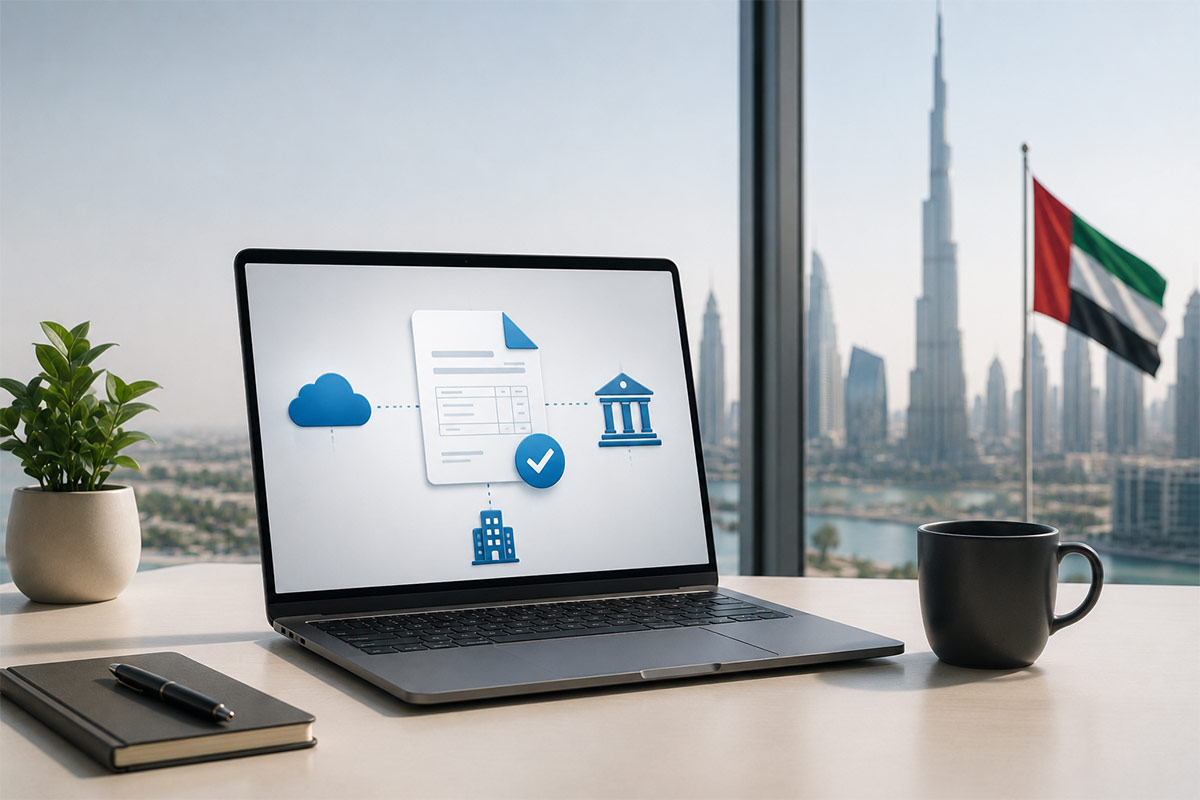
Amit Khaitan, vice-chairman of the ICAI Dubai Chapter, said e-invoicing is mainly about capturing and reporting transactions in real time, rather than changing the nature of business operations. The UAE system is expected to follow international standards such as Peppol, a framework already used in several countries for secure and standardized electronic document exchange.
Why Is the UAE Introducing E-Invoicing?
The main purpose of e-invoicing is to improve tax transparency and make financial reporting more reliable, especially for VAT.
At present, errors can happen when invoices are lost, recorded late, duplicated or reported incorrectly. By moving invoices into a digital system, the UAE aims to reduce these gaps and create a clearer record of business transactions.
Khaitan noted that digital recording can help reduce delays and mistakes because every transaction is captured in a more structured way.
The system may also benefit businesses directly. With fewer invoice disputes, companies could receive payments faster and manage cash flow more efficiently.
Verified invoice data may also help banks assess business activity more confidently, which could make access to financing easier for some companies.
What Should Businesses Do Now?
With the rollout timeline already confirmed, businesses in the UAE should begin preparing as early as possible. The first step is to review current invoicing, accounting and ERP systems. Companies should also check whether they fall under the first phase of implementation, especially if their annual revenue exceeds Dh50 million.
Businesses should also start understanding how approved service providers will work and what technical changes may be needed to connect their systems. CA Sanjay Gagarani, treasurer of the ICAI Dubai Chapter, said the conversation has moved beyond whether e-invoicing is necessary. The real question now is how quickly businesses can adapt.
Companies that prepare early are likely to face fewer disruptions and may benefit more from the new system once it becomes fully operational.
Final Thoughts
The UAE’s e-invoicing rollout marks an important shift in how business transactions will be recorded and reported. For large companies, the change begins with the pilot phase on July 1, 2026. For smaller companies, the transition is expected to follow from January 2027, with full implementation planned by 2028.
While the system may require technical preparation, it is not designed to disrupt normal business activity. Instead, it aims to make invoicing more accurate, transparent and efficient across the UAE economy.