
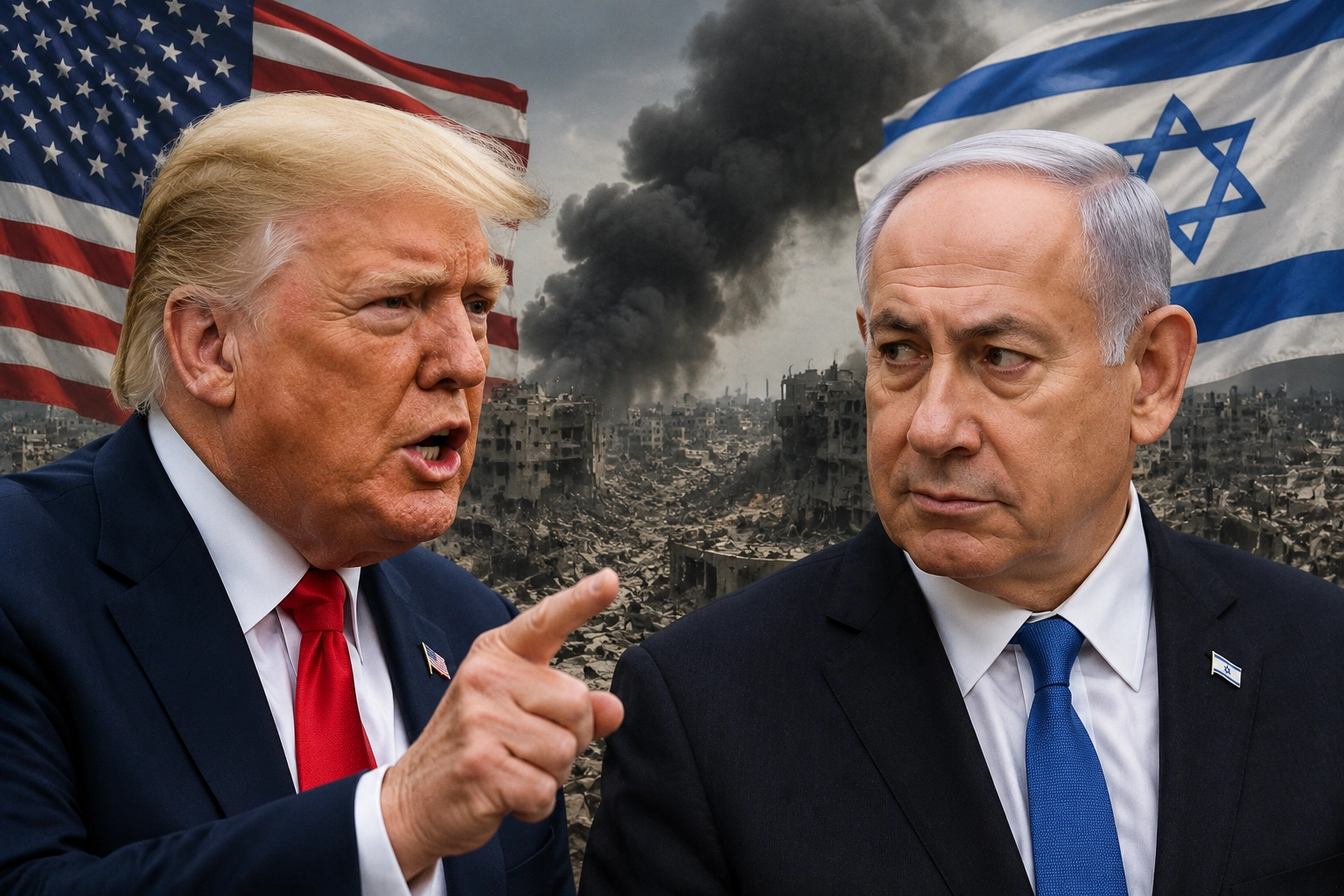
growing disagreement between US President Donald Trump and Israeli Prime Minister Benjamin Netanyahu over the future of Gaza has created new tensions between the two leaders, raising questions about the direction of the conflict and the next stage of regional diplomacy.
For years, Trump and Netanyahu have been seen as close political allies, with both leaders frequently highlighting their strong relationship on security issues and Middle East policy. However, recent discussions over Gaza’s future have revealed differences between Washington and Jerusalem regarding how the conflict should move forward.
The main dispute reportedly focuses on the future administration of Gaza, the role of Israeli forces, the reconstruction process and the conditions required for a long-term settlement. While Israel has emphasised security guarantees and preventing Hamas from rebuilding its military capabilities, the US administration has pushed for a broader political framework aimed at reducing regional instability.
Trump has repeatedly stated that Washington wants to see an end to prolonged fighting and a move toward a solution that provides stability in Gaza. However, Netanyahu’s government has maintained that military pressure remains necessary until Israel’s security objectives are achieved.
The disagreement comes at a sensitive time, as international pressure continues to increase over the humanitarian situation in Gaza. Aid organisations have warned about shortages of essential supplies, displacement and the challenges of rebuilding infrastructure after months of conflict.
US officials have reportedly encouraged discussions about a future governance model for Gaza that does not include Hamas control, while also calling for greater involvement from regional partners. Arab countries have shown interest in supporting reconstruction efforts but have demanded a clear political pathway and guarantees for Palestinian civilians.
The issue has also created political challenges for Netanyahu inside Israel. The prime minister faces pressure from different parts of his coalition, with some allies demanding a tougher approach while others are concerned about the long-term consequences of continued military operations.
For Trump, the Gaza issue represents a major foreign policy challenge as he attempts to maintain support among US allies while avoiding a wider regional escalation. His administration has tried to balance Israel’s security concerns with calls from international partners for a diplomatic solution.
Despite the disagreements, both Washington and Jerusalem continue to emphasise the strength of their alliance. However, the latest dispute highlights a growing gap over how to achieve long-term stability in Gaza.
Analysts believe the coming weeks will be important in determining whether the two sides can find common ground or whether disagreements over Gaza’s future will further strain one of the Middle East’s most important political relationships.