
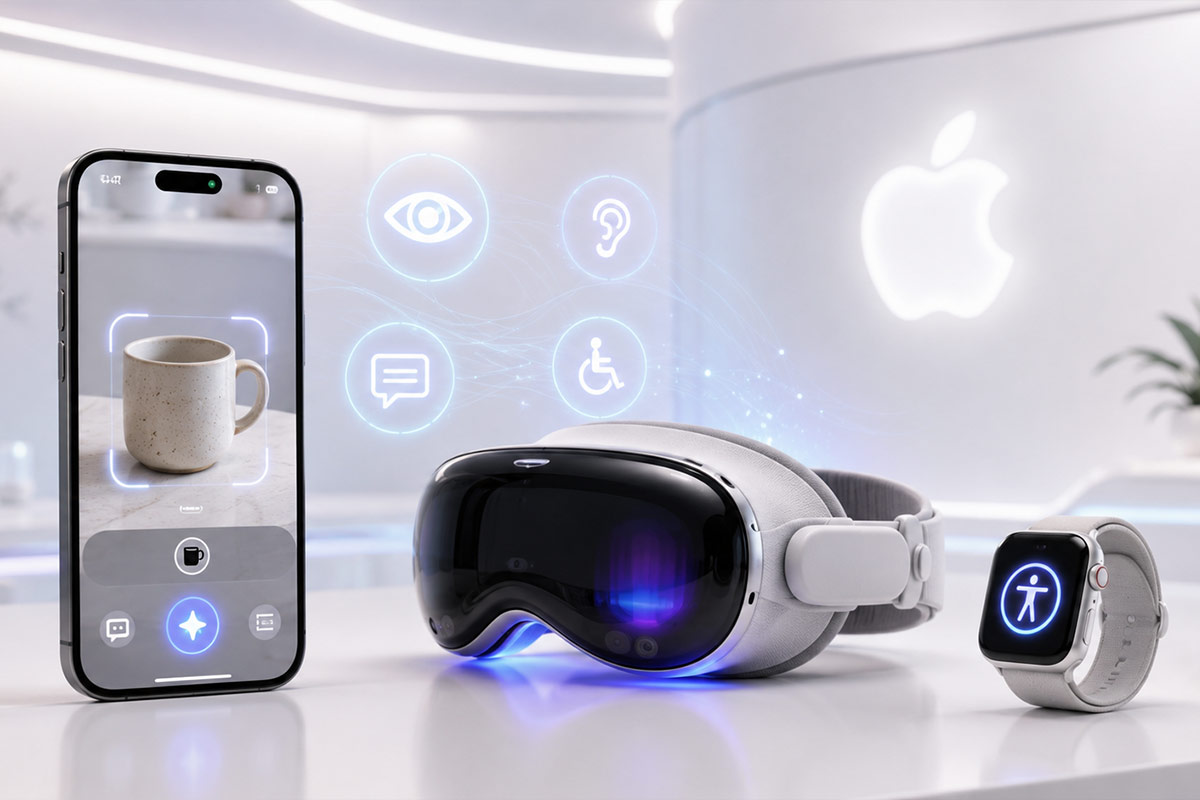
Apple has announced a new set of accessibility features powered by Apple Intelligence, giving users with disabilities more ways to navigate, understand and control their devices. The new tools are expected to roll out later this year across iPhone, iPad, Mac, Apple TV and Vision Pro. The updates focus on people with visual, hearing and mobility disabilities, while keeping Apple’s privacy-first approach to artificial intelligence at the centre of the experience.
Smarter VoiceOver for Visual Content
One of the biggest updates is coming to VoiceOver, Apple’s screen-reading technology for blind and low-vision users. With Apple Intelligence, VoiceOver will be able to provide more detailed descriptions of images across apps, photos and documents. This means users can get a clearer understanding of visual content without needing someone else to explain it.
The feature is designed to make images, documents and app interfaces more accessible, especially when visual information is important to the user’s next action.
Magnifier Becomes More Conversational
Apple is also upgrading Magnifier, a tool that helps users see objects, text and surroundings more clearly through the iPhone camera. With the new AI-powered improvements, users will be able to point their iPhone camera at an object or environment and ask follow-up questions in natural language. For example, a user could ask for more detail about what is in front of them or request help understanding a specific item.
Magnifier will also support spoken commands such as “zoom in” or “turn on flashlight,” making it feel more like an interactive accessibility assistant.
Voice Control Gets Natural Language Support
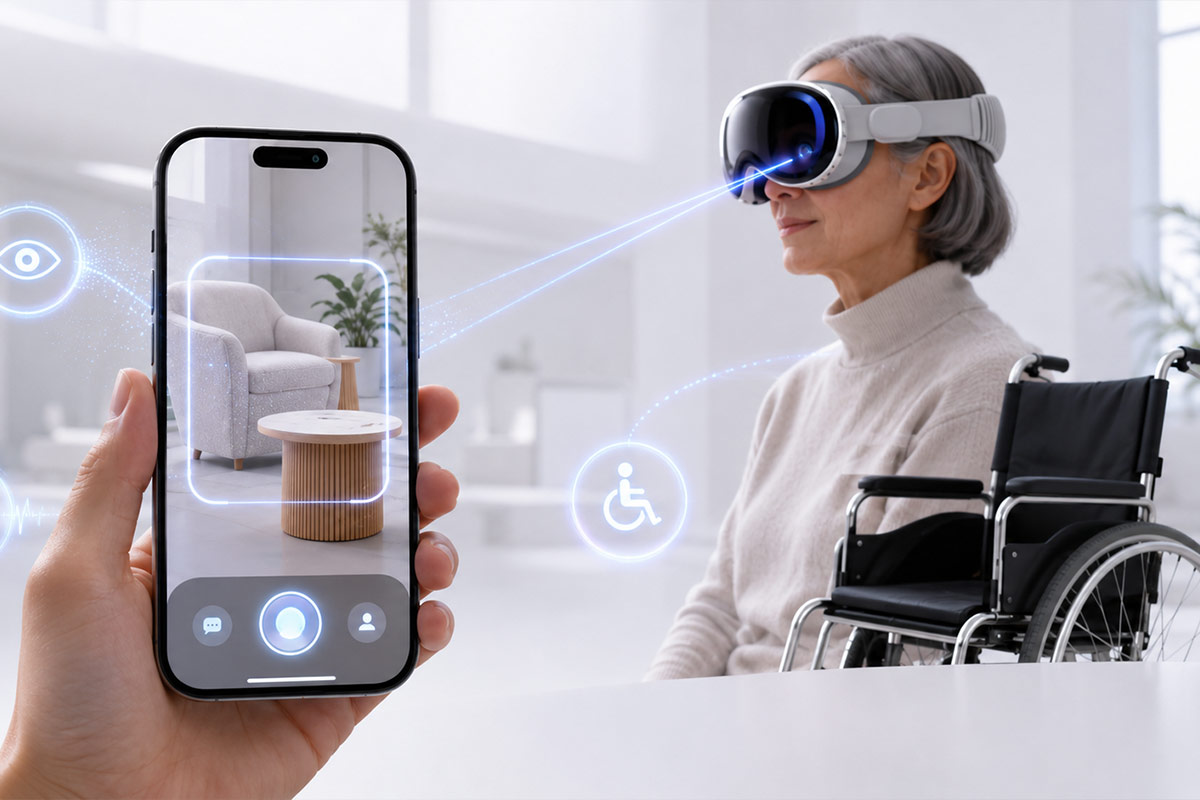
Another major update is coming to Voice Control. Previously, users often needed to know exact labels, buttons or command phrases to control their devices. With the new update, Apple is making Voice Control more natural by allowing users to describe what they see on the screen.
Commands such as “tap the purple folder” or “open the restaurant guide” will help users navigate apps without memorising specific interface labels. This feature could be especially useful for people with physical disabilities who rely on voice navigation instead of touch controls.
AI Subtitles for Videos Without Captions
Apple is adding AI-generated subtitles for videos that do not already include captions. Using on-device speech recognition, Apple devices will be able to create subtitles for personal videos, online clips and shared media. Because the processing happens on the device, Apple says the feature can work privately without sending the user’s data to external servers.
This update is designed to help deaf and hard-of-hearing users access more video content, even when captions were not originally provided.
Accessibility Reader Gets Smarter
Apple is also improving Accessibility Reader, a tool that helps users with dyslexia, low vision or reading difficulties. The updated version will be able to simplify complex articles, summarise content on request and translate text while keeping formatting and visual customisation options.
This could make long or difficult text easier to understand, especially for users who need cleaner layouts, simpler wording or customised reading settings.
Vision Pro Adds Wheelchair Control Support
One of the most notable additions is coming to Apple Vision Pro. Apple is introducing a wheelchair control feature that uses eye tracking to help users operate compatible power wheelchairs. The feature will initially support Tolt and LUCI systems in the United States.
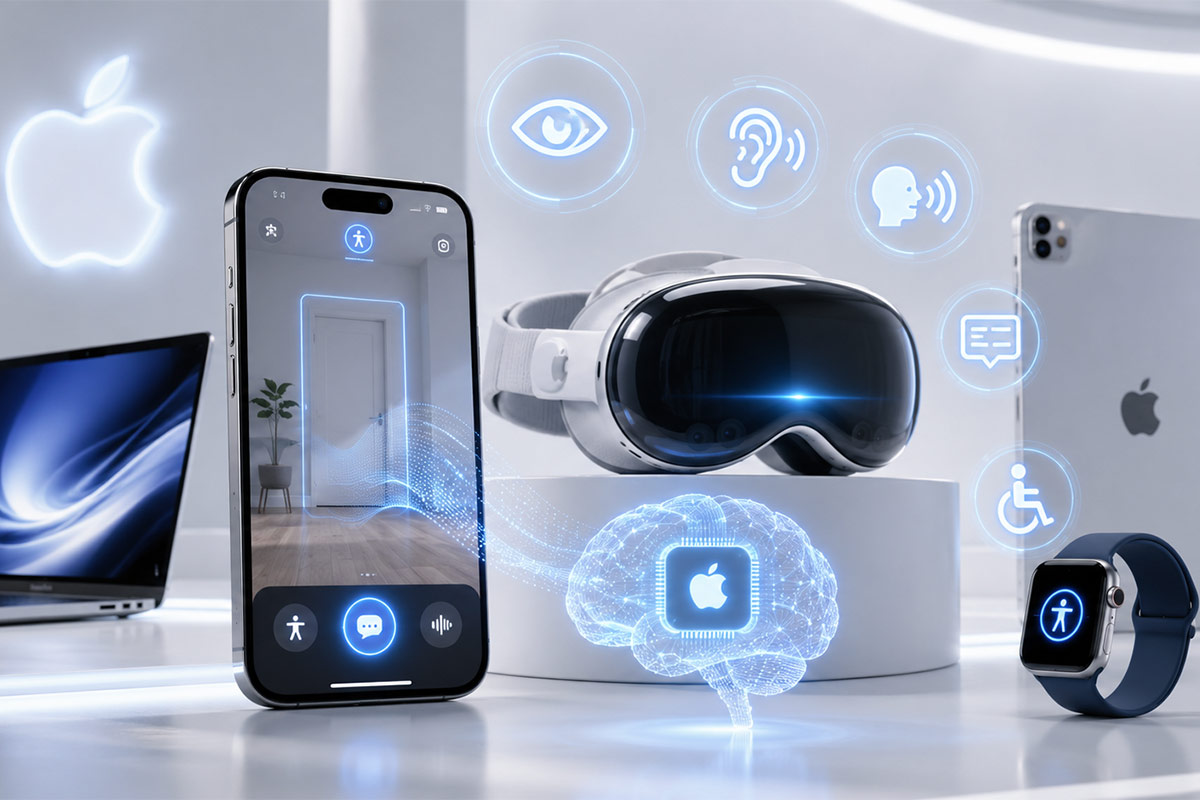
The update shows how Apple is trying to extend accessibility beyond screens and into real-world mobility support.
More Accessibility Updates Across Apple Devices
Apple also announced several other accessibility improvements across its ecosystem. These include larger text support on tvOS, better hearing aid pairing, face gesture controls for Vision Pro, and support for the Sony Access Controller on iPhone, iPad and Mac.
Together, the updates show Apple’s continued effort to make its devices easier to use for people with different physical, visual and hearing needs.
What These Features Mean for Users
Apple’s new AI-powered accessibility tools could make everyday device use more natural, personal and independent. Instead of requiring users to memorise commands, rely on fixed captions or struggle with visual information, Apple Intelligence is being used to make devices better at understanding context, speech, images and user intent.
For people with disabilities, these changes could mean faster navigation, better access to information and more control over both digital and physical environments.
With Apple WWDC 2026 approaching, Apple’s accessibility updates also show how artificial intelligence can be used for more than productivity or entertainment. In this case, AI is being positioned as a practical tool for independence, inclusion and everyday usability.