

Despite living in an era dominated by artificial intelligence, advanced science, and instant access to information, astrology continues to attract millions of followers worldwide. From daily horoscopes on social media to detailed birth chart readings available through mobile applications, astrology has successfully adapted to the digital age.
While scientific communities generally regard astrology as a pseudoscience, its cultural, psychological, and social influence remains undeniable. Understanding why astrology continues to thrive in the 21st century reveals fascinating insights into human behavior, identity, and the search for meaning.
What Is Astrology?
Astrology is the belief that the positions and movements of celestial bodies, such as planets and stars, can influence human personalities, behaviors, and life events. The practice dates back thousands of years and has roots in ancient civilizations including Babylon, Egypt, Greece, and China. Today, astrology is commonly associated with zodiac signs, birth charts, planetary transits, and compatibility analyses. Modern astrologers use sophisticated software and astronomical calculations to generate detailed interpretations based on an individual’s birth date, time, and location.
Key elements of astrology include:
- Zodiac signs and personality interpretations.
- Birth charts that map planetary positions at the time of birth.

Why Astrology Remains Popular in the Modern World
The continued popularity of astrology cannot be explained solely by tradition. Several modern factors contribute to its widespread appeal.
The Search for Identity
In an increasingly complex world, many people turn to astrology as a tool for self-discovery. Personality descriptions associated with zodiac signs often provide a framework through which individuals can better understand themselves and their relationships. For younger generations especially, astrology offers a language for discussing emotions, strengths, weaknesses, and interpersonal dynamics.
Psychological Comfort and Meaning
Humans naturally seek patterns and explanations for life events. Astrology provides narratives that can make uncertainty feel more manageable. During periods of stress, major life transitions, or global instability, many individuals find comfort in astrological guidance. Rather than predicting exact outcomes, astrology often functions as a reflective tool that encourages introspection and personal growth.
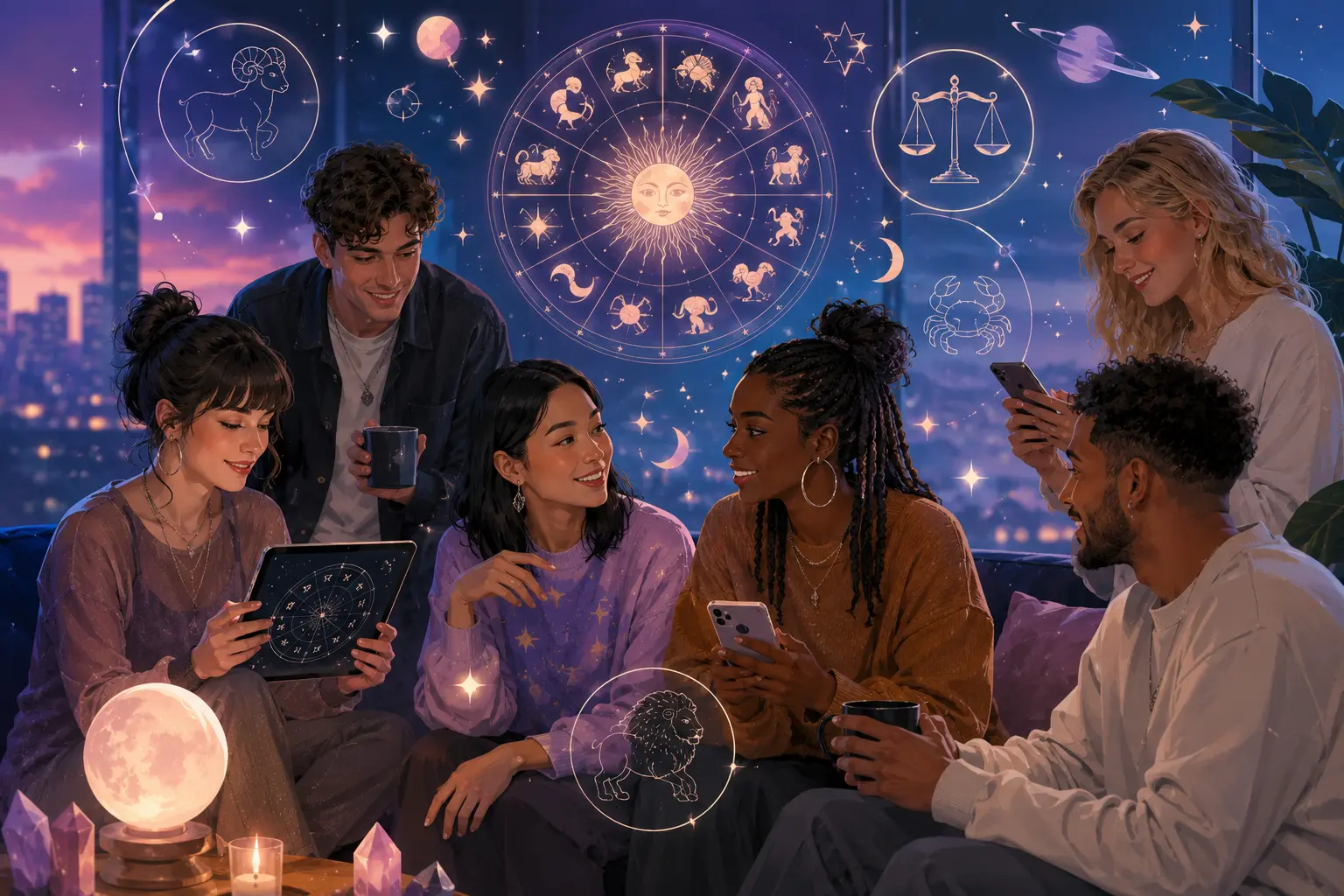
The Rise of Digital Astrology
The internet has transformed astrology from a niche interest into a global phenomenon. Social media platforms, mobile apps, and online communities have introduced astrology to new audiences.
Popular astrology applications now provide:
- Personalized birth chart analyses.
- Daily, weekly, and monthly horoscope updates.
These services make astrology more accessible than ever before. Users can receive customized insights instantly, contributing to the rapid growth of astrology-related content online.
Social Media and Astrology Culture
Platforms such as Instagram, TikTok, and YouTube have played a major role in astrology’s resurgence. Astrology influencers regularly share content about zodiac traits, relationship compatibility, planetary retrogrades, and life advice. This digital ecosystem has transformed astrology into both a form of entertainment and a social identity marker. Many users enjoy sharing astrology memes, discussing compatibility, and exploring personality traits associated with their signs.
Astrology and Psychology
One reason astrology remains influential is its overlap with psychological concepts. Researchers have suggested that astrology’s appeal may be connected to cognitive biases, including the Barnum Effect. This phenomenon occurs when individuals perceive vague, general statements as highly personal and accurate.
For example, statements such as “You value close relationships but sometimes need time alone” can resonate with a broad range of people. Astrology often uses these types of interpretations, allowing individuals to connect deeply with the descriptions. However, many practitioners argue that astrology’s value lies less in prediction and more in self-reflection. In this sense, astrology functions similarly to personality assessments, journals, or coaching exercises.

Astrology in Business and Relationships
Astrology has expanded beyond personal interest and increasingly influences decision-making in various areas of life.
Career Decisions
Some individuals use astrological guidance when considering career changes, entrepreneurship, or professional development. While most major organizations rely on data-driven decision-making, astrology remains a personal tool for reflection among professionals worldwide.
Dating and Compatibility
Dating applications and online communities frequently incorporate zodiac compatibility discussions. Many people consider astrological compatibility when evaluating potential partners, friendships, or business relationships. Although there is no scientific evidence proving zodiac compatibility predicts relationship success, the practice remains culturally significant and widely discussed.
Scientific Perspectives on Astrology
The scientific consensus is clear: there is currently no reliable evidence demonstrating that planetary positions directly influence personality traits or future events. Numerous studies have attempted to validate astrological predictions and personality assessments, but results have generally failed to support astrological claims under controlled conditions.
Nevertheless, astrology’s cultural relevance does not depend entirely on scientific validation. Many followers view astrology as a symbolic system rather than a literal predictive science. This distinction helps explain why astrology continues to thrive despite ongoing criticism from scientific communities.
The Future of Astrology
As technology continues to evolve, astrology is likely to remain a significant part of digital culture. Artificial intelligence, personalized analytics, and advanced data visualization tools are already being integrated into astrology platforms.
Future developments may include:
- More personalized astrological reports powered by AI.
- Interactive birth chart analysis tools.
- Enhanced community-driven astrology platforms.
- Integration with wellness and self-development applications.
Rather than disappearing, astrology appears to be adapting to contemporary trends and technological innovation.
Conclusion
Astrology’s enduring popularity in the 21st century highlights humanity’s ongoing desire for meaning, identity, and connection. While scientific evidence does not support astrology as a predictive science, its cultural and psychological influence remains powerful.
Through social media, mobile technology, and evolving digital communities, astrology has found new ways to engage modern audiences. Whether viewed as entertainment, self-reflection, or spiritual guidance, astrology continues to shape conversations about personality, relationships, and the human experience. As society becomes increasingly digital, the stars may continue to serve as symbols through which people explore themselves and their place in the world.