
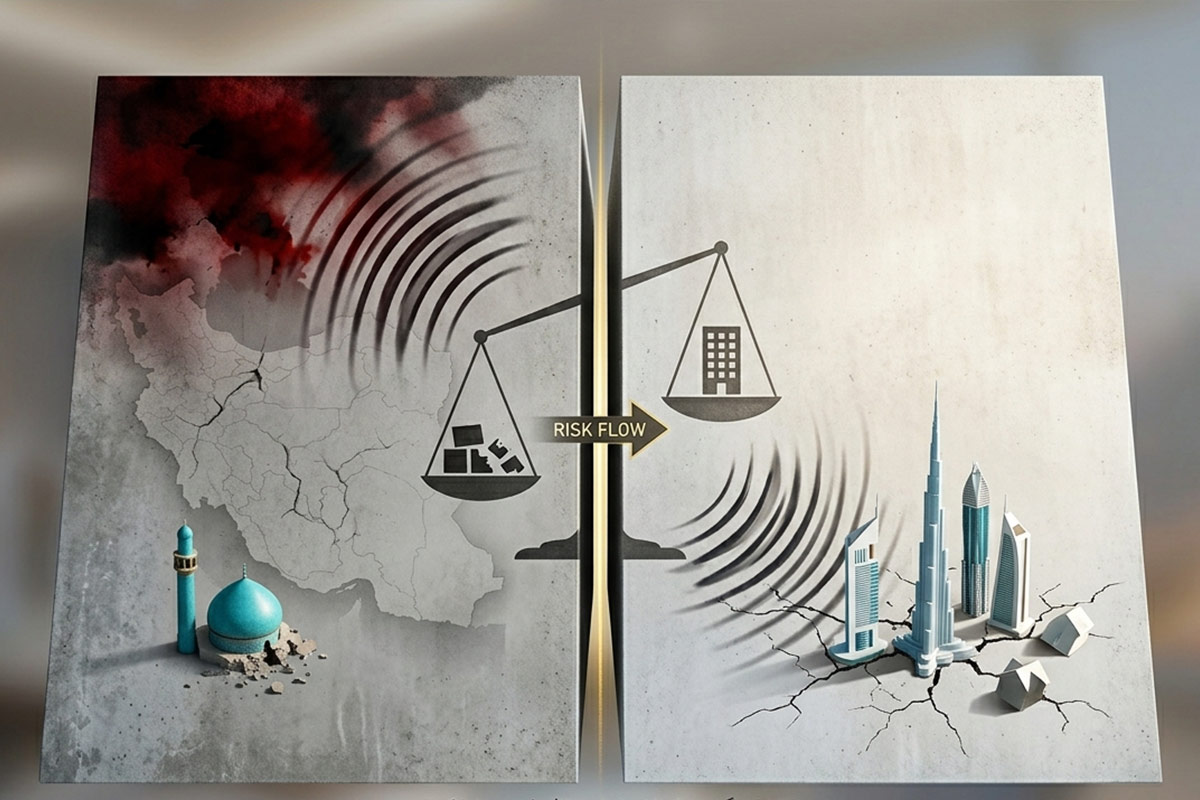
Dubai’s real estate market has always behaved as more than a local property market. It is a regional capital magnet—absorbing wealth, talent, and capital from neighboring economies during periods of uncertainty. Historically, geopolitical instability in the Middle East has often redirected liquidity toward Dubai, reinforcing its position as a safe-haven asset jurisdiction.
If a military conflict involving Iran were to escalate or persist, the impact on Dubai’s property market would not be linear. It would depend on duration, severity, regional spillover, and investor psychology. Here are three realistic scenarios.
Scenario One: Short-Term Conflict, Rapid Containment (Bullish for Dubai)
This is the most market-friendly scenario.
A limited conflict lasting a few weeks or months—with no major disruption to regional shipping lanes, no direct impact on the United Arab Emirates, and quick diplomatic stabilization—would likely trigger capital flight from Iran and parts of the wider region. In this environment, Dubai would likely benefit significantly. Why?
Dubai already serves as the primary capital relocation destination for Iranian high-net-worth individuals, business owners, and regional investors. During uncertainty, preserving capital becomes the priority.
Real estate becomes the preferred vehicle because:
- It preserves wealth in hard assets
- It creates residency pathways
- It offers rental yield
- It protects against currency collapse in neighboring economies
Under this scenario:
– Luxury properties in areas like Downtown Dubai and Dubai Marina could see accelerated demand
– Mid-market investment zones like Jumeirah Village Circle and Al Jaddaf may experience increased transaction volume
– Off-plan projects from developers like Emaar Properties and Sobha Realty could absorb redirected liquidity rapidly
Market Effect: Price increase: 5%–15% in 6–12 months
This scenario would likely resemble previous regional capital migration cycles—but at a larger scale.
Scenario Two: Prolonged Regional Instability (Mixed Outcome)
This is the most complex scenario. A conflict lasting 6–18 months changes market psychology. At first, Dubai benefits from incoming capital. But over time:
- Regional risk premiums rise
- Global investors become more cautious toward Middle East exposure
- Tourism may soften
- Business expansion decisions may slow
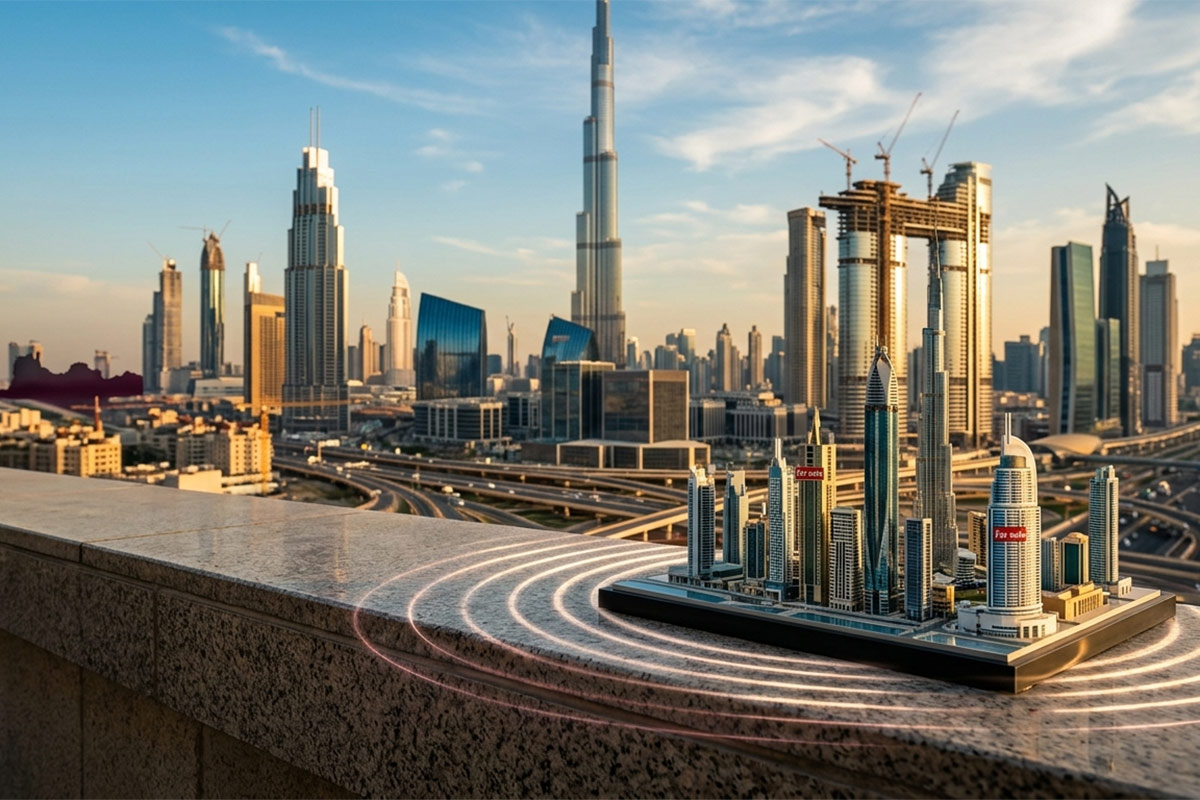
This creates a two-speed market.
Likely winners: Prime areas with genuine scarcity:
- Palm Jumeirah
- Downtown Dubai
- Dubai Hills Estate
These remain wealth-preservation assets.
Likely weaker segments: Speculative off-plan inventory and oversupplied mid-tier projects.
Investors become selective.
Developers may increase incentives:
– Post-handover payment plans
– Fee waivers
– Higher broker commissions
Market Effect: Prime segment: +3% to +8%
Secondary/off-plan speculative segment: -5% to +3%
The market would become highly segmented.
Location quality would matter far more than during a broad bull market.
Scenario Three: Major Regional Escalation (Short-Term Shock, Long-Term Opportunity)
This is the high-volatility scenario. If conflict disrupts the Strait of Hormuz, threatens Gulf security, or directly impacts broader regional operations, Dubai real estate would likely experience an immediate shock. Not because Dubai becomes fundamentally weak—but because liquidity freezes.
In this phase:
- Buyers delay decisions
- International funds reduce exposure
- Mortgage sentiment weakens
- Short-term tourism declines
Immediate reaction: Prices could fall 10%–20% in selected segments
However, Dubai’s structural advantages remain:
- Strong governance
- Dollar-linked currency
- Global business infrastructure
- Tax efficiency
Once stability returns, recovery could be aggressive. Historically, capital tends to return quickly to functioning regional hubs.
### Long-term effect: Potential V-shaped recovery.
This scenario creates buying opportunities for cash investors.
Which Scenario Is Most Likely?
The highest probability scenario is not extreme escalation. The most probable path is Scenario One or Two. Why Because major powers generally seek containment rather than full regional destabilization due to energy market implications. That means Dubai may continue to strengthen its role as the Middle East’s capital preservation hub. For investors, the key question is not whether volatility will appear. It is where capital runs when volatility appears. And historically, the answer has often been Dubai.
Investor Takeaway
For buyers considering Dubai real estate today:
- Focus on strong developers
- Avoid weak speculative inventory
- Prioritize livable, rentable assets
- Maintain liquidity for volatility-driven opportunities
In uncertain regional environments, quality assets usually outperform. Dubai’s resilience has been tested before. It may be tested again. And history suggests it adapts faster than most.
Disclaimer: This analysis is scenario-based and not investment advice. Investors should evaluate market conditions, financing costs, and geopolitical developments before making decisions.