
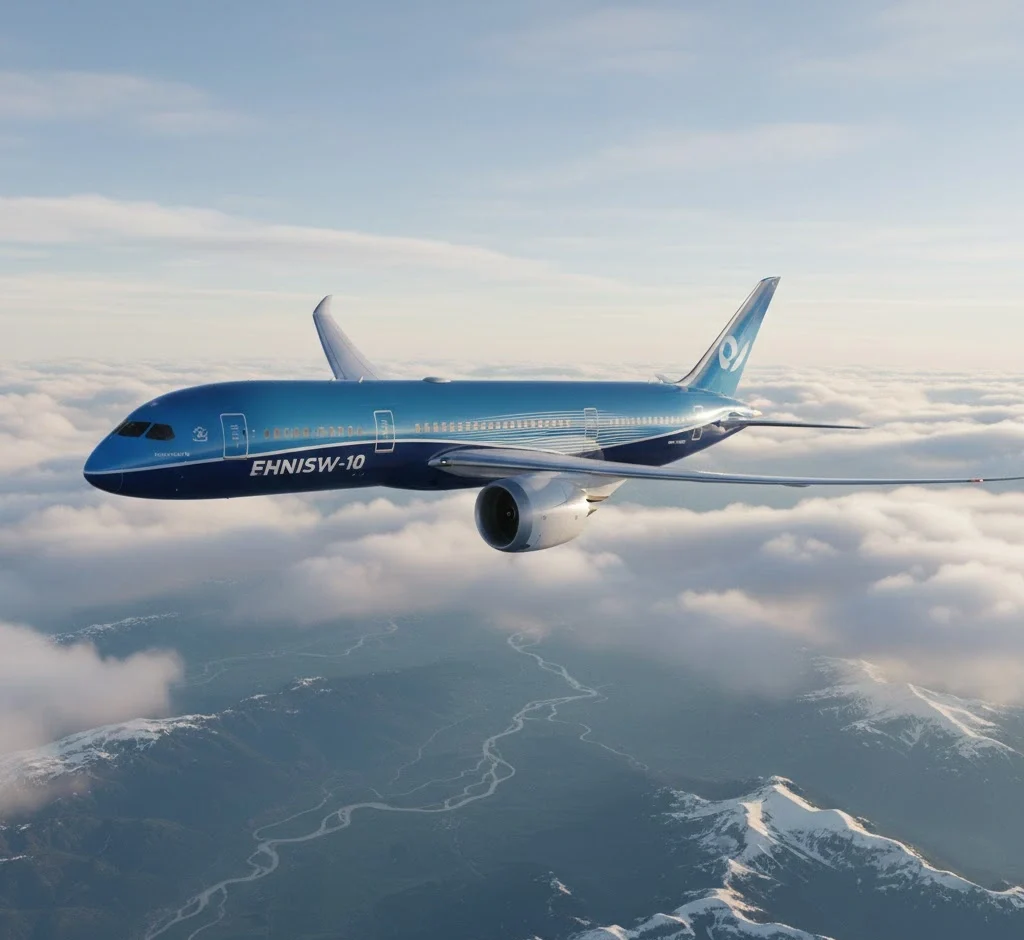
Ultra-long-haul aviation has redefined global connectivity. Today, the longest flights in the world by time exceed 16–19 hours in the air, linking cities separated by vast oceans without stopovers. These routes are engineering feats, operational challenges, and strategic market plays for airlines competing for premium travelers. In this guide, we rank the 10 longest flights in the world (by time), explain why they exist, and examine what makes ultra-long-haul routes viable.
As more UAE travelers explore distant destinations, interest in ultra-long-haul travel continues to rise, especially among residents planning trips to destinations that may not require visas. If you’re considering global travel from the UAE, you may also find this guide helpful: Visa free countries for UAE residents
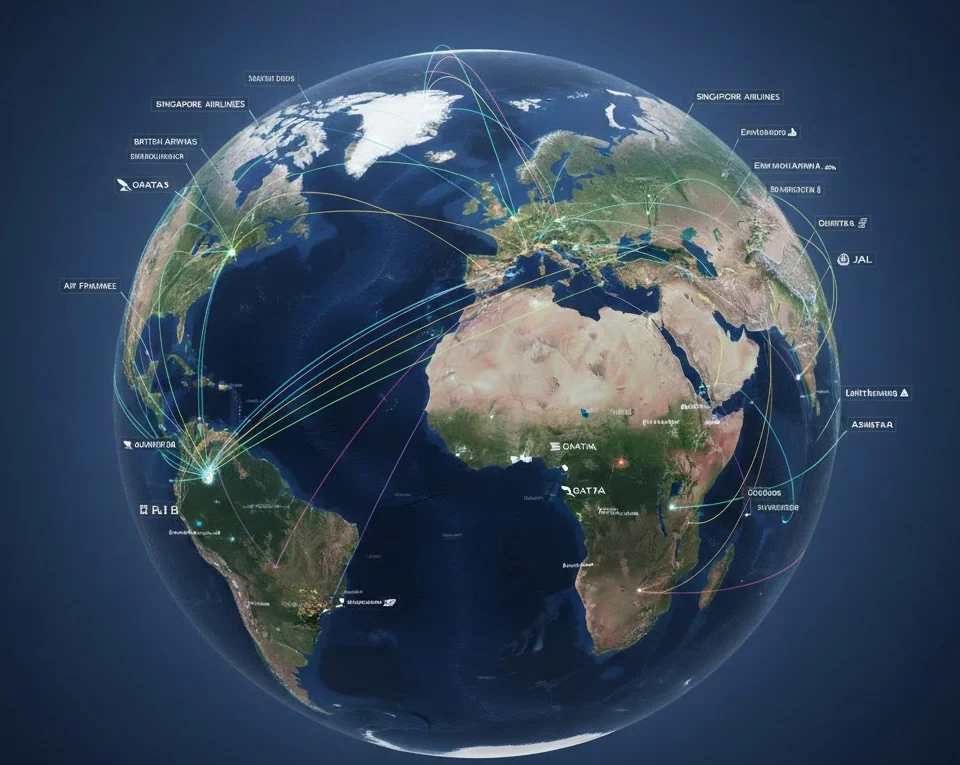
How We Measure the Longest Flights in the World (By Time)
When ranking the longest flights in the world by time, we focus on scheduled block time (gate-to-gate duration), not just distance. Winds, air traffic control routings, and seasonal variations can slightly change flight time. The aircraft type, payload, and prevailing jet streams also influence duration. Most ultra-long-haul services rely on advanced twin-engine aircraft such as the Airbus A350-900/1000 or the Boeing 787-9/10, optimized for fuel efficiency and extended range.
1) Singapore Airlines: Singapore (SIN) to New York (JFK)
- Approx. time: 18h 30m – 19h
- Aircraft: A350-900ULR
Often cited as the longest flight in the world by time, this non-stop flight connects Southeast Asia with the U.S. East Coast. Operated by an ultra-long-range A350 variant, it prioritizes premium cabins and optimized fuel burn. Seasonal winds can push the total time near the 19-hour mark westbound.
2) Qantas Airways: Perth (PER) to London (LHR)
- Approx. time: 17h 20m – 17h 45m
- Aircraft: 787-9
A landmark route linking Western Australia directly with Europe, this service is among the longest flights in the world (by time), operating regularly. Strong headwinds over the Indian Ocean can extend block time, while tailwinds shorten the eastbound leg.
3) Singapore Airlines: Singapore (SIN) to Newark (EWR)
- Approx. time: 18h+
- Aircraft: A350-900ULR
Reintroduced after a pandemic pause, SIN–EWR frequently ranks near the top of the longest flights in the world by time. The airline configures these aircraft with fewer seats to maximize range and passenger comfort.
4)Air India: Bengaluru (BLR) to San Francisco (SFO)
- Approx. time: 17h 30m – 18h
- Aircraft: 777-200LR / A350 (fleet transition ongoing)
This transpolar route leverages Arctic routings to minimize distance. Depending on the winds, it can approach the upper tier of the longest flights in the world by time.
5) United Airlines: Los Angeles (LAX) to Singapore (SIN)
- Approx. time: 17h 30m – 18h
- Aircraft: 787-9
A key U.S.–Asia corridor, LAX–SIN, routinely appears in discussions of the longest flights in the world (by time). The Pacific crossing demands precise fuel planning and crew rotation.
6) Emirates: Dubai (DXB) to Auckland (AKL)
- Approx. time: 17h 10m – 17h 30m
- Aircraft: A380 / 777
This ultra-long-haul service exemplifies Middle East–Oceania connectivity. Westbound headwinds can increase total duration, placing it among the longest flights in the world by time in certain seasons.
Given Dubai’s position as a global aviation hub, long-haul connectivity continues expanding, something also discussed in our related aviation coverage here: LINK
7)Cathay Pacific: Hong Kong (HKG) to New York (JFK)
- Approx. time: 16h 30m – 17h 30m
- Aircraft: A350-1000
Polar routings and weather patterns can significantly influence total time. At its peak durations, this route competes within the top tier of the longest flights in the world (by time).
8) Qatar Airways: Doha (DOH) to Auckland (AKL)
- Approx. time: 16h 30m – 17h 30m
- Aircraft: 777-200LR / A350
A consistent presence in ultra-long-haul rankings, DOH–AKL reflects the Gulf carrier model connecting Europe and Asia with Oceania via efficient widebodies.
9)American Airlines: Dallas (DFW) to Sydney (SYD)
- Approx. time: 16h 45m – 17h 15m
- Aircraft: 787-9
Linking Texas with Australia, this route underscores the expanding network of non-stop Pacific services competing for premium demand.
10)Delta Airlines: Atlanta (ATL) to Johannesburg (JNB)
- Approx. time: 16h – 16h 30m
- Aircraft: A350-900
Connecting the U.S. Southeast with Southern Africa, ATL–JNB is a flagship long-haul route and remains one of the longest flights in the world by time.
Why Airlines Operate the Longest Flights in the World (By Time)
Operating the longest flights in the world (by time) is capital-intensive but strategically valuable:
- Premium Revenue Focus
Ultra-long-haul routes attract business travelers willing to pay for time savings and non-stop convenience. - Hub Strengthening
Airlines reinforce global hubs (e.g., Singapore, Dubai, Doha) by connecting distant markets directly. - Fleet Optimization
New-generation aircraft (A350, 787) offer range efficiency that makes these routes economically viable. - Brand Positioning
Flying the longest route confers marketing prestige and competitive differentiation.
Passenger Experience on Ultra-Long-Haul Flights
On the longest flights in the world by time, airlines adjust service models to mitigate fatigue:
- Enhanced cabin humidity and lighting (circadian rhythm tuning)
- Larger premium cabins
- Specialized meal timing
- Wellness amenities (stretching guides, hydration kits)
Aircraft like the A350 incorporate improved cabin pressurization to reduce jet lag impact.
Operational Challenges
Operating the longest flights in the world (by time) requires:
- Augmented flight crews (multiple captains/first officers)
- Strict ETOPS (Extended-range Twin-engine Operational Performance Standards) compliance
- Polar navigation capability
- Strategic fuel reserves
Weather over the Pacific or polar regions can significantly affect the total duration.
How Distance Differs from Time
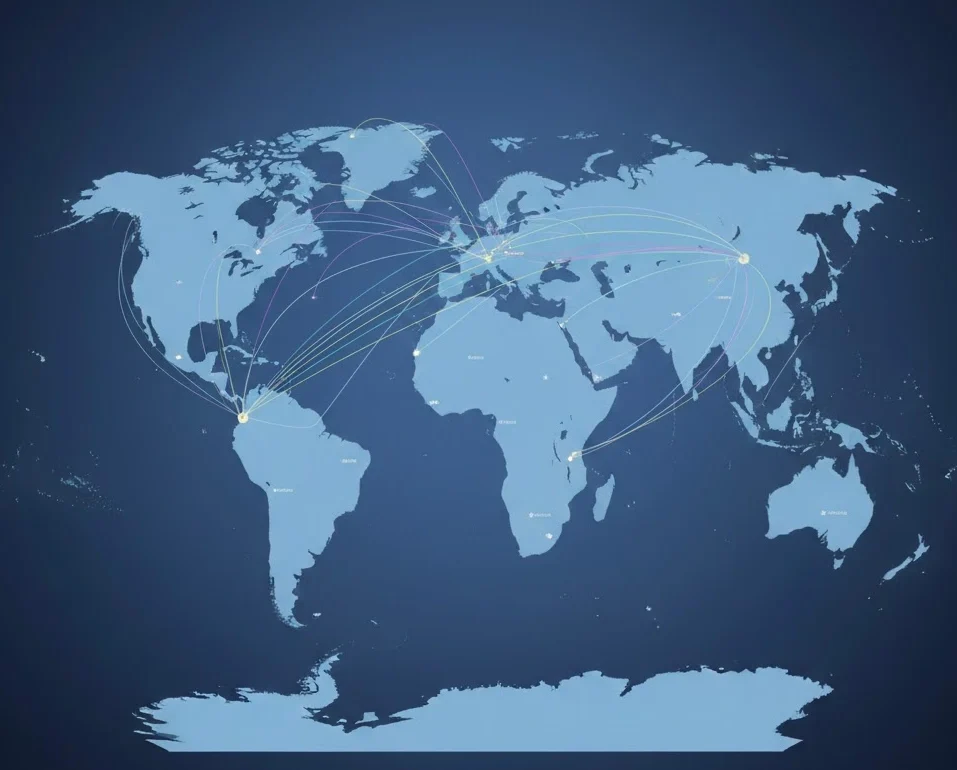
It’s important to distinguish between the longest flights in the world by time and the longest flights by pure geographic distance. Many readers assume that the farthest route in miles must automatically be the longest in duration, but that is not always the case. In commercial aviation, time and distance are influenced by different variables.
The Earth’s rotation and global wind systems play a major role. Aircraft flying eastbound often benefit from powerful jet streams, which can significantly reduce total flight time. Conversely, westbound flights frequently encounter strong headwinds that slow ground speed, sometimes adding one to two hours to the journey. This is why a route that is slightly shorter in mileage can still rank among the longest flights in the world by time when operated against prevailing winds.
For example, transpacific and transatlantic westbound routes typically take longer than their eastbound counterparts. A flight covering 15,000 kilometers might take 17 hours in one direction but only 15.5 hours in the opposite direction. This variation can shift how routes are ranked when measuring the longest flights in the world (by time).
Additional Factors That Affect Flight Time
Beyond wind patterns, several operational variables influence total block time:
- Air traffic control routing: Aircraft rarely fly in perfectly straight lines. Routes may be adjusted to avoid restricted airspace, congestion, or geopolitical zones.
- Weather systems: Storms, turbulence zones, and seasonal weather patterns can force detours.
- Aircraft performance limitations: Payload weight (passengers, cargo, fuel) impacts cruising speed and altitude.
- Polar routing constraints: Flights using Arctic paths must comply with specific communication and diversion regulations.
Because of these factors, two routes of nearly identical distance may differ significantly in scheduled duration.
Why Airlines Schedule Longer Block Times
Airlines also build buffers into published schedules. A flight that typically takes 16 hours in favorable conditions might be scheduled for 16 hours and 45 minutes to account for variability. This ensures better on-time arrival statistics and protects operational reliability.
As a result, when evaluating the longest flights in the world by time, rankings may shift slightly throughout the year. Seasonal wind patterns, especially during winter in the Northern Hemisphere, can extend westbound durations, temporarily pushing certain routes higher in time-based rankings.
In short, distance measures how far a plane travels across the globe, but time reflects the real-world operational conditions of commercial aviation. That distinction explains why the longest flights in the world by time are not always the longest flights in the world by distance.