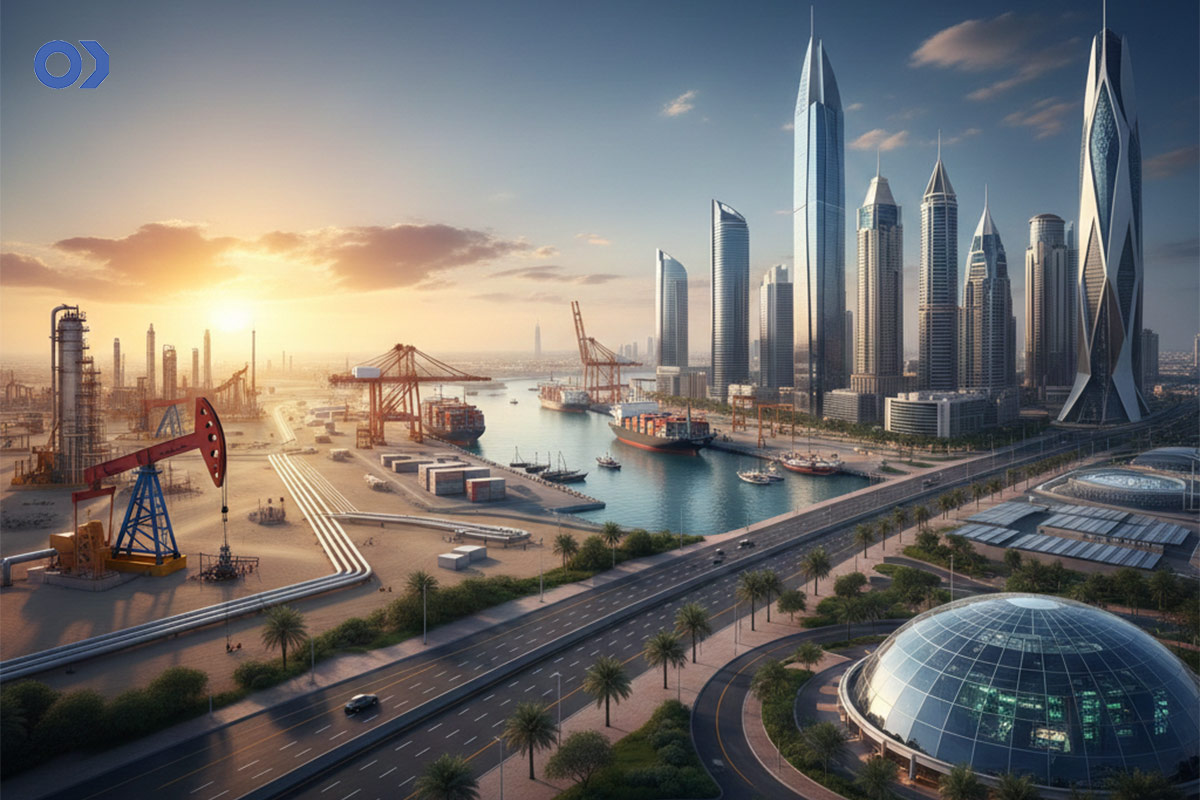
Over the past five decades, the United Arab Emirates has transformed from an oil-dependent economy into one of the world’s most diversified and dynamic economic models. While hydrocarbons once dominated national income, sectors such as global trade, logistics, real estate, tourism, finance, and technology now play central roles in growth.
Today, the UAE economy can be understood as a multi-sector economic portfolio similar to a diversified investment portfolio where risks and returns are distributed across industries to enhance long-term stability and resilience. This shift is the result of deliberate state strategy, large-scale infrastructure investment, and forward-looking economic planning.
Structure of the UAE Economic Portfolio
Recent data shows that non-oil sectors now account for the majority of economic output. Approximately 73–77% of GDP is generated by non-oil activities, while oil and gas contribute roughly 23–30%. This demonstrates the tangible success of diversification strategies implemented over the past two decades.
The UAE’s economic structure can be broadly categorized into five key pillars: oil and gas, trade and logistics, real estate and construction, technology and digital economy, and tourism and hospitality.
1. Oil and Gas: Strategic Foundation, Not the Primary Growth Engine
Although its relative share has declined, hydrocarbons remain strategically vital. The oil sector provides substantial government revenue, supports sovereign wealth investments, ensures macroeconomic stability during global downturns, and finances long-term transformation initiatives.
The UAE holds roughly 10% of global proven oil reserves, offering long-term fiscal security. However, oil’s role is gradually shifting. Rather than serving as the primary driver of growth, it is increasingly functioning as a financial engine that funds diversification into technology, renewable energy, and advanced industries. Oil is becoming a stabilizer rather than a growth accelerator.
2. Trade, Transit, and Logistics: Backbone of the Modern Model
One of the most powerful pillars of today’s UAE economy is its position as a global trade and transit hub. Its geographic location between Asia, Europe, and Africa enables it to function as a central node in global supply chains.
Trade contributes approximately 16–17% of non-oil GDP, while transportation and storage are among the fastest-growing sectors. Transit and logistics are more than industries; they form the structural backbone of the non-oil growth model. Ports, airports, and free zones create multiplier effects across finance, manufacturing, and e-commerce.
With ongoing expansion of mega-ports, airports, and international economic corridors, the UAE is positioned to strengthen its leadership as a global logistics powerhouse over the next decade.
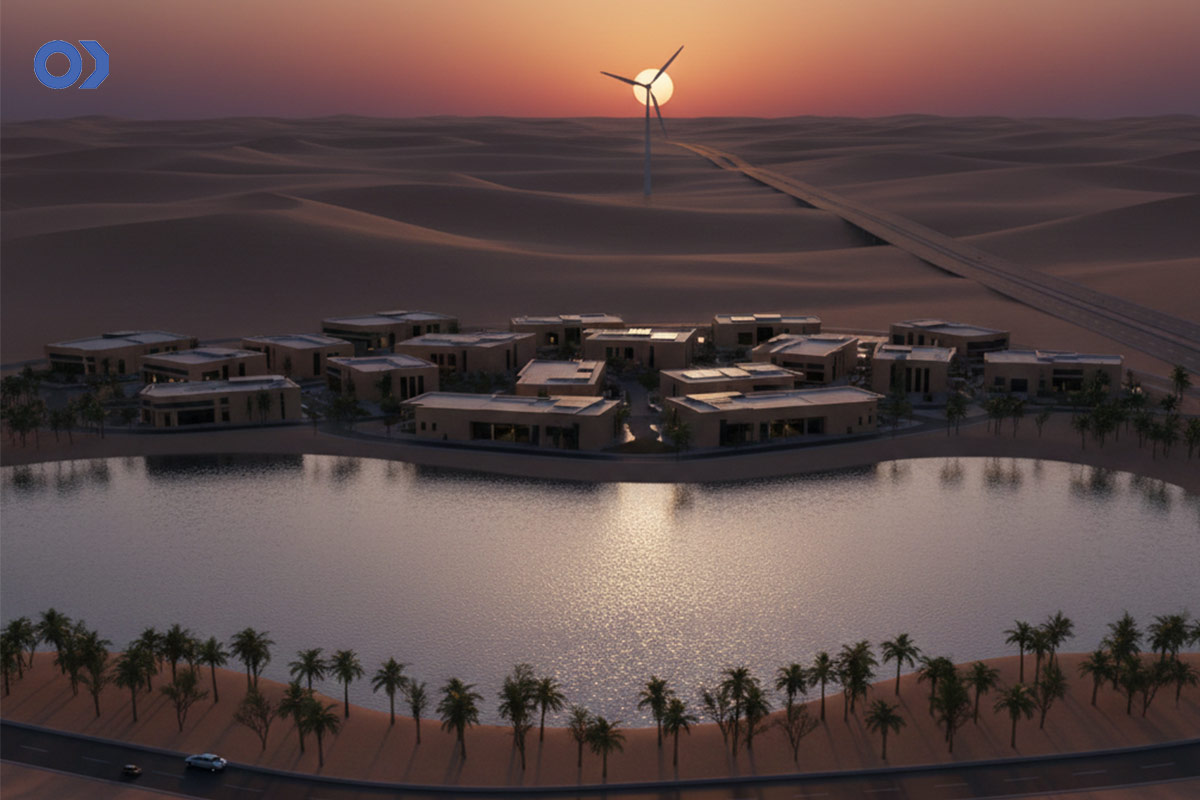
3. Real Estate and Construction: Capital Magnet and Growth Multiplier
Real estate has played a transformative role, particularly in Dubai’s rise as a global investment destination. The sector contributes roughly 7–8% of non-oil GDP, but its indirect impact is significantly larger due to its integration with tourism, financial services, retail, and demographic expansion.
Real estate serves not only as an economic contributor but also as a mechanism for absorbing global capital inflows. Future growth is expected to be supported by population expansion, skilled migration, investor residency programs, large-scale infrastructure development, and international wealth relocation. Increasingly, UAE property markets function as global safe-haven assets.
4. Technology and the Digital Economy: Emerging High-Growth Sector
While technology represents a smaller share of GDP compared to traditional sectors, it is among the fastest-growing areas. The UAE is investing heavily in artificial intelligence, fintech, blockchain, smart cities, digital infrastructure, autonomous mobility, and cybersecurity.
Government strategies aim to position the country not only as a trade center but as a regional and global technology hub. Over the next decade, technology is expected to become a key productivity driver and a central pillar of diversification.
5. Tourism and Hospitality: Branding and Spillover Effects
Tourism has been integral to the UAE’s economic model since the 1990s. Massive investments in aviation, hospitality, entertainment, and infrastructure have placed the country among the world’s leading tourism destinations.
National strategies aim to increase tourism’s annual contribution to over $120 billion by 2031. The sector generates strong spillover effects across retail, aviation, real estate, and service industries, reinforcing overall economic resilience.
Historical Evolution of the UAE Economy
The transformation can be understood in three phases.
- Phase 1: Oil Economy (1970–1995)
Heavy reliance on hydrocarbons, foundational infrastructure development, and formation of sovereign wealth funds. - Phase 2: Early Diversification (1995–2010)
Rise of Dubai as a trade hub, rapid expansion of aviation and tourism, and major real estate development. - Phase 3: Advanced Economic Model (2010–Present)
Innovation-driven growth, technology investment, financial services expansion, and knowledge economy initiatives.
This progression reflects a deliberate transition from resource dependency to diversified economic strength.
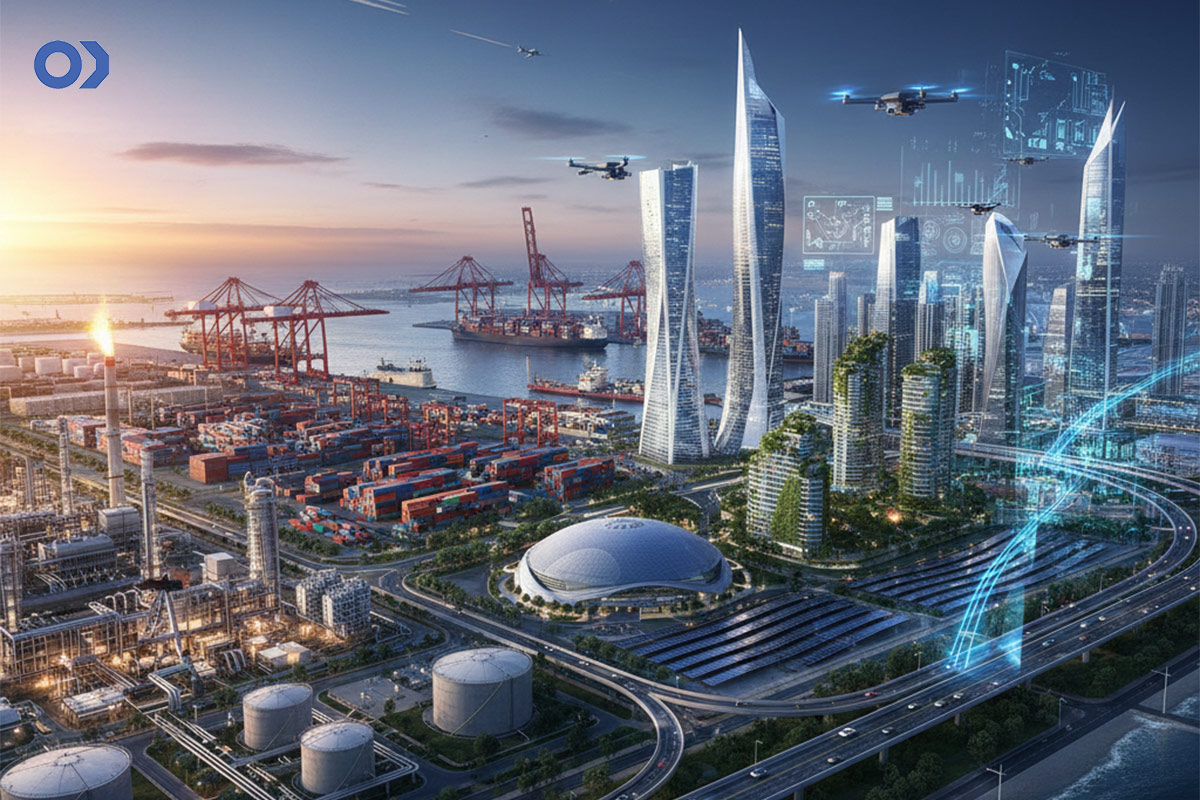
Future Trajectory: Where Is the UAE Heading?
Several structural trends will shape the coming decade. Government strategies aim to reduce oil’s share of GDP toward approximately 20% by 2030. Simultaneously, the UAE seeks to position itself as a global logistics center, financial hub, and innovation ecosystem.
Population and human capital growth will further drive consumption, housing demand, service expansion, and entrepreneurial activity.
Sector Potential Assessment
Based on current economic indicators:
Highest Growth Potential
Technology and artificial intelligence
Logistics and global trade
Financial services
Stable Long-Term Growth
Real estate
Tourism
Lower Relative Growth
Oil and hydrocarbons, due to global energy transition trends
Implications for Investors and Entrepreneurs
The diversified structure creates opportunities across technology startups, logistics services, real estate investment, financial innovation, digital platforms, and international trade ecosystems.
Strong non-oil growth, regulatory stability, and infrastructure depth position the UAE as one of the most attractive long-term investment environments among emerging markets.
Strategic Conclusion
The UAE is no longer defined as an oil economy. It is a diversified economic portfolio built on trade, infrastructure, innovation, and global capital flows. Its success stems from using hydrocarbon wealth to finance transformation, building world-class connectivity infrastructure, attracting global talent and capital, and anticipating long-term economic shifts.
Over the next decade, the UAE is positioned to become one of the most diversified and strategically influential economies globally, with expanding roles in trade, technology, finance, and investment.