

One of the most common concerns surrounding Dubai is the perception that its economic model is inherently fragile. Critics often argue that the city represents a relatively young ecosystem heavily dependent on real estate, external capital flows, and global economic cycles and therefore vulnerable to future downturns. Property prices, they say, cannot rise indefinitely, and rapid growth phases are often followed by painful corrections. These concerns are not irrational. But they are also incomplete.
Signals from Institutional Capital
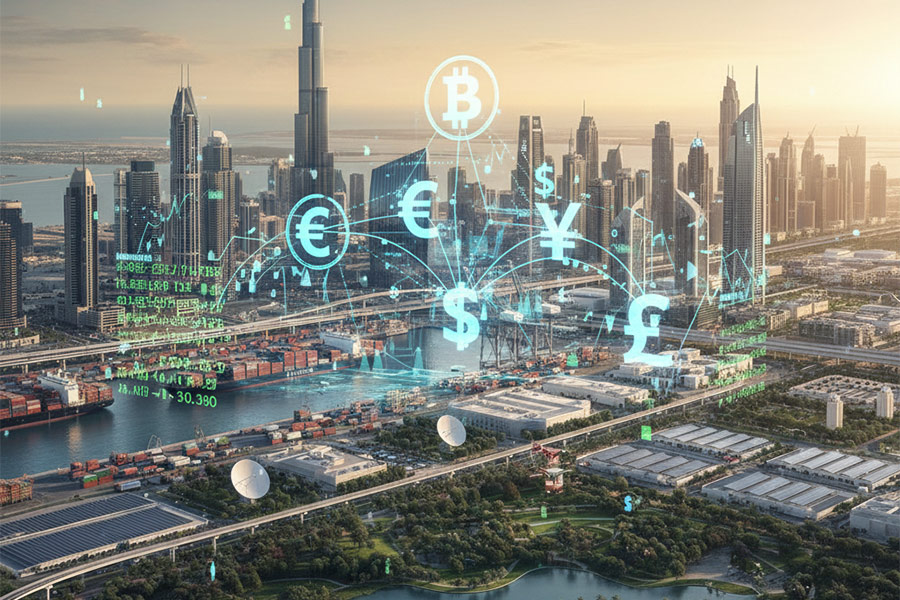
In financial markets, one of the most reliable indicators used to assess long-term viability is not sentiment, it is capital movement. Specifically, the behavior of large institutional investors, multinational corporations, and sovereign entities, often referred to as “smart money” or, colloquially, “whales.”
When long-horizon capital commits resources to a jurisdiction, it usually reflects extensive risk modeling, scenario planning, and future forecasting. And in recent years, the scale and nature of capital moving into Dubai suggests something more structural than a temporary boom.
The Whale Signal: Long-Term Corporate Commitments
Major multinational corporations do not make large strategic investments based on short-term market enthusiasm. Their capital allocation decisions are typically grounded in multi-decade projections, demographic trends, regulatory analysis, and geopolitical risk assessments.
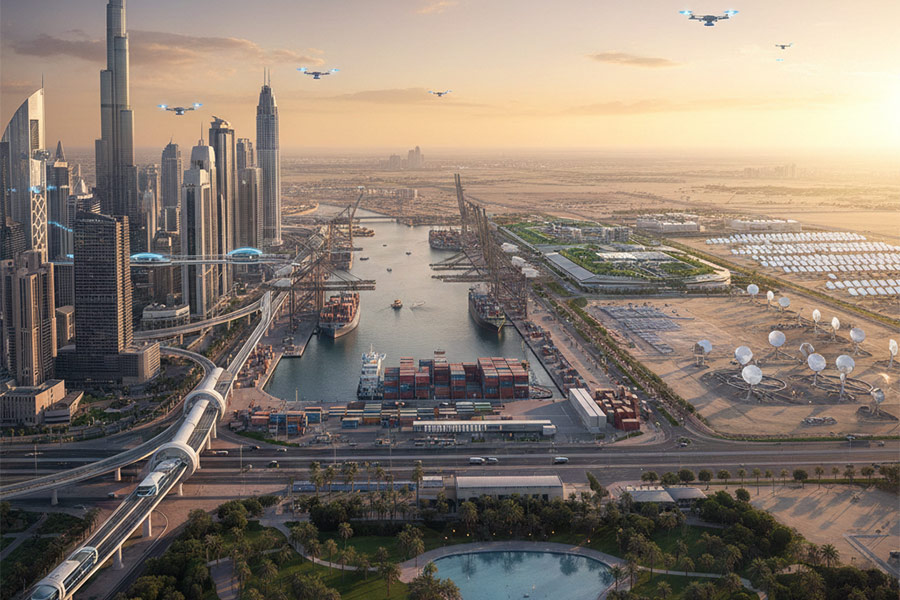
Investments and strategic expansions by global firms including automotive manufacturers, technology companies, logistics giants, financial institutions, and luxury brands signal confidence in long-term economic stability.
Examples include:
- Expansion of regional headquarters by Fortune 500 companies
- Long-term infrastructure partnerships
- Technology and AI sector investments
- Logistics and aviation capacity expansion
- Luxury and branded real estate collaborations
Projects involving global brands such as Mercedes-Benz, Bugatti, Armani, and others in high-value real estate developments are often misunderstood as marketing exercises. In reality, they represent capital commitments linked to long-term demand forecasts for high-net-worth migration, tourism flows, and wealth concentration.
For corporations with advanced forecasting divisions, entering a market is rarely speculative. It reflects probabilistic confidence in future demand. From a financial perspective, large institutional participation acts as a stabilizing force. It reduces volatility compared with purely speculative retail-driven markets.
Structural Factors Supporting Dubai’s Long-Term Outlook
Several macroeconomic variables strengthen the argument that Dubai’s trajectory may be more durable than skeptics assume.
First, demographics. Dubai is one of the fastest-growing high-income migration hubs in the world, attracting entrepreneurs, professionals, and wealthy individuals from Europe, Asia, Africa, and increasingly North America. Population growth in such ecosystems tends to create sustained demand for real estate, services, and infrastructure.
Second, taxation and regulatory competitiveness. With zero personal income tax and relatively low corporate taxation, Dubai maintains a structural advantage in attracting globally mobile capital compared to high-tax jurisdictions.
Third, geographic positioning. Dubai sits at the intersection of Europe, Asia, and Africa, within an eight-hour flight of roughly two-thirds of the world’s population. This logistical advantage is not cyclical, it is structural.
Fourth, economic diversification. Contrary to outdated perceptions, Dubai’s economy is not oil-dependent. Trade, tourism, aviation, finance, and logistics form the core economic drivers, creating multiple revenue streams.
Fifth, sovereign backing. Even though Dubai itself has limited oil resources, it operates within the broader UAE federal framework, which includes Abu Dhabi’s substantial sovereign wealth capacity. This implicit financial safety net reduces systemic risk compared with isolated city economies.
read more: Abu Dhabi vs Dubai Economy
Why Concerns Still Exist And Why They Are Not Entirely Wrong
Despite these strengths, legitimate risks remain. Real estate cycles are real. Dubai experienced significant property corrections in 2009–2010 and again during later periods. Rapid price increases can attract speculative capital, which can amplify volatility during global downturns.
Global dependence is another vulnerability. Dubai’s economy is deeply integrated into international trade, tourism, and capital flows. External shocks such as global recessions, geopolitical tensions, or financial crises can transmit quickly into local markets.
Interest rate environments also matter. Higher global interest rates can reduce liquidity, affecting real estate demand and investment activity. Supply dynamics pose additional challenges. Aggressive development pipelines, if not matched by demand growth, can lead to oversupply in certain property segments. These factors explain why skepticism persists.
A Balanced Perspective: Cyclical Risk vs Structural Direction
The critical distinction is between cyclical volatility and structural trajectory. Dubai is almost certainly not immune to economic cycles. Periods of correction are inevitable in any fast-growing market.
However, the presence of long-term institutional capital, multinational corporate commitments, sovereign backing, demographic inflows, and geographic advantages suggests that Dubai’s growth is not purely speculative. In financial terms, the market may experience cycles but the underlying trend appears structural.
Should Investors Be Worried?
The more nuanced answer is: Short-term volatility risk: Yes. Long-term structural collapse risk: Unlikely.
Markets rarely move in straight lines, and Dubai is no exception. But dismissing the city as a fragile or temporary phenomenon ignores the scale of capital, infrastructure, and institutional commitment already embedded in its economy. Perhaps the most telling indicator remains the behavior of the largest players. When sophisticated capital with multi-decade horizons continues to enter a market, it usually signals not a bubble but a belief in a future. And in the case of Dubai, that future appears to be built on more than o