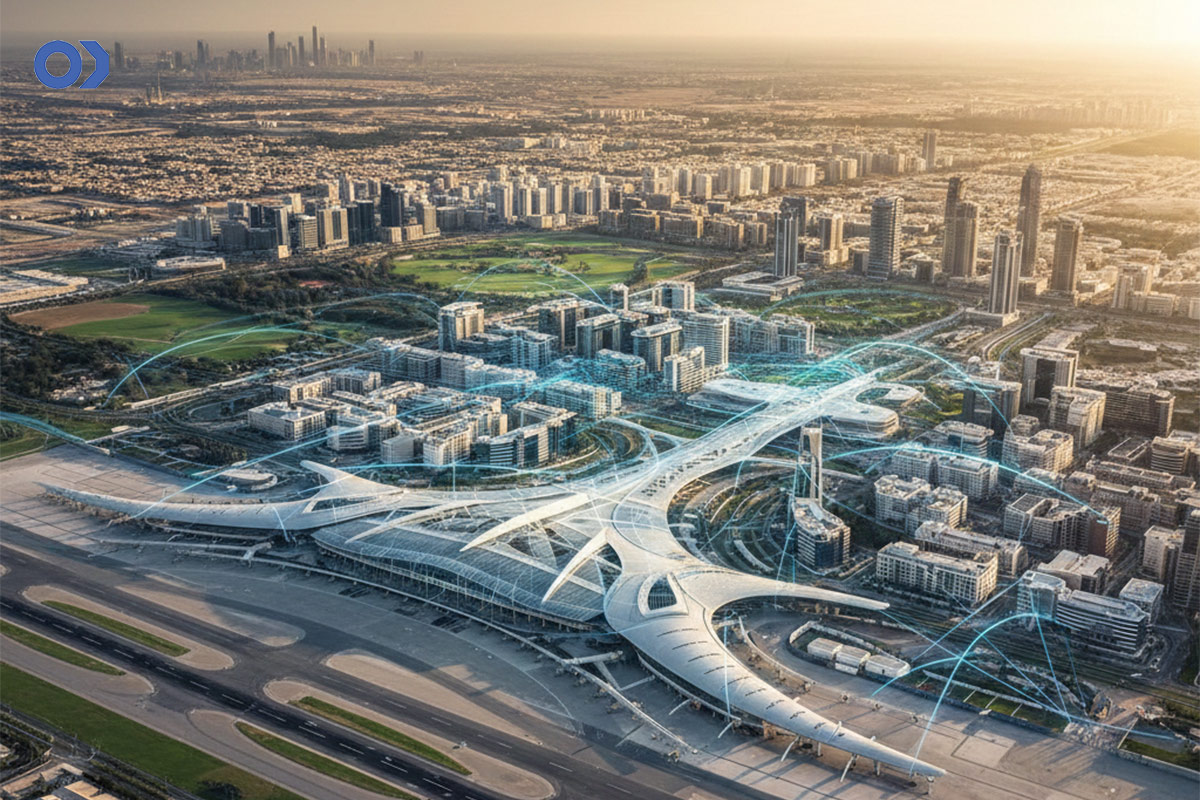
As discussed in our previous analysis of the UAE aviation sector and Dubai’s mega-airport strategy, the development of Al Maktoum International Airport represents one of the most ambitious infrastructure projects in modern aviation. However, the airport is not merely a transportation facility — it is the economic anchor of an entirely new urban corridor.
The Airport Effect: How Aviation Drives Real Estate Growth
Historically, major global airports have catalyzed new economic zones around them. Heathrow in London, Schiphol in Amsterdam, and Incheon in Seoul all triggered large-scale commercial and residential development in their surrounding areas.
Dubai is replicating this model but at a significantly larger scale. As discussed in our broader analysis of Dubai as a global transit hub, infrastructure investment in connectivity has consistently acted as a multiplier for trade, logistics, and urban expansion. The expansion of Al Maktoum International Airport represents the aviation layer of that same strategic framework.
In parallel, our examination of the UAE aviation industry and Dubai’s mega-airport strategy highlighted how aviation in Dubai is not merely transportation it is a central economic engine contributing significantly to GDP. When aviation functions at that scale, real estate demand becomes a structural consequence rather than a speculative reaction.
The $35 billion expansion of Al Maktoum Airport is therefore more than an airport project; it is the foundation of a new urban growth corridor. Government projections include housing demand for up to one million residents over time in the broader airport zone. Such scale naturally carries profound implications for long-term property values and spatial economic shifts within the city.
Key Real Estate Zones Around the New Airport
The real estate market surrounding the airport is already experiencing structural changes that could redefine Dubai’s property geography over the next decade. As employment in aviation, logistics, and related industries expands, residential demand tends to follow infrastructure rather than precede it.
Dubai South Residential District
Dubai South stands as the primary beneficiary due to direct proximity to the airport and integration with Dubai World Central. The district benefits from aviation and logistics employment growth, relatively affordable entry prices compared to central Dubai, planned metro connectivity, and a 15-minute-city urban design concept that supports long-term livability.
Property transactions in Dubai South increased approximately 30% year-over-year in 2025, signaling rising investor confidence and early-cycle positioning. This pattern aligns with historical airport-driven growth models observed in other global hubs but amplified by Dubai’s unique transit and aviation scale.
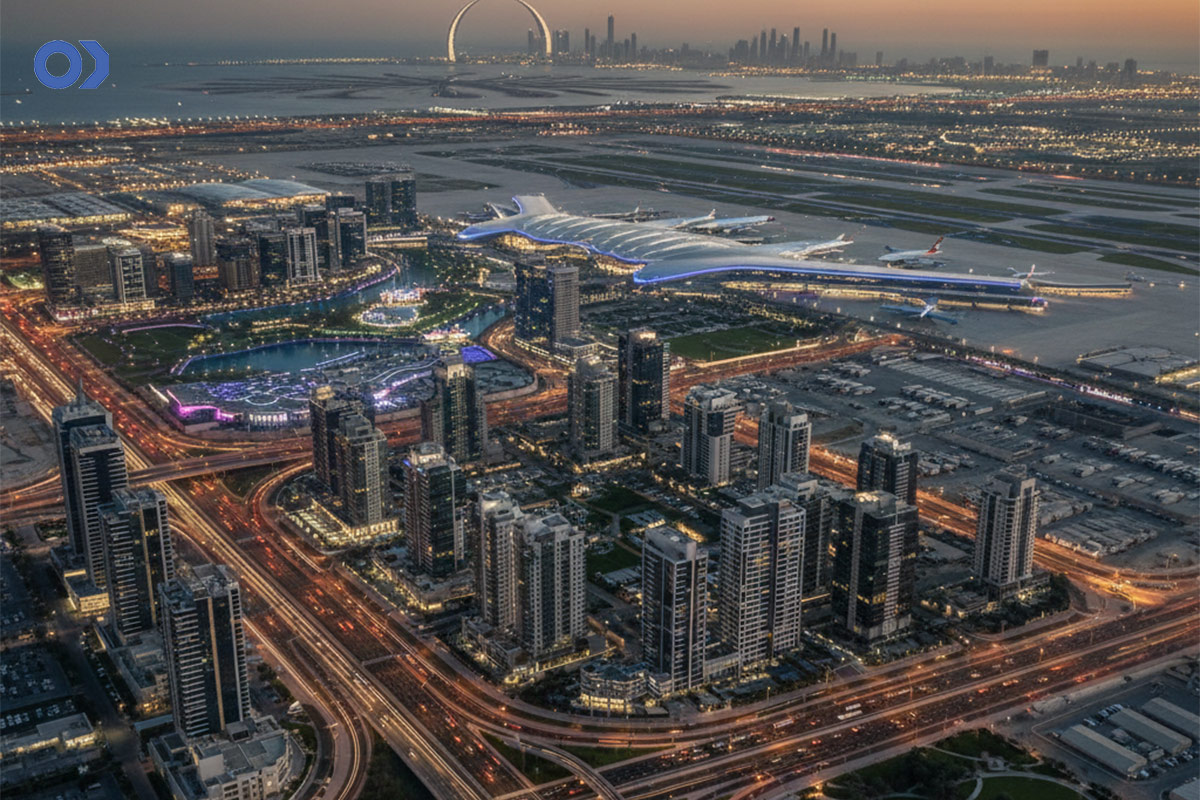
Expo City Dubai
Expo City functions as the commercial and innovation anchor of the southern corridor. Built on the legacy of Expo 2020, the area combines free-zone business infrastructure, event and exhibition facilities, and direct connectivity to the airport.
As global connectivity strengthens through Al Maktoum Airport, corporate demand for nearby residential and office space is expected to grow. This integration between business activity and residential supply enhances long-term value potential.
Palm Jebel Ali and Coastal Developments
Palm Jebel Ali represents the luxury segment within the broader southern expansion zone. Historically, major infrastructure upgrades create a “halo effect,” where demand spills into adjacent premium districts offering long-term lifestyle value.
As transport corridors and connectivity improve, luxury coastal developments may experience indirect uplift driven by airport-related economic activity.
Logistics and Commercial Zones
The airport forms part of Dubai World Central (DWC), a mixed-use mega-development that integrates logistics parks, aviation industries, commercial offices, and residential communities.
This level of integration is designed to create a self-sustaining economic ecosystem, where employment generation directly supports housing demand and retail growth.
Current Market Performance and Price Trends
The impact of the airport project is already visible in price dynamics. Since Expo 2020, property values in Dubai South have risen approximately 40–60%, driven largely by infrastructure anticipation and investor positioning. Analysts forecast an additional 15–20% price growth linked to continued airport expansion and phased infrastructure rollout.
Prices in the southern corridor remain significantly lower than prime central districts, creating a combination often associated with early-cycle growth markets: lower entry costs paired with strong infrastructure catalysts.
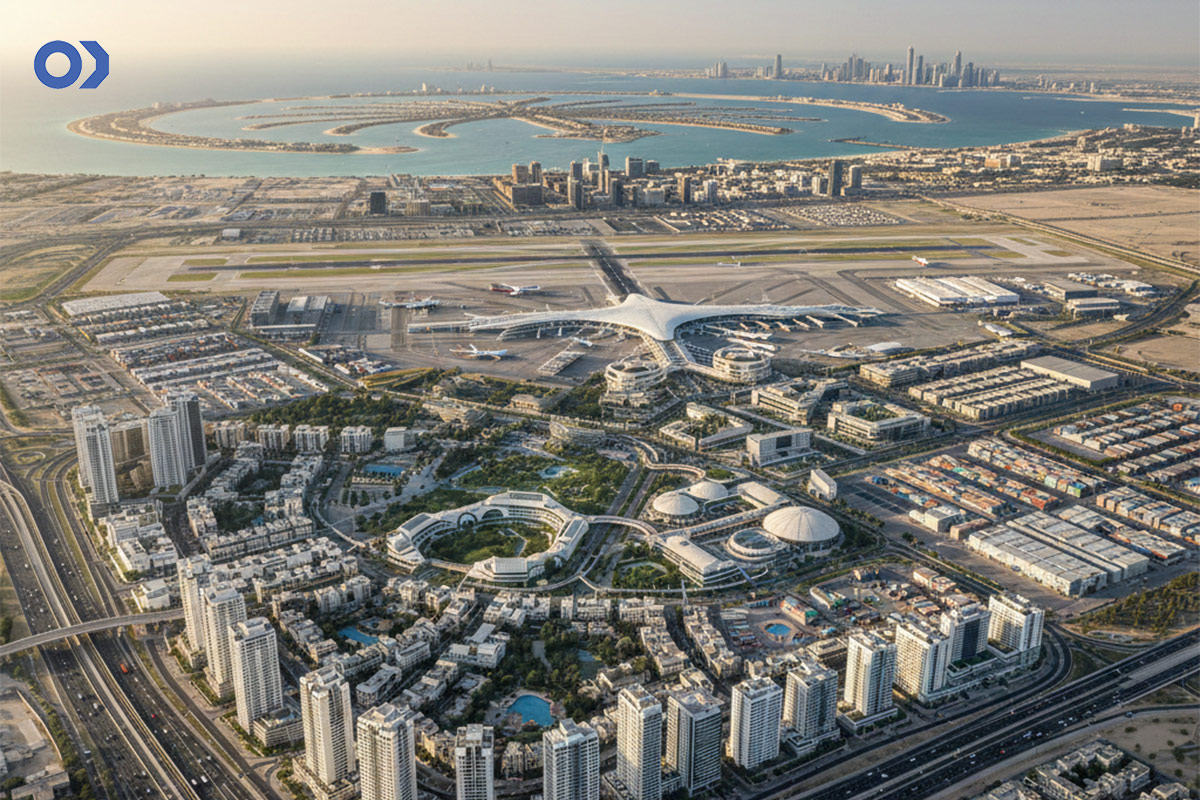
Will the New Airport Affect Property Around DXB?
For investors, the potential impact on areas surrounding the current Dubai International Airport (DXB) is an important consideration.
In the short term (0–5 years), minimal negative impact is expected. DXB remains centrally located, surrounded by mature communities, and continues to function as the primary aviation hub. Real estate near DXB benefits from established infrastructure and urban density.
In the medium to long term (5–15 years), economic gravity may gradually shift southward. As aviation operations transition toward Al Maktoum Airport, logistics employment and corporate offices may follow. Demand growth around DXB could slow relative to Dubai South.
However, sharp decline is unlikely because central Dubai land remains scarce, redevelopment opportunities exist, and mixed-use conversion potential is strong. Some analysts even expect DXB-adjacent land to eventually transform into premium urban districts.
Infrastructure and Connectivity Multipliers
The property impact of Al Maktoum Airport is amplified by supporting infrastructure projects, including metro expansions, new highway networks, logistics corridors, Expo legacy development, and long-term population growth strategies.
Historically, Dubai property values have risen approximately 20–25% between the announcement and completion of major metro expansions. Infrastructure timing often plays a crucial role in price appreciation cycles.
10-Year Investment Outlook (2025–2035)
Over the next decade, Dubai’s southern corridor is projected to evolve into a major employment center, logistics powerhouse, residential growth zone, and technology cluster.
Real estate appreciation is likely to follow phased infrastructure development rather than occur instantly. Investors with medium-to-long time horizons may benefit most from this structural transition.
Risks Investors Should Consider
A balanced view is essential. Potential risks include extended development timelines, property cycle volatility, project quality differences, micro-location variations, and broader global economic conditions. Infrastructure alone does not guarantee investment success; timing and asset selection remain critical.
Strategic Conclusion
The development of Al Maktoum International Airport represents a structural shift in Dubai’s urban geography. Real estate around the airport particularly Dubai South, Expo City, and surrounding corridors appears positioned for long-term growth driven by employment expansion, connectivity, and demographic trends.
While areas surrounding the existing airport will likely retain value due to central location advantages, the next decade may see increasing investment momentum move toward Dubai’s southern expansion zone.
For investors, the opportunity lies not in short-term speculation, but in understanding the long-term infrastructure logic shaping Dubai’s future.